Phaneta pallidarcis
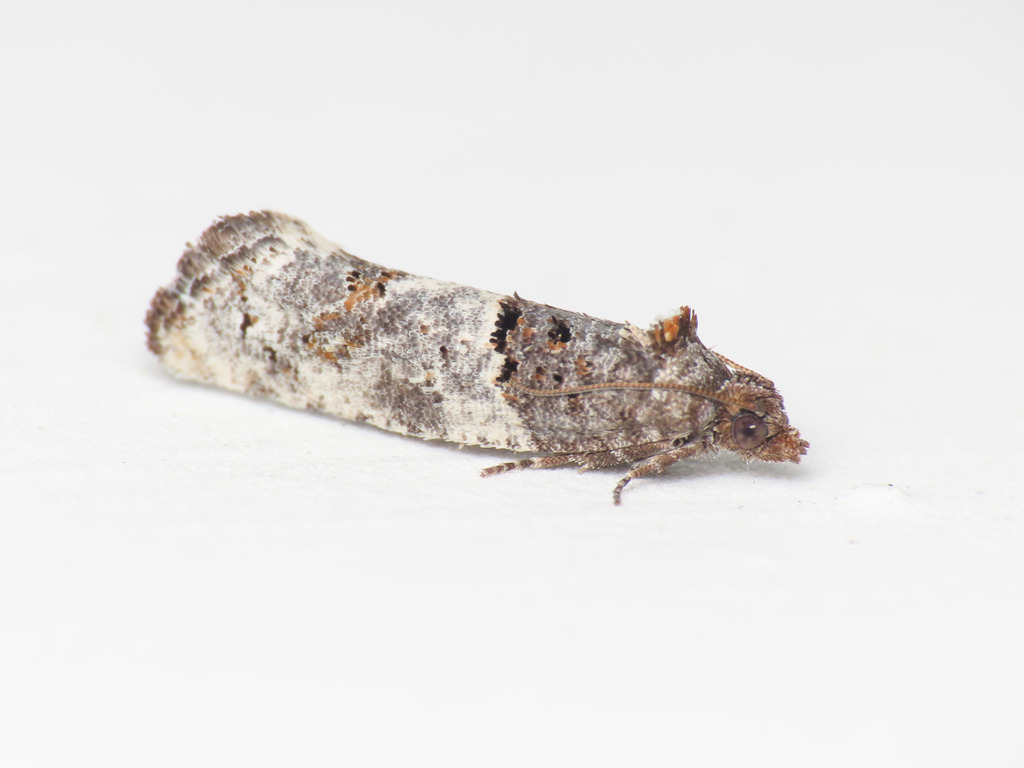
(c) Emanuele Santarelli, some rights reserved (CC BY-SA) · licence
Family: Tortricidae · Class: Insecta · Order: Lepidoptera
Phaneta pallidarcis is a California animal in the Tortricidae family.
Phaneta pallidarcis is a small moth in the family Tortricidae, commonly known as leafroller moths. This species belongs to a genus of microlepidoptera characterized by their distinctive wing patterns and specialized larval feeding behaviors. Adult moths typically measure 8 to 12 millimeters in wingspan, displaying the mottled gray-brown coloration typical of many tortricid species. The forewings exhibit subtle banding patterns that provide effective camouflage against bark and lichen substrates. Males can be distinguished from females by their more feathered antennae and slightly smaller size. The known distribution of Phaneta pallidarcis appears to be limited, though comprehensive range data for this species remains incomplete. Like many tortricid moths, this species likely has a restricted geographic range tied to specific host plant associations and habitat requirements. The genus Phaneta includes numerous species distributed across North America, with several endemic to western regions including California. Habitat preferences for P. pallidarcis are not well-documented in current literature, though members of the genus Phaneta typically inhabit areas where their host plants occur. Many tortricid moths in this genus are associated with woody plants and shrubs in various plant communities. The species likely requires specific microhabitat conditions related to host plant availability, moisture levels, and temperature ranges suitable for larval development and adult reproduction. The life cycle of Phaneta pallidarcis follows the typical tortricid pattern of complete metamorphosis. Larvae are likely leaf-tiers or borers, feeding within rolled leaves, stems, or other plant tissues of their host species. Adult flight periods are unknown but may coincide with host plant phenology and favorable environmental conditions. Female moths deposit eggs on or near host plants, where larvae develop through several instars before pupating. The species may be univoltine (one generation per year) or multivoltine depending on climate and host plant availability. Conservation status information for Phaneta pallidarcis is currently unavailable, as the species lacks federal or state listing designation. The absence of conservation status rankings may reflect limited knowledge about population trends, distribution, and threats rather than actual population stability. Many microlepidoptera face potential threats from habitat loss, climate change, and pesticide use, particularly species with narrow host plant requirements or limited distributions. Without comprehensive surveys and taxonomic research, the conservation needs of this species remain unclear. The taxonomic status and ecological relationships of P. pallidarcis require further investigation. Recent molecular studies of tortricid moths have revealed cryptic species complexes and revised phylogenetic relationships within the family. Additional research on host plant associations, life history, distribution, and population status would contribute significantly to understanding this species' conservation requirements and ecological role within its native habitat.
Classification
Class: Insecta · Order: Lepidoptera · Family: Tortricidae
Frequently asked questions
How is Phaneta pallidarcis classified?
Phaneta pallidarcis belongs to class Insecta, order Lepidoptera, family Tortricidae.
What family does Phaneta pallidarcis belong to?
Phaneta pallidarcis is in the Tortricidae family.
What is Phaneta pallidarcis?
Phaneta pallidarcis is a small moth in the family Tortricidae, commonly known as leafroller moths.
Is Phaneta pallidarcis found in California?
Yes. Phaneta pallidarcis is recorded in California in The California Species Project's catalogue.
Related species
Other California species in the same genus, family, or bioregion.
Data from The California Species Project — 14,000+ California species with verified data from CNPS, CDFW, USFWS, and more.