Phaneta stramineana
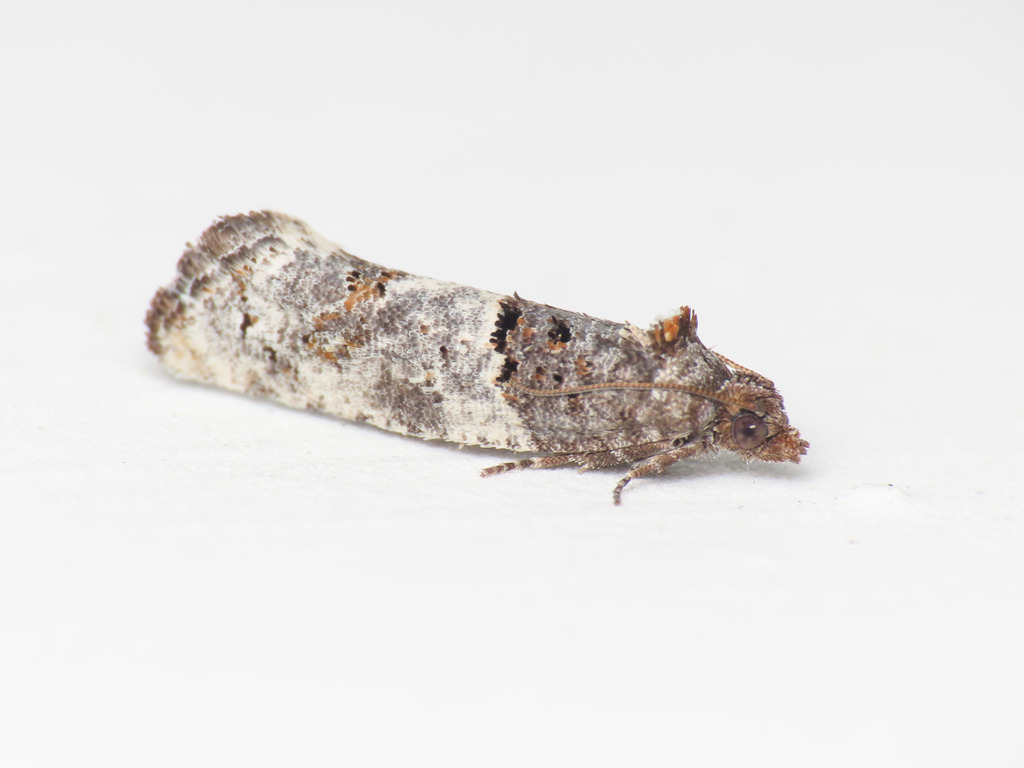
(c) Emanuele Santarelli, some rights reserved (CC BY-SA) · licence
Family: Tortricidae · Class: Insecta · Order: Lepidoptera
Phaneta stramineana is a California animal in the Tortricidae family.
Phaneta stramineana is a small moth in the family Tortricidae, commonly known as tortrix moths or leafroller moths. This species belongs to a diverse group of microlepidoptera characterized by their leaf-rolling larval behavior and distinctive wing patterns. Adult moths typically measure 8 to 12 mm in wingspan, with forewings displaying a straw-colored or pale yellowish ground color that gives the species its name 'stramineana,' derived from the Latin word for straw. The forewings exhibit the characteristic tortricid pattern with darker brown or reddish-brown markings forming irregular bands and patches across the wing surface. The hindwings are typically paler, ranging from whitish to light gray. When at rest, the wings are held roof-like over the body, creating a triangular profile typical of tortricid moths. The antennae are filiform in both sexes, and the palpi are moderately developed. Information regarding the specific distribution of Phaneta stramineana in California is limited in available literature. Tortricidae species generally have restricted ranges tied to their host plant distributions. Many Phaneta species are associated with herbaceous plants and shrubs, particularly those in the families Asteraceae, Rosaceae, and Apiaceae, though the specific host plant associations for P. stramineana require further documentation. The habitat preferences of this species likely correspond to areas supporting its larval host plants. Tortricid moths typically inhabit diverse environments including chaparral, woodland margins, meadows, and disturbed areas where herbaceous vegetation flourishes. Elevation preferences and specific microhabitat requirements for P. stramineana remain poorly documented in the scientific literature. Like other tortricid moths, P. stramineana likely exhibits a complete metamorphosis with egg, larval, pupal, and adult stages. Larvae typically feed within rolled or webbed leaves of host plants, creating characteristic shelters that protect them from predators and environmental conditions. The larval feeding behavior often creates distinctive damage patterns on host plants. Flight periods and number of generations per year have not been well documented for this species. Adult moths are generally attracted to lights and may be active during evening hours. The conservation status of Phaneta stramineana has not been formally assessed by state or federal agencies. Like many microlepidoptera, this species may face threats from habitat loss, urbanization, and changes in plant community composition. The limited available information about its distribution, ecology, and population status indicates a need for additional research to assess conservation needs. Many small moth species remain poorly studied despite their important ecological roles as herbivores and prey for other organisms.
Classification
Class: Insecta · Order: Lepidoptera · Family: Tortricidae
Frequently asked questions
How is Phaneta stramineana classified?
Phaneta stramineana belongs to class Insecta, order Lepidoptera, family Tortricidae.
What family does Phaneta stramineana belong to?
Phaneta stramineana is in the Tortricidae family.
What is Phaneta stramineana?
Phaneta stramineana is a small moth in the family Tortricidae, commonly known as tortrix moths or leafroller moths.
Is Phaneta stramineana found in California?
Yes. Phaneta stramineana is recorded in California in The California Species Project's catalogue.
Related species
Other California species in the same genus, family, or bioregion.
Data from The California Species Project — 14,000+ California species with verified data from CNPS, CDFW, USFWS, and more.