Pheosia californica
Western Poplar Sphinx
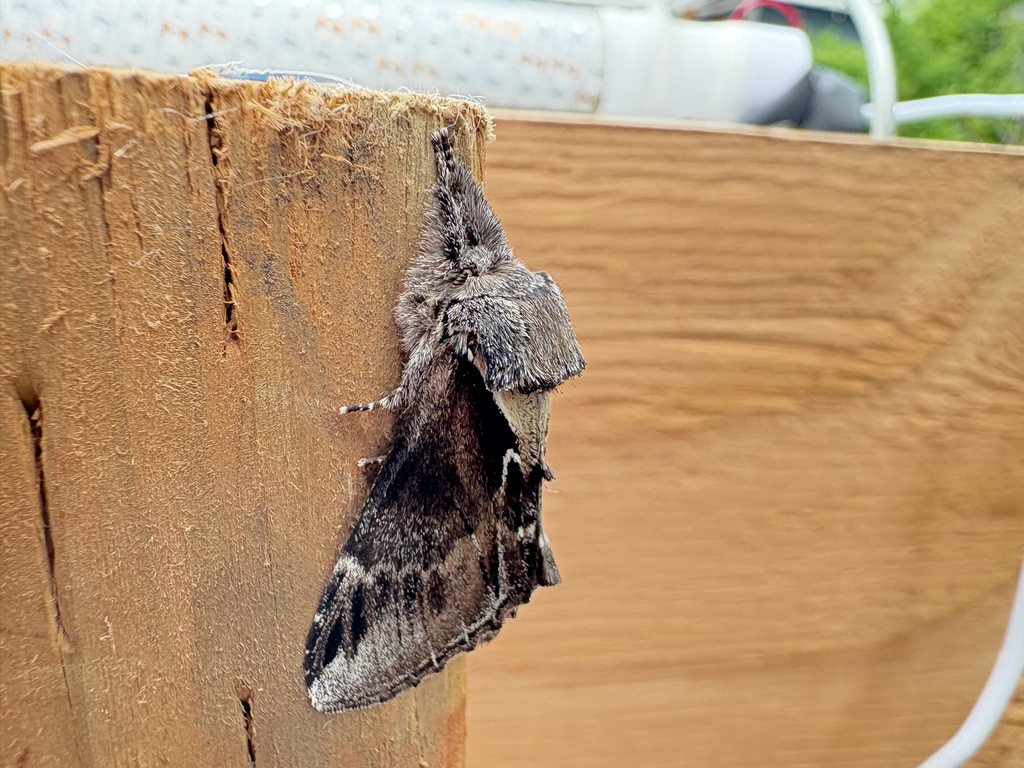
no rights reserved · CC0
Family: Notodontidae · Class: Insecta · Order: Lepidoptera
Pheosia californica (Western Poplar Sphinx) is a California animal in the Notodontidae family.
Pheosia californica is a medium-sized moth in the family Notodontidae, commonly known as the Western Poplar Sphinx. The species was originally described by Stretch in 1872 and was formerly treated as a synonym of Pheosia rimosa before being elevated to full species status (Moth Photographers Group). Adults display typical notodontid characteristics with forewings spanning approximately 35-45 mm. The forewings are typically grayish-brown with subtle darker markings and cross-lines, while the hindwings are lighter in coloration. The species can be distinguished from the closely related P. rimosa by specific morphological characters that led to its taxonomic separation. Pheosia californica is endemic to California, with its range primarily encompassing the western portions of the state. The species appears to be associated with riparian areas and low elevation habitats where its host plants occur. Records indicate presence in various California counties, though detailed distribution data remains limited in the scientific literature. The species inhabits riparian zones and areas with suitable host plant availability. Like other members of the genus Pheosia, this moth is likely associated with poplar and willow trees (Salicaceae family), which serve as larval host plants. Adults are nocturnal and are attracted to artificial lights, following typical sphinx moth behavior patterns. The species appears to favor low elevation environments, particularly areas with adequate moisture to support host plant growth. As with other notodontids, Pheosia californica likely undergoes complete metamorphosis with egg, larval, pupal, and adult stages. Larvae probably feed on leaves of poplar and related trees in the Salicaceae family, though specific host plant relationships for this species have not been thoroughly documented in available literature. Adult flight periods and seasonal activity patterns require further study, though most western North American notodontids are active during spring and summer months. Mating behavior and reproductive ecology remain poorly documented for this species. Pheosia californica does not appear on federal or state conservation lists, suggesting stable population status within its California range. However, like many riparian-associated species, it may face habitat pressure from development, water management practices, and climate change impacts on riparian ecosystems. The species' conservation status would benefit from additional survey work and population monitoring, particularly given the specialized nature of riparian habitats in California. The limited scientific literature available on this moth highlights the need for additional research on its biology, distribution, and ecological requirements. Scientific documentation for this species remains limited. The information presented here is based on available taxonomic sources and general knowledge of related species. If you have additional verified information about this species' biology, distribution, or ecology, please contact us to help improve this species account.
Classification
Class: Insecta · Order: Lepidoptera · Family: Notodontidae
Frequently asked questions
How is Pheosia californica classified?
Pheosia californica belongs to class Insecta, order Lepidoptera, family Notodontidae.
What family does Pheosia californica belong to?
Pheosia californica is in the Notodontidae family.
What is Pheosia californica?
Pheosia californica is a medium-sized moth in the family Notodontidae, commonly known as the Western Poplar Sphinx.
Is Pheosia californica found in California?
Yes. Pheosia californica is recorded in California in The California Species Project's catalogue.
Related species
Other California species in the same genus, family, or bioregion.
Data from The California Species Project — 14,000+ California species with verified data from CNPS, CDFW, USFWS, and more.