Pheosia rimosa
Black-rimmed Prominent
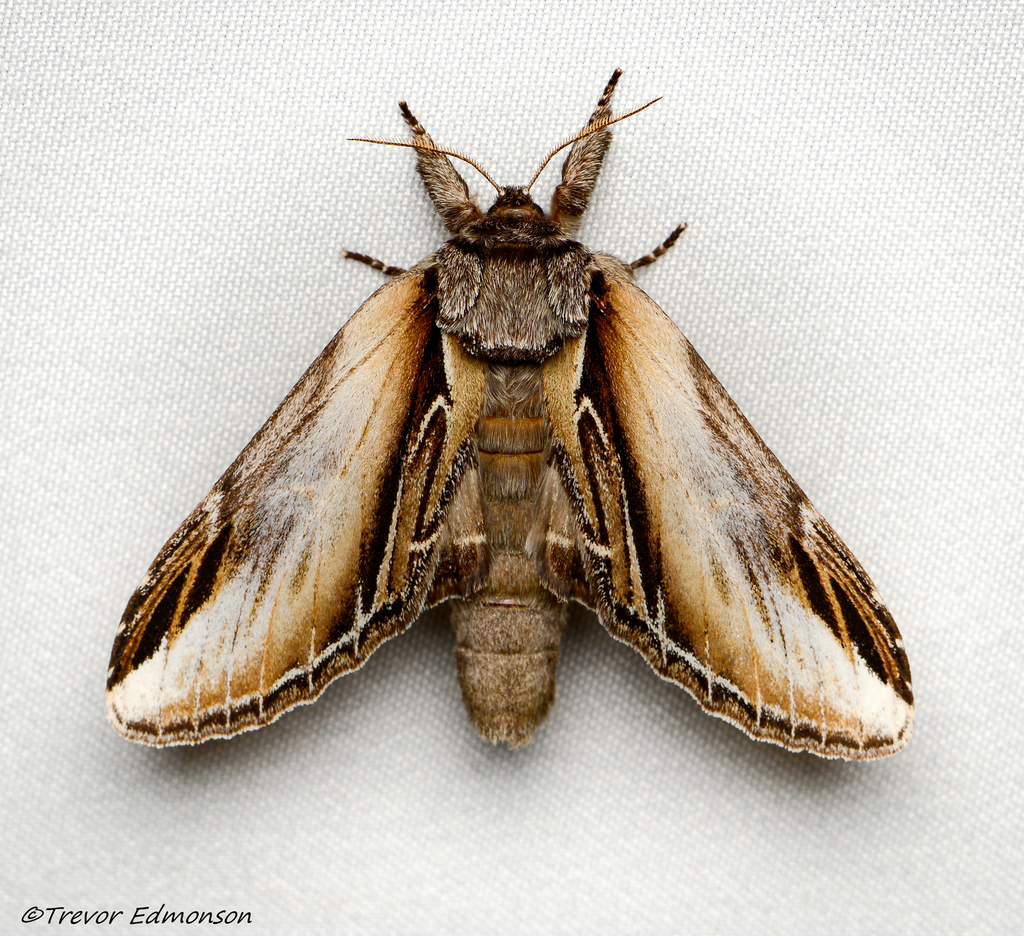
(c) Trevor Edmonson, some rights reserved (CC BY) · licence
Family: Notodontidae · Class: Insecta · Order: Lepidoptera
Pheosia rimosa (Black-rimmed Prominent) is a California animal in the Notodontidae family.
The Black-rimmed Prominent (Pheosia rimosa) is a medium-sized moth in the family Notodontidae, characterized by distinctive wing patterns and coloration. Adults have a wingspan of approximately 35-45 mm (1.4-1.8 inches). The forewings are predominantly gray to brown with darker markings, including the characteristic black rim along the outer margin that gives the species its common name. The hindwings are lighter, typically pale gray to whitish. At rest, the moth holds its wings in a tent-like position over the body, a typical posture for prominent moths. Pheosia rimosa occurs across western North America, with populations documented in California, Oregon, Washington, and extending into British Columbia. In California, the species has been recorded primarily in northern counties, including areas of the Coast Range and Sierra Nevada foothills. The distribution appears to be associated with suitable host plant availability and appropriate forest habitat conditions. This species inhabits mixed deciduous and coniferous forests, particularly areas where aspen and cottonwood trees are present. The elevation range extends from near sea level in coastal areas to approximately 2,500 meters (8,200 feet) in mountainous regions. Adults are typically found in forest openings, along forest edges, and in riparian corridors where host plants thrive. The species shows a preference for areas with moderate moisture levels and partial canopy cover. Larvae feed primarily on species in the genus Populus, including quaking aspen (Populus tremuloides) and various cottonwood species. The caterpillars are distinctive, with a prominent dorsal hump and variable coloration ranging from green to brown. They typically feed on leaves during late spring and summer months. Adults emerge in mid to late summer, with flight period generally extending from July through September. The species is univoltine, producing one generation per year. Adults are nocturnal and are attracted to artificial lights during their active period. Pheosia rimosa is not currently listed under federal or state endangered species legislation. However, like many forest-dependent Lepidoptera, the species may face challenges from habitat modification, forest management practices, and climate change impacts on host plant distribution. The species' dependence on Populus species makes it potentially vulnerable to changes in forest composition and riparian habitat degradation. Population trends are not well documented, but the species appears to maintain stable populations where suitable habitat persists. Conservation of mixed forest habitats and riparian corridors benefits this species along with other forest-dependent moths. Climate change may affect the distribution of both the moth and its host plants, particularly at elevational boundaries and in areas experiencing increased drought stress.
Classification
Class: Insecta · Order: Lepidoptera · Family: Notodontidae
Frequently asked questions
How is Pheosia rimosa classified?
Pheosia rimosa belongs to class Insecta, order Lepidoptera, family Notodontidae.
What family does Pheosia rimosa belong to?
Pheosia rimosa is in the Notodontidae family.
What is Pheosia rimosa?
The Black-rimmed Prominent (Pheosia rimosa) is a medium-sized moth in the family Notodontidae, characterized by distinctive wing patterns and coloration.
Is Pheosia rimosa found in California?
Yes. Pheosia rimosa is recorded in California in The California Species Project's catalogue.
Related species
Other California species in the same genus, family, or bioregion.
Data from The California Species Project — 14,000+ California species with verified data from CNPS, CDFW, USFWS, and more.