Phidiana hiltoni
Hilton's Aeolid
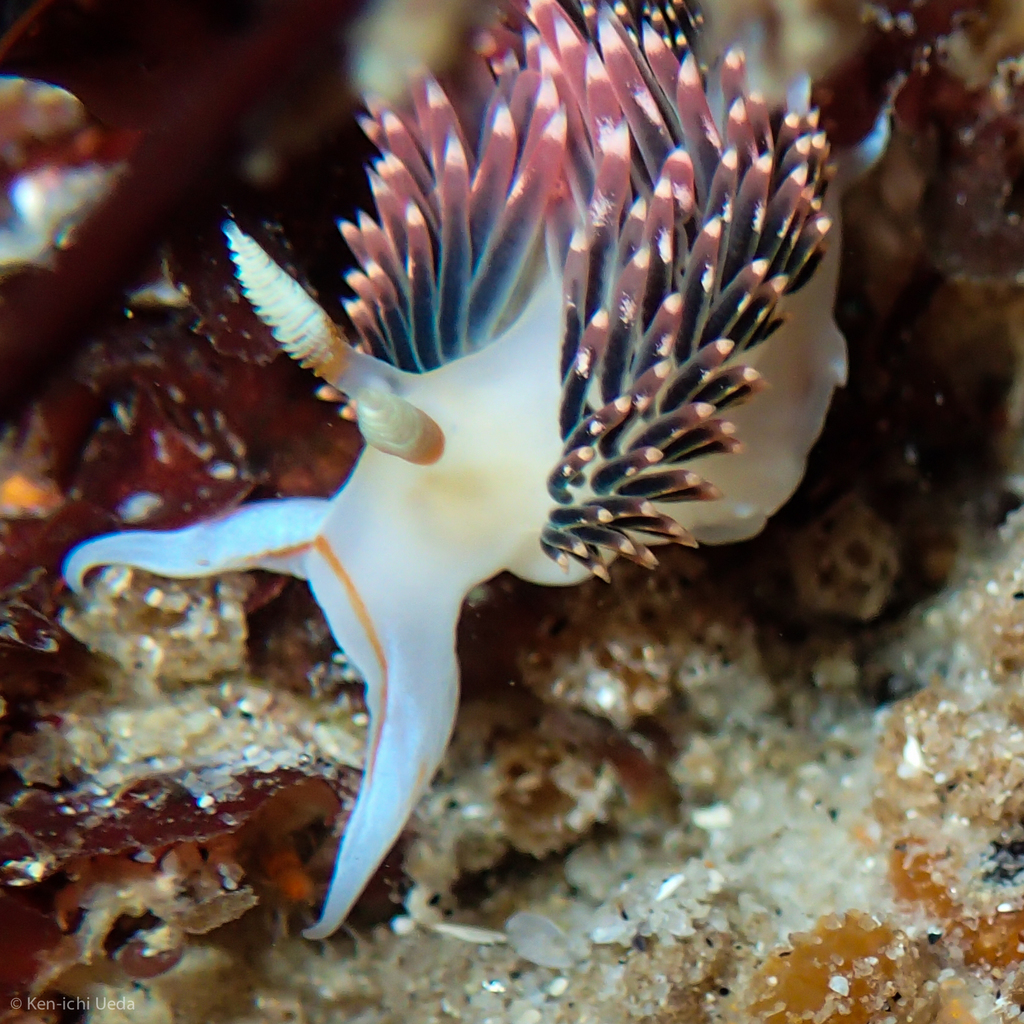
(c) Ken-ichi Ueda, some rights reserved (CC BY) · licence
Family: Facelinidae · Class: Gastropoda · Order: Nudibranchia
Phidiana hiltoni (Hilton's Aeolid) is a California animal in the Facelinidae family.
Hilton's aeolid (Phidiana hiltoni) is a species of sea slug belonging to the nudibranch family Facelinidae. This marine gastropod is characterized by its soft body and cerata, finger-like projections that extend from the dorsal surface and function in both respiration and digestion. Like other aeolid nudibranchs, Hilton's aeolid lacks a shell in its adult form and displays the bright coloration typical of many nudibranch species. Hilton's aeolid is found along the California coast, with documented occurrences in several marine protected areas. The species has been recorded in the Carmel Pinnacles State Marine Reserve, Naples State Marine Conservation Area, Judith Rock State Marine Reserve near San Miguel Island, and Gull Island State Marine Reserve in the Northern Channel Islands. These locations span from central California's Monterey County to the Channel Islands off Southern California, indicating a range that encompasses much of California's rocky intertidal and subtidal zones. This nudibranch inhabits rocky marine environments, including granite spires, kelp forests, and reef walls. The species is associated with marine protected areas that feature rocky reefs, kelp forests, surfgrass beds, and underwater pinnacle and arch systems. Habitat depths vary from shallow intertidal zones to deeper subtidal areas, with some locations reaching significant depths along reef walls and cave networks. The species appears to prefer areas with complex three-dimensional structure provided by rocky substrates and kelp forest canopies. Like other aeolid nudibranchs, Hilton's aeolid is likely carnivorous, feeding primarily on hydroids and other cnidarians. The cerata contain extensions of the digestive system, allowing the animal to process food efficiently. Many aeolids are capable of incorporating nematocysts (stinging cells) from their cnidarian prey into their cerata for defense, a process known as kleptocnida. Reproduction in nudibranchs typically involves hermaphroditic individuals that engage in reciprocal fertilization, laying ribbon-like egg masses on suitable substrates. The conservation status of Hilton's aeolid has not been formally assessed. The species currently lacks federal or state listing status, and no specific population data or threat assessments are available. However, its presence within multiple California marine protected areas suggests some level of habitat protection. Like many marine invertebrates, potential threats may include water quality degradation, habitat modification, and climate change impacts on marine ecosystems. The species' association with kelp forest environments makes it potentially vulnerable to changes in ocean temperature and chemistry that affect kelp forest health and distribution along the California coast.
Classification
Class: Gastropoda · Order: Nudibranchia · Family: Facelinidae
Frequently asked questions
How is Phidiana hiltoni classified?
Phidiana hiltoni belongs to class Gastropoda, order Nudibranchia, family Facelinidae.
What family does Phidiana hiltoni belong to?
Phidiana hiltoni is in the Facelinidae family.
What is Phidiana hiltoni?
Hilton's aeolid (Phidiana hiltoni) is a species of sea slug belonging to the nudibranch family Facelinidae.
Is Phidiana hiltoni found in California?
Yes. Phidiana hiltoni is recorded in California in The California Species Project's catalogue.
Related species
Other California species in the same genus, family, or bioregion.
Data from The California Species Project — 14,000+ California species with verified data from CNPS, CDFW, USFWS, and more.