Philaenus spumarius
Meadow Spittlebug
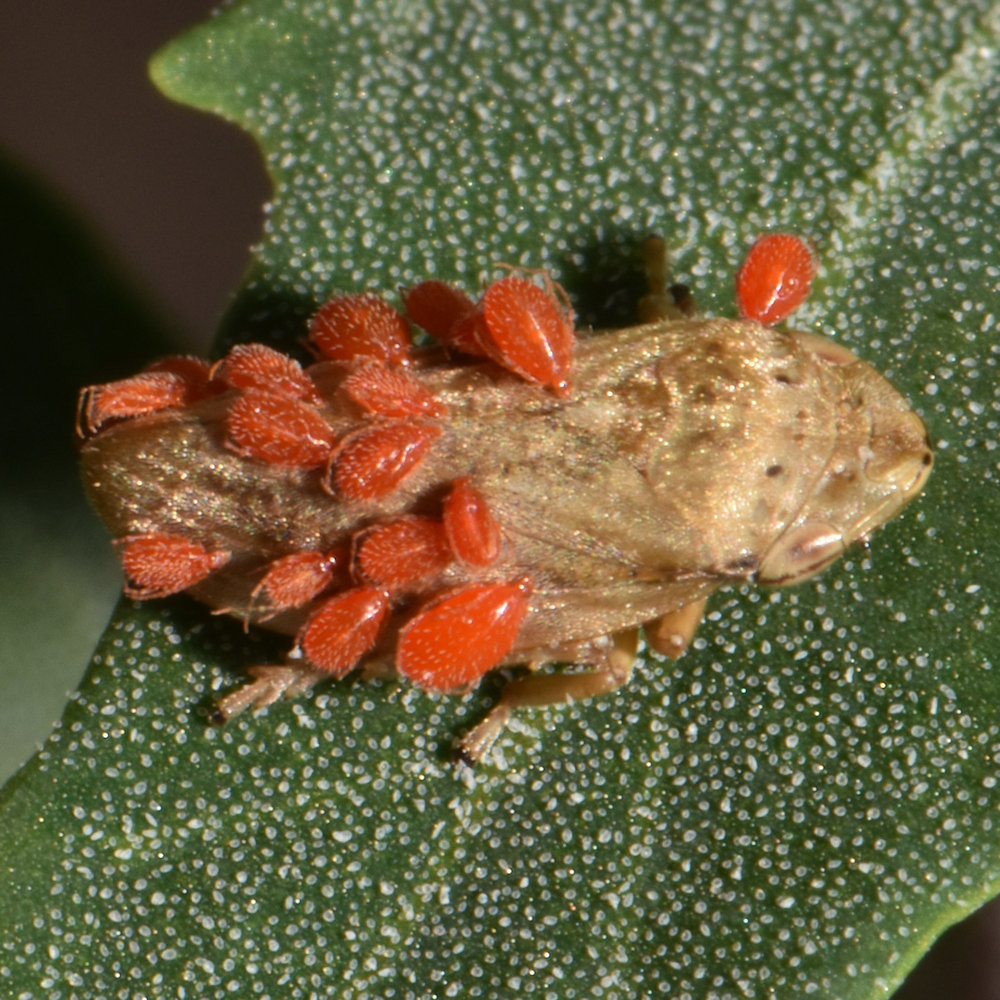
(c) Reiner Jakubowski, some rights reserved (CC BY-SA) · licence
Family: Aphrophoridae · Class: Insecta · Order: Hemiptera
Philaenus spumarius (Meadow Spittlebug) is a California animal in the Aphrophoridae family.
The meadow spittlebug is a small hemipteran insect belonging to the family Aphrophoridae. Adults typically measure 5-7 mm (0.2-0.3 inches) in length with a robust, oval-shaped body. The species exhibits considerable color variation, ranging from pale yellow to dark brown or black, often with distinctive markings that can include spots, stripes, or mottled patterns. The forewings are leathery at the base and membranous at the tips, characteristic of hemipterans. Adults have prominent, bulging eyes and short antennae. Philaenus spumarius has one of the broadest distributions of any spittlebug species globally. The species occurs throughout North America, Europe, and parts of Asia. In North America, it ranges from Canada south to Mexico, and from coast to coast. Within California, the meadow spittlebug can be found in diverse habitats across multiple elevation zones, though specific county-level distribution data within the state requires further documentation. This species inhabits a wide variety of open habitats including meadows, grasslands, agricultural areas, gardens, and forest edges. Meadow spittlebugs are polyphagous, utilizing numerous host plants across many plant families. Common hosts include grasses, legumes, composites, and various herbaceous plants. Adults are typically found on vegetation from late spring through early fall, while nymphs develop on plant roots and stems during spring and early summer. The meadow spittlebug is perhaps best known for the distinctive foam masses, called "spittle," produced by its nymphs. These white, frothy masses are created when nymphs excrete excess plant fluids and mix them with air and waxy secretions. The spittle serves as protection from predators, parasites, and desiccation while the nymphs feed on plant juices. Adults and nymphs use piercing-sucking mouthparts to extract plant fluids, primarily from phloem and xylem tissues. The species typically produces one generation per year in most climates, with adults active during summer months and eggs overwintering in plant tissues or soil. Philaenus spumarius is not federally or state-listed as threatened or endangered. According to NatureServe Explorer, the species has a global status of GNR (Global Status Not Ranked), indicating insufficient information for comprehensive status assessment. However, the species appears to be generally stable across its range and may benefit from its broad host plant range and habitat flexibility. As an agricultural pest, meadow spittlebugs can occasionally cause economic damage to crops, particularly alfalfa and clover, through direct feeding damage and potential disease transmission. The species serves as prey for various predators including birds, spiders, and predatory insects, contributing to ecosystem food webs in agricultural and natural habitats.
Classification
Class: Insecta · Order: Hemiptera · Family: Aphrophoridae
Frequently asked questions
How is Philaenus spumarius classified?
Philaenus spumarius belongs to class Insecta, order Hemiptera, family Aphrophoridae.
What family does Philaenus spumarius belong to?
Philaenus spumarius is in the Aphrophoridae family.
What is Philaenus spumarius?
The meadow spittlebug is a small hemipteran insect belonging to the family Aphrophoridae.
Is Philaenus spumarius found in California?
Yes. Philaenus spumarius is recorded in California in The California Species Project's catalogue.
More California species
This species has no close relatives in our California data — here are other species to explore.
Data from The California Species Project — 14,000+ California species with verified data from CNPS, CDFW, USFWS, and more.