Philanthus multimaculatus
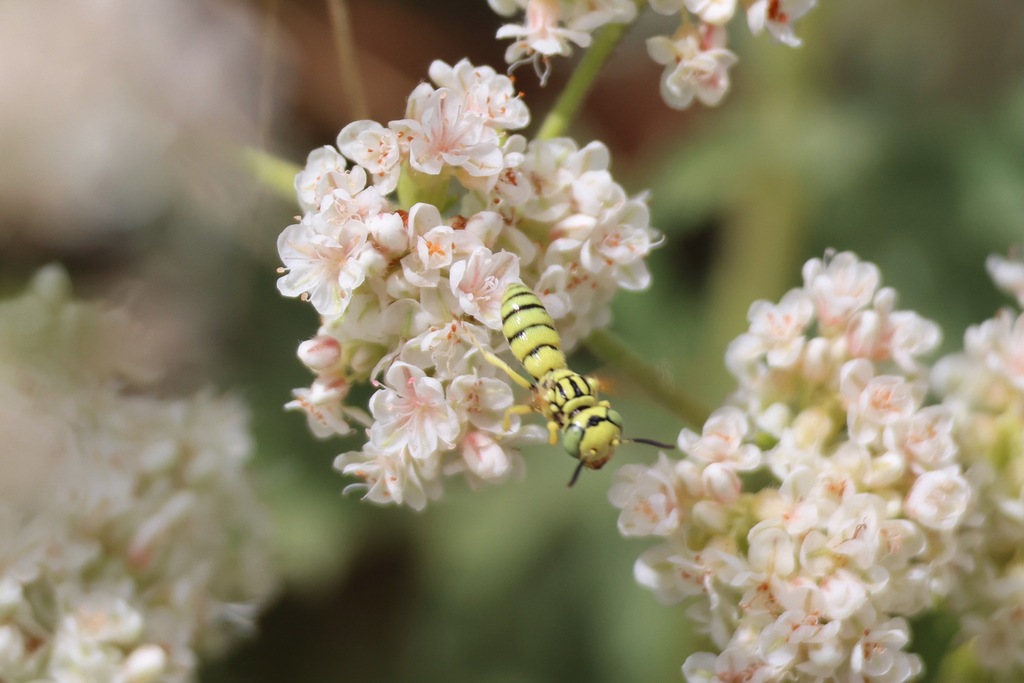
(c) Rachel Lee Harper, some rights reserved (CC BY) · licence
Family: Crabronidae · Class: Insecta · Order: Hymenoptera
Philanthus multimaculatus is a California animal in the Crabronidae family.
Philanthus multimaculatus is a species of sand wasp in the family Crabronidae, subfamily Philanthinae, commonly known as beewolves. This species belongs to the tribe Philanthini within the genus Philanthus, a group of solitary wasps known for their specialized hunting behavior targeting bees and other hymenopteran insects. As a member of the beewolf group, P. multimaculatus likely exhibits the characteristic robust build typical of Philanthus species, with a well-developed head and thorax adapted for capturing and subduing prey. The specific epithet "multimaculatus" suggests the presence of multiple spots or markings on the body, though detailed morphological descriptions for this particular species are not well documented in current literature. Like other Philanthus wasps, adults likely measure between 10-20 millimeters in length, with females typically larger than males. The distribution range of Philanthus multimaculatus within California has not been comprehensively documented. The species appears to be part of the diverse Philanthus fauna found across western North America, though specific county records and habitat associations require further study. Many Philanthus species show preferences for areas with suitable nesting substrates and abundant bee populations. Habitat requirements for P. multimaculatus remain poorly documented, though members of the genus Philanthus typically inhabit areas with sandy or loose soil suitable for excavating nesting burrows. These wasps generally prefer open areas with good sun exposure, including grasslands, scrublands, and disturbed habitats where their bee prey are active. Elevation preferences and specific plant community associations have not been established for this species. The ecology and behavior of P. multimaculatus likely follows the general Philanthus pattern of solitary nesting and specialized predation on bees. Female beewolves typically excavate burrows in sandy soil where they provision individual brood cells with paralyzed bees as food for developing larvae. Males may establish territories near emergence sites or nectar sources. The specific prey preferences, seasonal activity patterns, and reproductive biology of P. multimaculatus have not been thoroughly studied, representing significant knowledge gaps in understanding this species. Conservation status information for Philanthus multimaculatus is not available, as the species lacks formal conservation rankings at state or federal levels. The limited scientific documentation available suggests this species may be uncommon or have a restricted distribution, though systematic surveys would be needed to assess population status and trends. Like many native wasps, P. multimaculatus may face threats from habitat loss, pesticide use, and potential declines in native bee populations that serve as prey. Scientific documentation for this species remains extremely limited. The information presented here is based on available sources including BugGuide taxonomic records and general knowledge of Philanthus ecology. Detailed studies of morphology, distribution, habitat requirements, and life history are needed to better understand this species' biology and conservation needs.
Classification
Class: Insecta · Order: Hymenoptera · Family: Crabronidae
Frequently asked questions
How is Philanthus multimaculatus classified?
Philanthus multimaculatus belongs to class Insecta, order Hymenoptera, family Crabronidae.
What family does Philanthus multimaculatus belong to?
Philanthus multimaculatus is in the Crabronidae family.
What is Philanthus multimaculatus?
Philanthus multimaculatus is a species of sand wasp in the family Crabronidae, subfamily Philanthinae, commonly known as beewolves.
Is Philanthus multimaculatus found in California?
Yes. Philanthus multimaculatus is recorded in California in The California Species Project's catalogue.
Related species
Other California species in the same genus, family, or bioregion.
Data from The California Species Project — 14,000+ California species with verified data from CNPS, CDFW, USFWS, and more.