Philanthus nasalis
Antioch Specid Wasp
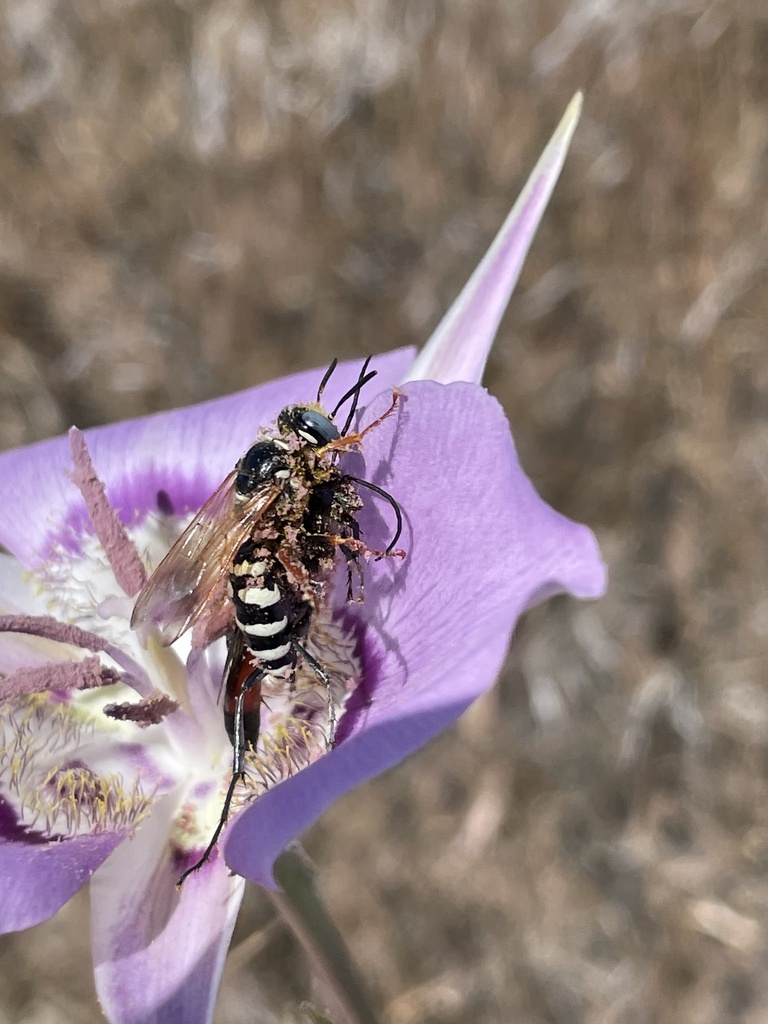
no rights reserved · CC0
Family: Crabronidae · Class: Insecta · Order: Hymenoptera
Conservation status: G2 S2
Philanthus nasalis (Antioch Specid Wasp) is a California animal in the Crabronidae family.
The Antioch sphecid wasp (Philanthus nasalis) is a small, solitary wasp in the family Crabronidae. Males measure approximately 8 mm in length, while females reach 11.5 mm (Bohart 1972). The species is distinguished by its distinctive ivory-colored tergal pattern areas and notable sky-blue eyes, which separate it from related Philanthus species (BugGuide). The wasp displays the typical sphecid body form with a well-defined waist between the thorax and abdomen. Historically, Philanthus nasalis was known from two locations in California: the type locality at Antioch Dunes in Contra Costa County and the Zayante Sandhills of Santa Cruz County (Bohart 1972). The species is believed to be extirpated from the Antioch Dunes, its original discovery site, leaving only the Santa Cruz County population known to persist (BugGuide). This represents a significant range reduction for a species that was already geographically restricted at the time of its scientific description in 1972. The remaining population inhabits sandy dune systems within the Zayante Sandhills ecosystem of Santa Cruz County. This habitat consists of marine-derived sandy soils that support specialized plant communities adapted to the unique substrate conditions. The species appears to be closely tied to these sandy environments, which provide both nesting sites and foraging opportunities. The Zayante Sandhills represent one of California's most threatened ecosystems, with extensive habitat conversion and fragmentation affecting numerous endemic species. As a member of the tribe Philanthini, commonly known as beewolves, P. nasalis likely exhibits typical hunting behavior for the group, provisioning nest cells with paralyzed bee prey to feed developing larvae. Adult wasps are active during the warmer months, with males potentially engaging in territorial behavior around nesting sites. Specific details about host preferences, nesting biology, and seasonal activity patterns for this species remain poorly documented in the scientific literature. Philanthus nasalis holds conservation status as a Species of Concern with the U.S. Fish and Wildlife Service, reflecting its extremely limited distribution and population decline (USFWS ECOS). NatureServe ranks the species as G2 S2, indicating it is imperiled both globally and within California due to rarity and restricted range. The apparent extirpation from Antioch Dunes represents a 50% reduction in known localities, leaving the species dependent on the single remaining population in Santa Cruz County. Primary threats include habitat destruction, urban development pressure, recreational activities that disturb sandy soils, and invasive plant species that alter native plant communities. The small population size and limited distribution make the species particularly vulnerable to stochastic events and environmental changes. Conservation efforts focus on habitat protection within the Zayante Sandhills and monitoring of the remaining population to assess long-term viability.
Classification
Class: Insecta · Order: Hymenoptera · Family: Crabronidae
Conservation status
G2 S2
Frequently asked questions
How is Philanthus nasalis classified?
Philanthus nasalis belongs to class Insecta, order Hymenoptera, family Crabronidae.
What family does Philanthus nasalis belong to?
Philanthus nasalis is in the Crabronidae family.
Is Philanthus nasalis protected or of conservation concern?
Philanthus nasalis carries the following status: G2 S2.
What is Philanthus nasalis?
The Antioch sphecid wasp (Philanthus nasalis) is a small, solitary wasp in the family Crabronidae.
Is Philanthus nasalis found in California?
Yes. Philanthus nasalis is recorded in California in The California Species Project's catalogue.
Related species
Other California species in the same genus, family, or bioregion.
Data from The California Species Project — 14,000+ California species with verified data from CNPS, CDFW, USFWS, and more.