Philodromus cespitum
Turf Running Spider
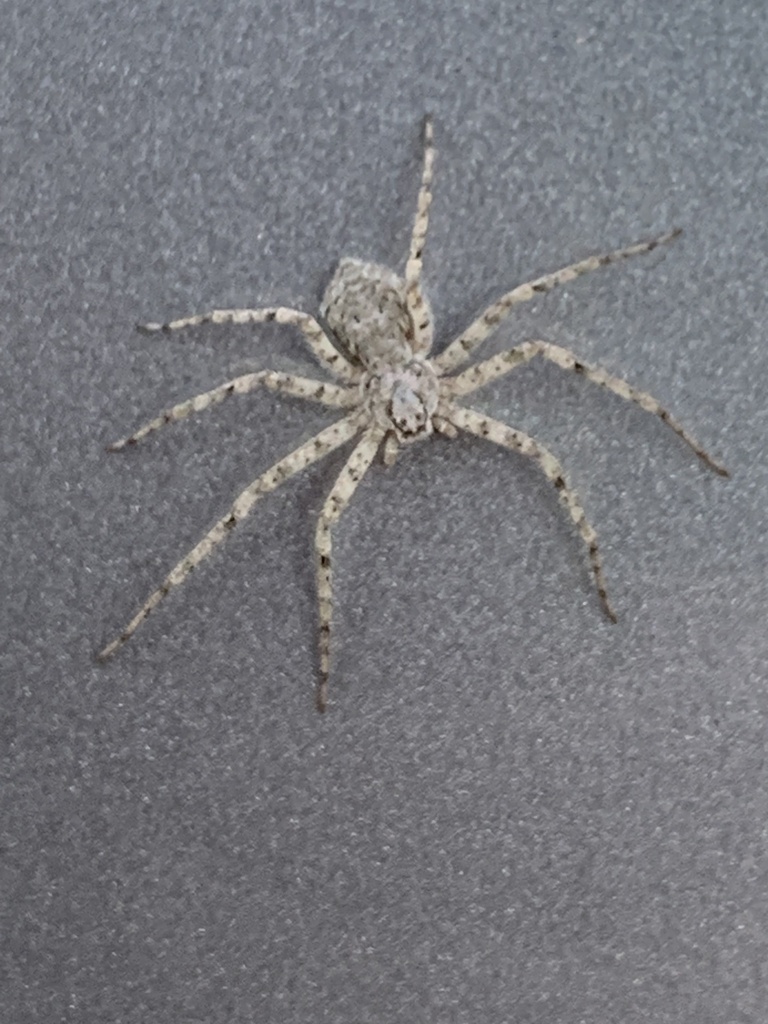
(c) north145, some rights reserved (CC BY) · licence
Family: Philodromidae · Class: Arachnida · Order: Araneae
Philodromus cespitum (Turf Running Spider) is a California animal in the Philodromidae family.
The turf running spider is a small member of the running spider family Philodromidae, characterized by its flattened body form and ability to move rapidly across surfaces. Adults typically measure 4-6 mm in body length, with females slightly larger than males. The cephalothorax is brownish-yellow to reddish-brown with darker markings, while the abdomen displays variable coloration ranging from pale yellow to brown with indistinct patterns. The legs are relatively long and robust, adapted for rapid locomotion, with the front two pairs often longer than the posterior pairs. Males can be distinguished by their darker coloration and modified palpal structures used in mating. Philodromus cespitum has a widespread distribution across North America and Europe, indicating its successful adaptation to temperate climates. In North America, the species occurs from Canada south through the United States, though specific California distribution records remain incompletely documented. According to NatureServe, the species maintains a global conservation status of G5, indicating it is secure across its range (NatureServe 2025). This species inhabits diverse terrestrial environments, showing particular affinity for low-growing vegetation and ground-level microhabitats. The common name "turf running spider" reflects its association with grassy areas, lawns, and similar habitats where it hunts among vegetation. The species also occurs in gardens, agricultural fields, forest edges, and disturbed habitats, demonstrating considerable ecological flexibility. It typically remains close to the ground or on low vegetation rather than constructing aerial webs. Turf running spiders are active hunters that do not build capture webs, instead relying on their speed and agility to pursue prey. They are primarily diurnal, hunting small arthropods including flies, aphids, small beetles, and other soft-bodied insects. The spiders use their excellent eyesight to locate prey and their rapid movements to capture it. Mating typically occurs during warmer months, with males performing courtship displays before approaching females. Females construct silken egg sacs that they guard until the spiderlings emerge and disperse. The species faces no significant conservation concerns, maintaining stable populations throughout its range. Its ability to adapt to human-modified environments, including urban and suburban landscapes, has likely contributed to its continued success. Climate change and habitat modification represent potential long-term concerns, though the species' ecological flexibility suggests resilience to moderate environmental changes. No specific conservation measures are currently recommended for this species, though maintenance of diverse habitat types benefits spider communities generally. The species serves an important ecological role as both predator of pest insects and prey for larger arthropods and small vertebrates.
Classification
Class: Arachnida · Order: Araneae · Family: Philodromidae
Frequently asked questions
How is Philodromus cespitum classified?
Philodromus cespitum belongs to class Arachnida, order Araneae, family Philodromidae.
What family does Philodromus cespitum belong to?
Philodromus cespitum is in the Philodromidae family.
What is Philodromus cespitum?
The turf running spider is a small member of the running spider family Philodromidae, characterized by its flattened body form and ability to move rapidly across surfaces.
Is Philodromus cespitum found in California?
Yes. Philodromus cespitum is recorded in California in The California Species Project's catalogue.
Related species
Other California species in the same genus, family, or bioregion.
Data from The California Species Project — 14,000+ California species with verified data from CNPS, CDFW, USFWS, and more.