Philodromus rufus
White-striped Running Crab Spider
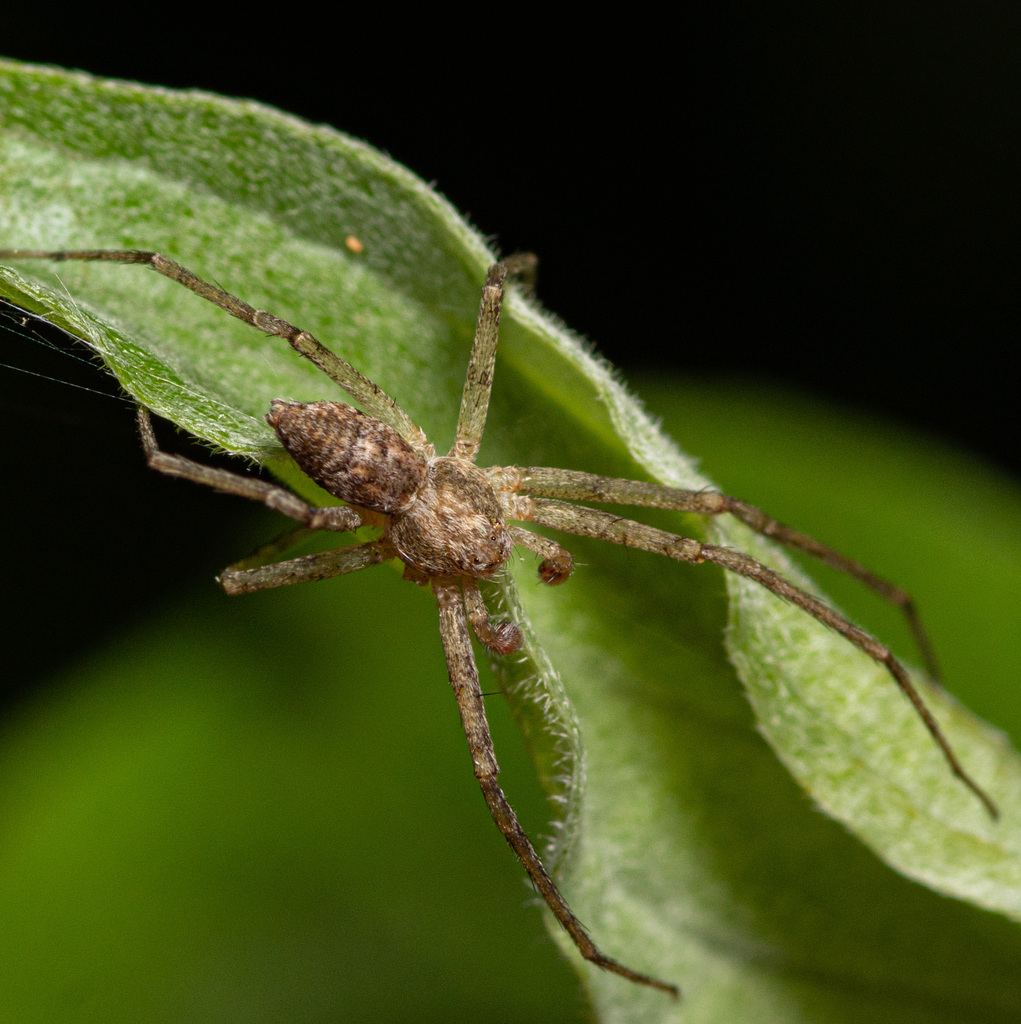
(c) Justin Williams, some rights reserved (CC BY) · licence
Family: Philodromidae · Class: Arachnida · Order: Araneae
Philodromus rufus (White-striped Running Crab Spider) is a California animal in the Philodromidae family.
The White-striped Running Crab Spider (Philodromus rufus) is a medium-sized spider in the family Philodromidae, distinguished by its flattened body and laterally-extended legs characteristic of crab spiders. Adults typically measure 3-5 mm in body length, with females generally larger than males. The species displays sexual dimorphism in coloration: females are typically reddish-brown to yellowish-brown with variable pale striping patterns, while males are often darker with more pronounced markings. The legs are subequal in length, a key distinguishing feature from thomisid crab spiders where the anterior legs are notably longer. Philodromus rufus has a widespread distribution across North America, including California. According to NatureServe, the species has a global conservation status of G5, indicating it is secure globally. The species occurs across multiple habitat types throughout its range, with several recognized subspecies including P. r. pacificus, P. r. quartus, and P. r. vibrans, suggesting considerable geographic variation. This species inhabits diverse plant communities, commonly found on stems and leaves of various vegetation types. Running crab spiders are typically associated with herbaceous plants, shrubs, and low-growing vegetation where they hunt for prey. They show particular affinity for areas with dense plant growth that provides both hunting opportunities and shelter. The species can be found from low elevations to montane areas, adapting to different climatic conditions across California's varied topography. Philodromus rufus is an active predator that does not construct webs for prey capture. Instead, these spiders are cursorial hunters that actively pursue prey on plant surfaces. They feed primarily on small arthropods including flies, aphids, thrips, and other soft-bodied insects. Their hunting strategy involves rapid movement and ambush tactics, using their crab-like leg positioning to quickly grasp prey. The species is largely diurnal, being most active during daylight hours when many of their prey species are also active. Mating typically occurs during warmer months, with females producing egg sacs that are guarded until hatching. As a widespread and adaptable species, Philodromus rufus does not face significant conservation concerns. The species' global status of G5 reflects stable populations across its range (NatureServe). However, like many arthropods dependent on natural vegetation communities, local populations may be affected by habitat modification, urbanization, and agricultural conversion. The species' ability to utilize various plant hosts and habitat types likely contributes to its overall stability. Climate change impacts on plant communities could potentially affect local distributions, but the species' broad ecological tolerance suggests resilience to moderate environmental changes. No specific conservation measures are currently implemented for this species, and it is not listed under federal or state endangered species legislation.
Classification
Class: Arachnida · Order: Araneae · Family: Philodromidae
Frequently asked questions
How is Philodromus rufus classified?
Philodromus rufus belongs to class Arachnida, order Araneae, family Philodromidae.
What family does Philodromus rufus belong to?
Philodromus rufus is in the Philodromidae family.
What is Philodromus rufus?
The White-striped Running Crab Spider (Philodromus rufus) is a medium-sized spider in the family Philodromidae, distinguished by its flattened body and laterally-extended legs characteristic of crab spiders.
Is Philodromus rufus found in California?
Yes. Philodromus rufus is recorded in California in The California Species Project's catalogue.
Related species
Other California species in the same genus, family, or bioregion.
Data from The California Species Project — 14,000+ California species with verified data from CNPS, CDFW, USFWS, and more.