Phoca vitulina
Harbor Seal
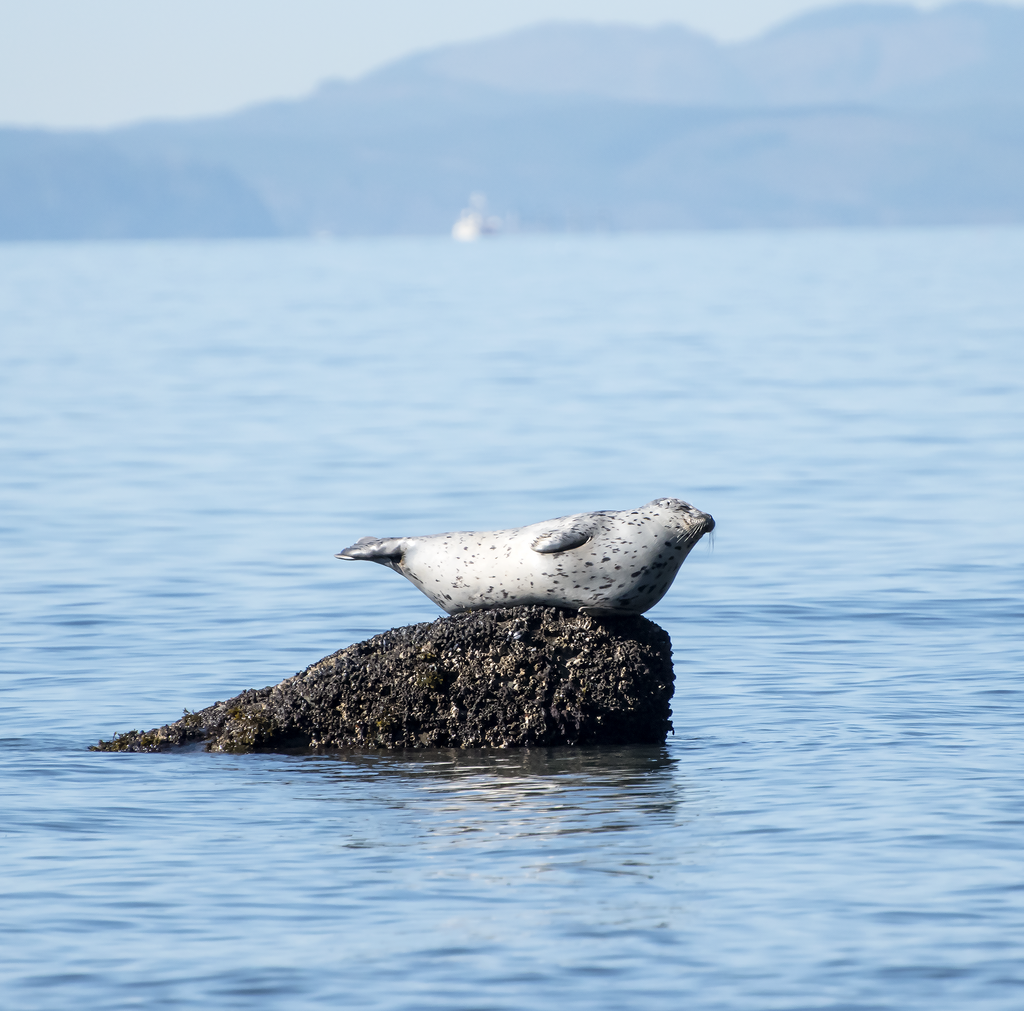
(c) David Badke, some rights reserved (CC BY-SA) · licence
Family: Phocidae · Class: Mammalia · Order: Carnivora
Phoca vitulina (Harbor Seal) is a California animal in the Phocidae family.
The harbor seal is a medium-sized pinniped with adults measuring 1.2 to 1.9 meters (4 to 6 feet) in length and weighing 55 to 168 kilograms (120 to 370 pounds), with males typically larger than females. The species exhibits variable coloration ranging from cream to dark brown or gray, often with lighter and darker spots or rings creating a mottled pattern. Harbor seals have a distinctively rounded head with large, dark eyes and V-shaped nostrils that close underwater. Unlike sea lions, they lack external ear flaps and have short fore-flippers with visible claws. Harbor seals occur along the entire California coast from the Oregon border to Mexico, inhabiting nearshore marine waters, estuaries, and coastal lagoons. The California population represents the southern extent of the Pacific harbor seal subspecies Phoca vitulina richardii. Major pupping areas include the Channel Islands, Monterey Bay, San Francisco Bay, Humboldt Bay, and Point Reyes. According to NOAA Fisheries, the California stock is estimated at approximately 31,600 individuals as of recent surveys. The species utilizes sandy beaches, rocky shores, mudflats, and marina docks as haul-out sites for resting, thermoregulation, and social interactions. Harbor seals prefer protected waters less than 100 meters deep and typically remain within 50 kilometers of shore. Pupping sites require proximity to productive foraging areas and freedom from human disturbance. The species demonstrates strong site fidelity, with individuals returning to the same haul-out locations repeatedly. Harbor seals are opportunistic feeders consuming a diverse diet of fish, squid, and crustaceans. Primary prey species include anchovies, sardines, mackerel, rockfish, and market squid, with diet varying seasonally and geographically. Adults can dive to depths exceeding 400 meters and hold their breath for up to 30 minutes while foraging. Breeding occurs annually with a rigid seasonal pattern. Mating takes place in water during late summer following pupping season. Females give birth to a single pup after an 11-month gestation period that includes a 3-month delayed implantation. Pupping in California occurs primarily from February through May, peaking in March and April. Harbor seals were protected under the Marine Mammal Protection Act of 1972, which prohibited hunting and harassment. The California population has recovered substantially since protection began, growing from an estimated low of fewer than 10,000 individuals in the 1970s. Current threats include entanglement in fishing gear, boat strikes, pollution, disease outbreaks, and climate change effects on prey availability. El Niño events can cause temporary population declines through reduced pup survival. The species is not currently listed under the Endangered Species Act, and NOAA Fisheries considers the California stock not depleted as of 2025.
Classification
Class: Mammalia · Order: Carnivora · Family: Phocidae
Frequently asked questions
How is Phoca vitulina classified?
Phoca vitulina belongs to class Mammalia, order Carnivora, family Phocidae.
What family does Phoca vitulina belong to?
Phoca vitulina is in the Phocidae family.
What is Phoca vitulina?
The harbor seal is a medium-sized pinniped with adults measuring 1.2 to 1.9 meters (4 to 6 feet) in length and weighing 55 to 168 kilograms (120 to 370 pounds), with males typically larger than females.
Is Phoca vitulina found in California?
Yes. Phoca vitulina is recorded in California in The California Species Project's catalogue.
Related species
Other California species in the same genus, family, or bioregion.
Data from The California Species Project — 14,000+ California species with verified data from CNPS, CDFW, USFWS, and more.