Phocoena sinus
Cochito
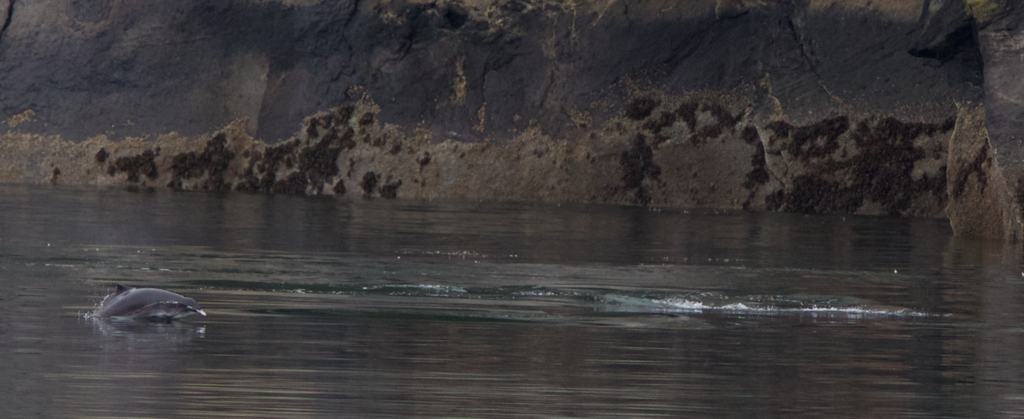
(c) Nodnarb Nedloh, some rights reserved (CC BY-SA) · licence
Family: Phocoenidae · Class: Mammalia · Order: Cetacea
Conservation status: Endangered
Phocoena sinus (Cochito) is a California animal in the Phocoenidae family.
The vaquita (Phocoena sinus), also known as cochito, is the world's smallest porpoise and most endangered marine mammal. Adults measure 120-150 cm (4-5 feet) in length and weigh 30-55 kg (66-121 pounds). Females are slightly larger than males. The species is distinguished by dark rings around the eyes and lips, giving it a distinctive facial pattern. The dorsal surface is dark gray, fading to lighter gray on the sides and white on the ventral surface. The dorsal fin is triangular and proportionally tall for a porpoise. Vaquitas are endemic to the upper Gulf of California (Sea of Cortez), Mexico, representing the most geographically restricted range of any marine mammal. Their distribution is limited to the shallow, turbid waters of the northern Gulf, primarily between the Colorado River delta and San Felipe. While listed as endangered "wherever found" under the U.S. Endangered Species Act, the species does not occur in U.S. waters. The species inhabits shallow coastal waters typically less than 50 meters deep, preferring areas with high turbidity and strong tidal mixing. According to SeaLifeBase, vaquitas are found in murky coastal waters where the Colorado River historically created nutrient-rich conditions. They favor areas with sandy and muddy bottoms where upwelling and tidal action create productive feeding zones. Vaquitas are non-migratory and maintain small home ranges year-round. They feed primarily on small fish, squid, and crustaceans found in the water column and near the bottom. The species exhibits unobtrusive swimming behavior, rarely leaping or creating surface disturbance, making them difficult to observe (Animal Diversity Web). Reproduction is slow, with females reaching sexual maturity at 3-6 years and producing single calves every 1-2 years after an 11-month gestation period. The vaquita faces imminent extinction due to entanglement in gillnets set for the totoaba (Totoaba macdonaldi), an endangered fish whose swim bladder is highly valued in illegal trade. According to Animal Diversity Web, vaquitas are often caught in fishing nets, making them perhaps the most endangered of the cetaceans. Population estimates have declined catastrophically from approximately 600 individuals in 1997 to fewer than 10 individuals as of recent surveys. The species was listed as endangered under the U.S. Endangered Species Act due to its critical conservation status. Despite international conservation efforts including gillnet bans, enhanced enforcement, and alternative fishing gear programs, the population continues to decline. The Mexican government has implemented fishing restrictions and established the Vaquita Refuge, but illegal fishing for totoaba persists. Without immediate and effective elimination of gillnet fishing in vaquita habitat, the species will likely become extinct within years, representing an irreversible loss of marine biodiversity in the Gulf of California ecosystem.
Classification
Class: Mammalia · Order: Cetacea · Family: Phocoenidae
Conservation status
Endangered
Frequently asked questions
How is Phocoena sinus classified?
Phocoena sinus belongs to class Mammalia, order Cetacea, family Phocoenidae.
What family does Phocoena sinus belong to?
Phocoena sinus is in the Phocoenidae family.
Is Phocoena sinus protected or of conservation concern?
Phocoena sinus carries the following status: Endangered.
What is Phocoena sinus?
The vaquita (Phocoena sinus), also known as cochito, is the world's smallest porpoise and most endangered marine mammal.
Is Phocoena sinus found in California?
Yes. Phocoena sinus is recorded in California in The California Species Project's catalogue.
Related species
Other California species in the same genus, family, or bioregion.
Data from The California Species Project — 14,000+ California species with verified data from CNPS, CDFW, USFWS, and more.