Phoebastria albatrus
Short-tailed albatross
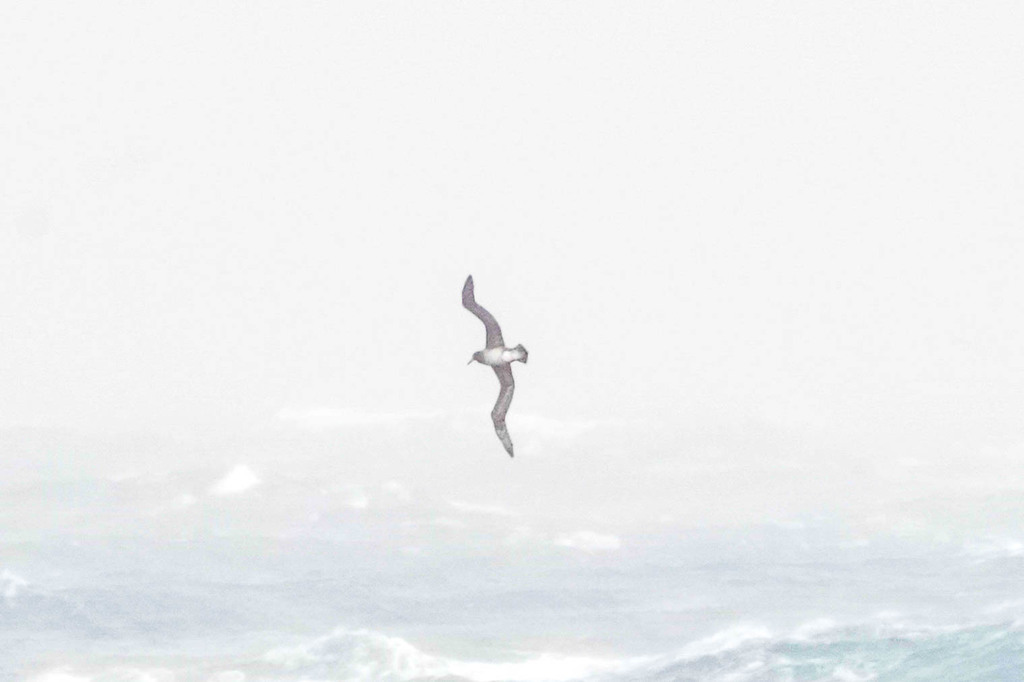
(c) WATANABE Hitoshi 渡辺仁, some rights reserved (CC BY) · licence
Family: Diomedeidae · Class: Aves · Order: Procellariiformes
Conservation status: Endangered · G1 S1
Phoebastria albatrus (Short-tailed albatross) is a California animal in the Diomedeidae family.
The short-tailed albatross is the largest seabird in the North Pacific Ocean, with adults measuring 84 to 94 cm (33 to 37 inches) in length and weighing 4.3 to 8.5 kg (9.5 to 18.7 pounds). The wingspan reaches 2.1 to 2.3 meters (6.9 to 7.5 feet). Adults display distinctive white plumage with a golden-yellow head and neck, black wing tips and trailing edges, and a large pink bill with a hooked tip. Juveniles are entirely dark brown, gradually acquiring adult plumage over several years through intermediate stages showing variable amounts of white and brown. Historically, short-tailed albatross ranged throughout the North Pacific from Japan to Alaska and south to California and Mexico. The species was nearly extinct by the 1940s due to commercial hunting on breeding colonies. Current breeding occurs exclusively on Torishima Island, Japan, with a small colony established on Minami-kojima in the Senkaku Islands. At sea, the species ranges across the North Pacific, with individuals regularly observed in California waters, particularly around the Farallon Islands, Monterey Bay, and offshore areas along the central and northern coast. The species inhabits pelagic marine environments, foraging over continental shelf waters and upwelling zones rich in prey. During the breeding season, short-tailed albatross nest on volcanic islands with steep grassy slopes and cliff edges. At sea, they utilize surface waters and areas where currents concentrate prey items. Short-tailed albatross are opportunistic feeders, consuming squid, fish, and crustaceans through surface seizing, shallow diving, and scavenging. They follow fishing vessels to feed on offal and discards. The species exhibits typical albatross breeding biology, with pairs forming long-term monogamous bonds. Breeding occurs biennially, with a single egg laid in late October or November. The incubation period lasts approximately 65 days, followed by a chick-rearing period of five to six months. Sexual maturity is reached at 6 to 8 years of age. The U.S. Fish and Wildlife Service listed the short-tailed albatross as endangered under the Endangered Species Act on August 30, 2000, correcting an earlier oversight when the species was omitted from the 1970 list of endangered native species despite occurring in United States waters. According to the California Department of Fish and Wildlife, the species is synonymous with Diomedea albatrus and maintains a G1 S1 conservation ranking, indicating extreme rarity both globally and within California. The global population has recovered from fewer than 50 individuals in the 1950s to approximately 7,400 birds as of recent counts, with the breeding population showing steady annual increases of 6 to 7 percent. Primary threats include potential volcanic activity on breeding islands, climate change impacts on marine food webs, plastic pollution, and incidental take in commercial fisheries. Recovery efforts focus on establishing additional breeding colonies and reducing fishery interactions through modified gear and practices.
Classification
Class: Aves · Order: Procellariiformes · Family: Diomedeidae
Conservation status
Endangered · G1 S1
Frequently asked questions
How is Phoebastria albatrus classified?
Phoebastria albatrus belongs to class Aves, order Procellariiformes, family Diomedeidae.
What family does Phoebastria albatrus belong to?
Phoebastria albatrus is in the Diomedeidae family.
Is Phoebastria albatrus protected or of conservation concern?
Phoebastria albatrus carries the following status: Endangered · G1 S1.
What is Phoebastria albatrus?
The short-tailed albatross is the largest seabird in the North Pacific Ocean, with adults measuring 84 to 94 cm (33 to 37 inches) in length and weighing 4.3 to 8.5 kg (9.5 to 18.7 pounds).
Is Phoebastria albatrus found in California?
Yes. Phoebastria albatrus is recorded in California in The California Species Project's catalogue.
Related species
Other California species in the same genus, family, or bioregion.
Data from The California Species Project — 14,000+ California species with verified data from CNPS, CDFW, USFWS, and more.