Phoebastria immutabilis
Laysan Albatross
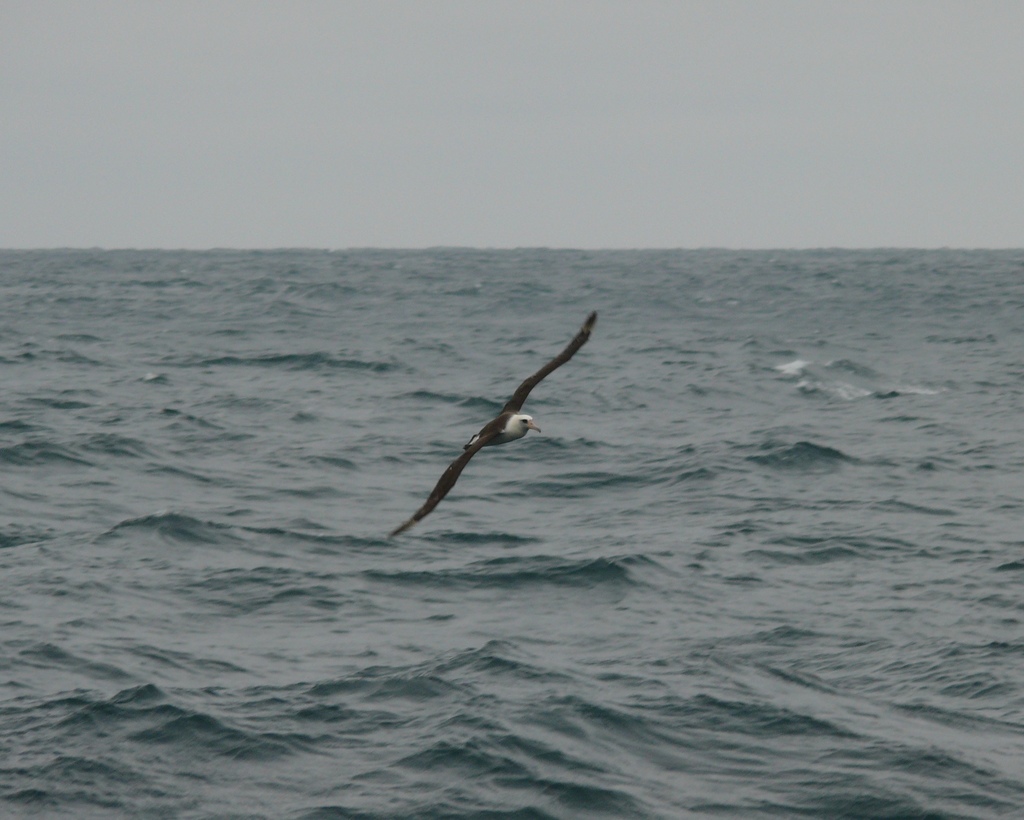
(c) Robert Webster, some rights reserved (CC BY-SA) · licence
Family: Diomedeidae · Class: Aves · Order: Procellariiformes
Phoebastria immutabilis (Laysan Albatross) is a California animal in the Diomedeidae family.
The Laysan Albatross is a large seabird with distinctive black-and-white plumage and exceptional flight capabilities, able to glide for hours without flapping. Adults measure 79 to 81 centimeters (31 to 32 inches) in length with a wingspan reaching 195 to 203 centimeters (77 to 80 inches). The species weighs between 2.4 to 4.1 kilograms (5.3 to 9.0 pounds). Adults display white bodies and heads with dark gray-brown backs and upper wing surfaces. The underwing shows characteristic black margins and variable black markings. A distinctive dark patch surrounds the eye, and the large hooked bill is yellow-orange with a dark tip. Juveniles appear similar to adults but with more extensive dark markings on the head and neck. Historically, Laysan Albatross bred primarily on islands in the Northwestern Hawaiian Islands, with the largest colonies on Laysan Island and Midway Atoll. The species has expanded its breeding range in recent decades, establishing new colonies on islands along the Pacific Coast, including the Channel Islands off California. Small numbers now nest on Guadalupe Island off Baja California, Mexico. During non-breeding periods, these albatrosses range widely across the North Pacific Ocean, from the Aleutian Islands to waters off California and Mexico. Laysan Albatross nest on flat, open areas of oceanic islands, typically on sandy or grassy terrain with minimal vegetation. Breeding sites are often located on clifftops or elevated areas that provide favorable wind conditions for takeoff. At sea, the species utilizes oceanic waters over the continental shelf and beyond, particularly areas with upwelling that support abundant prey populations. They are most commonly observed in waters with surface temperatures between 10 to 25 degrees Celsius. These albatrosses are highly efficient gliders, using dynamic soaring techniques to travel vast distances with minimal energy expenditure. They feed primarily by surface-seizing and shallow diving, consuming squid, fish, and crustaceans. Flying fish eggs and fish spawn constitute important seasonal food sources. Laysan Albatross are monogamous with complex courtship displays involving synchronized dancing, bill-fencing, and vocalizations. Breeding occurs annually, with females laying a single white egg between November and December. Both parents share incubation duties for approximately 64 days, and chicks fledge after 160 to 170 days. The Laysan Albatross is not federally listed under the Endangered Species Act, though populations face multiple conservation challenges. According to NOAA Fisheries, the global population is estimated at approximately 2.5 million individuals, with roughly 590,000 breeding pairs. Primary threats include plastic pollution and marine debris ingestion, which affects chick survival rates. Commercial fishing operations pose risks through bycatch in longline and gillnet fisheries. Climate change impacts breeding habitat through sea-level rise and altered storm patterns. Lead poisoning from paint on military structures historically affected Midway Atoll populations, though remediation efforts have reduced this threat. The species benefits from protected status on breeding islands and international agreements addressing seabird bycatch in fisheries.
Classification
Class: Aves · Order: Procellariiformes · Family: Diomedeidae
Frequently asked questions
How is Phoebastria immutabilis classified?
Phoebastria immutabilis belongs to class Aves, order Procellariiformes, family Diomedeidae.
What family does Phoebastria immutabilis belong to?
Phoebastria immutabilis is in the Diomedeidae family.
What is Phoebastria immutabilis?
The Laysan Albatross is a large seabird with distinctive black-and-white plumage and exceptional flight capabilities, able to glide for hours without flapping.
Is Phoebastria immutabilis found in California?
Yes. Phoebastria immutabilis is recorded in California in The California Species Project's catalogue.
Related species
Other California species in the same genus, family, or bioregion.
Data from The California Species Project — 14,000+ California species with verified data from CNPS, CDFW, USFWS, and more.