Phoebis sennae
Cloudless Sulphur
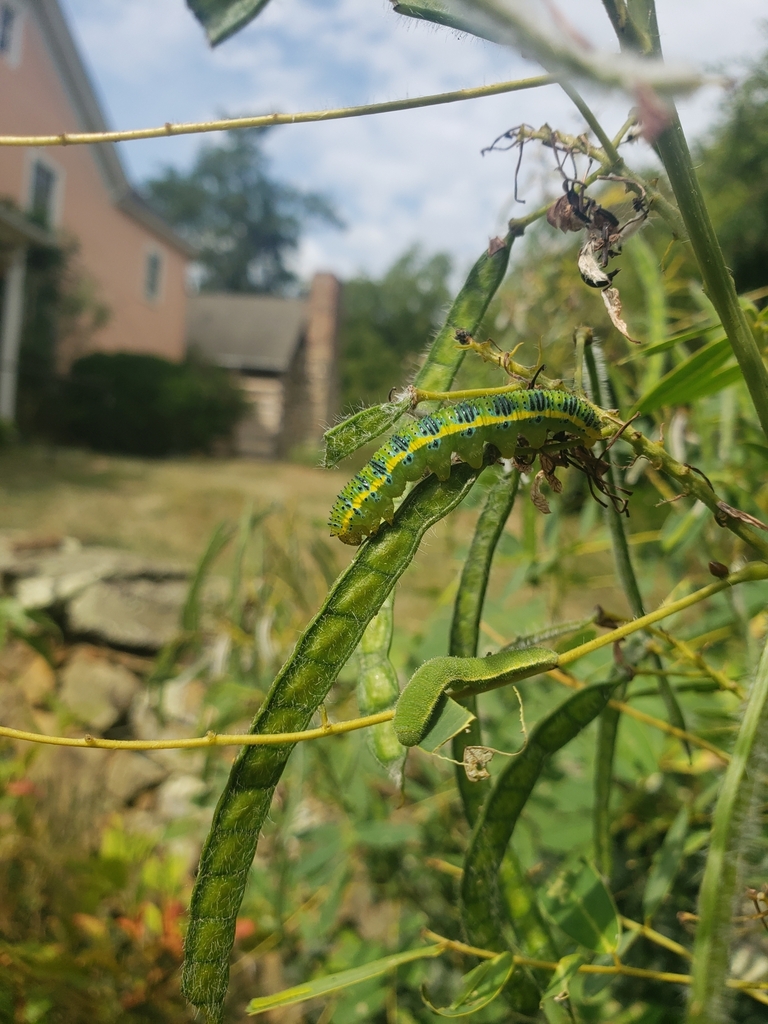
no rights reserved · CC0
Family: Pieridae · Class: Insecta · Order: Lepidoptera
Phoebis sennae (Cloudless Sulphur) is a California animal in the Pieridae family.
The Cloudless Sulphur is a large butterfly in the family Pieridae, with males exhibiting bright lemon-yellow wings and females displaying pale yellow to white coloration with darker wing borders. Males measure 60-65 mm (2.4-2.6 inches) in wingspan, while females are slightly larger at 65-75 mm (2.6-3.0 inches). The species lacks the dark wing borders typical of other sulphur butterflies, giving it the 'cloudless' appearance. Females often show subtle orange markings on the forewings and may have a small dark spot on each hindwing. The undersurfaces are pale yellow with fine pink markings, and both sexes have relatively pointed forewings. The Cloudless Sulphur maintains permanent resident populations from Argentina north to southern Texas and the Deep South. The species functions as a regular visitor and occasional colonist throughout most of the eastern United States and the Southwest, including California. In California, the butterfly appears primarily as a migrant and temporary colonist, with sightings recorded from the Central Valley through Southern California. Population establishment depends on the availability of suitable host plants and favorable climatic conditions. The species inhabits open areas including gardens, parks, roadsides, desert washes, and agricultural edges where host plants occur. Cloudless Sulphurs prefer sunny locations with access to nectar sources and are commonly observed in areas with lantana, bougainvillea, and other flowering shrubs. The butterfly tolerates a wide range of elevations from sea level to approximately 1,500 meters (4,900 feet) and adapts to both humid and arid environments. Cloudless Sulphurs are strong fliers capable of long-distance migration, with individuals traveling hundreds of miles during seasonal movements. The species exhibits multiple generations per year in warmer climates, with continuous breeding occurring in permanent populations. Females deposit single, cream-colored eggs on leaves and flower buds of Cassia species in the pea family (Fabaceae), including wild senna and other native and cultivated sennas. Caterpillars are green with yellow lateral stripes and develop through five instars over approximately three weeks. Adults are active throughout daylight hours and feed on nectar from a variety of flowers, showing particular preference for red and orange blooms. The Cloudless Sulphur holds no federal or state conservation listing status and is considered secure throughout most of its range. The species benefits from urban and suburban landscaping that incorporates host plants and nectar sources. Climate change may be expanding the butterfly's range northward, with increased reports of temporary colonization in previously unsuitable areas. In California, population persistence depends on continued availability of Cassia species, which include both native plants such as desert senna and introduced ornamental species. The butterfly's strong dispersal ability and broad host plant usage contribute to its overall population stability.
Classification
Class: Insecta · Order: Lepidoptera · Family: Pieridae
Frequently asked questions
How is Phoebis sennae classified?
Phoebis sennae belongs to class Insecta, order Lepidoptera, family Pieridae.
What family does Phoebis sennae belong to?
Phoebis sennae is in the Pieridae family.
What is Phoebis sennae?
The Cloudless Sulphur is a large butterfly in the family Pieridae, with males exhibiting bright lemon-yellow wings and females displaying pale yellow to white coloration with darker wing borders.
Is Phoebis sennae found in California?
Yes. Phoebis sennae is recorded in California in The California Species Project's catalogue.
Related species
Other California species in the same genus, family, or bioregion.
Data from The California Species Project — 14,000+ California species with verified data from CNPS, CDFW, USFWS, and more.