Pholcus phalangioides
Long-bodied Cellar Spider
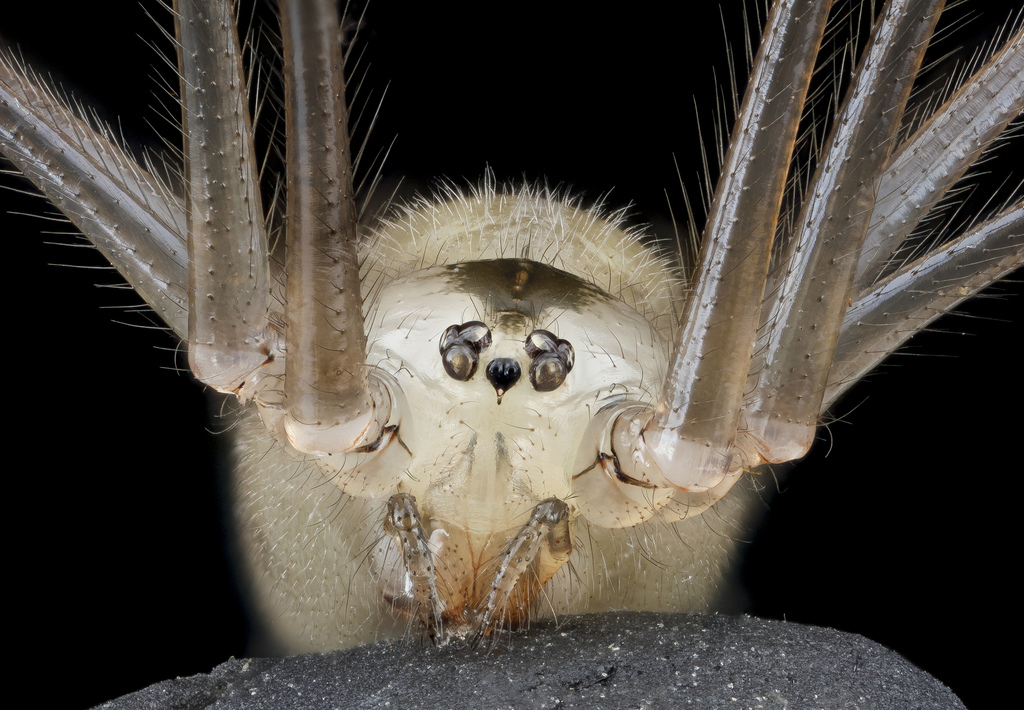
no rights reserved · CC0
Family: Pholcidae · Class: Arachnida · Order: Araneae
Pholcus phalangioides (Long-bodied Cellar Spider) is a California animal in the Pholcidae family.
The long-bodied cellar spider is a medium-sized arachnid with extremely long, thin legs and a relatively small body. Adult females measure 7-10 mm (0.3-0.4 inches) in body length, while males are slightly smaller at 6-9 mm. The legs can span up to 50 mm (2 inches), creating the characteristic elongated appearance. The body is pale yellow to light brown with darker markings, and the abdomen is cylindrical and elongated. The species can be distinguished from other cellar spiders by its longer legs relative to body size and the presence of a pronounced constriction between the cephalothorax and abdomen (BugGuide 2025). Pholcus phalangioides has a cosmopolitan distribution, occurring on all continents except Antarctica. Originally native to Europe, this species has been widely introduced through human commerce and is now established throughout North America, including California. In California, populations are documented from coastal areas to inland valleys, typically associated with human structures. The species is considered globally secure with a conservation rank of G5 according to NatureServe (NatureServe 2025). This species inhabits human-modified environments almost exclusively, earning its common name from its preference for cellars, basements, garages, and other dark, humid spaces. They construct irregular, three-dimensional webs in corners of buildings, under stairs, and in similar protected locations. The webs lack the geometric precision of orb weavers but are effective at capturing small flying insects. Long-bodied cellar spiders prefer temperatures between 15-25°C (59-77°F) and relative humidity above 70 percent. Long-bodied cellar spiders are sit-and-wait predators that feed primarily on small flying insects including flies, mosquitoes, moths, and other spiders. When threatened, they exhibit a distinctive defensive behavior of rapidly vibrating their webs, making their bodies appear blurred and potentially confusing predators. Mating occurs throughout the year in indoor environments. Females carry their egg sacs in their chelicerae (mouthparts) for approximately three weeks until the spiderlings emerge. A single female can produce multiple egg sacs annually, each containing 20-30 eggs. The species exhibits maternal care, with females remaining near their offspring for several days after emergence (BugGuide 2025). As a non-native species, Pholcus phalangioides is not subject to conservation protection and faces no significant threats to its populations. The species benefits from human activity and urban development, which provides abundant suitable habitat. While some studies have raised questions about potential impacts on native spider communities, the long-bodied cellar spider primarily occupies anthropogenic habitats that offer limited resources for native species. The species serves as a beneficial predator of household pests, contributing to natural pest control in residential and commercial buildings. Current populations appear stable and expanding, particularly in urban and suburban areas throughout California.
Classification
Class: Arachnida · Order: Araneae · Family: Pholcidae
Frequently asked questions
How is Pholcus phalangioides classified?
Pholcus phalangioides belongs to class Arachnida, order Araneae, family Pholcidae.
What family does Pholcus phalangioides belong to?
Pholcus phalangioides is in the Pholcidae family.
What is Pholcus phalangioides?
The long-bodied cellar spider is a medium-sized arachnid with extremely long, thin legs and a relatively small body.
Is Pholcus phalangioides found in California?
Yes. Pholcus phalangioides is recorded in California in The California Species Project's catalogue.
Related species
Other California species in the same genus, family, or bioregion.
Data from The California Species Project — 14,000+ California species with verified data from CNPS, CDFW, USFWS, and more.