Photinus knulli
Southwest synchronous firefly
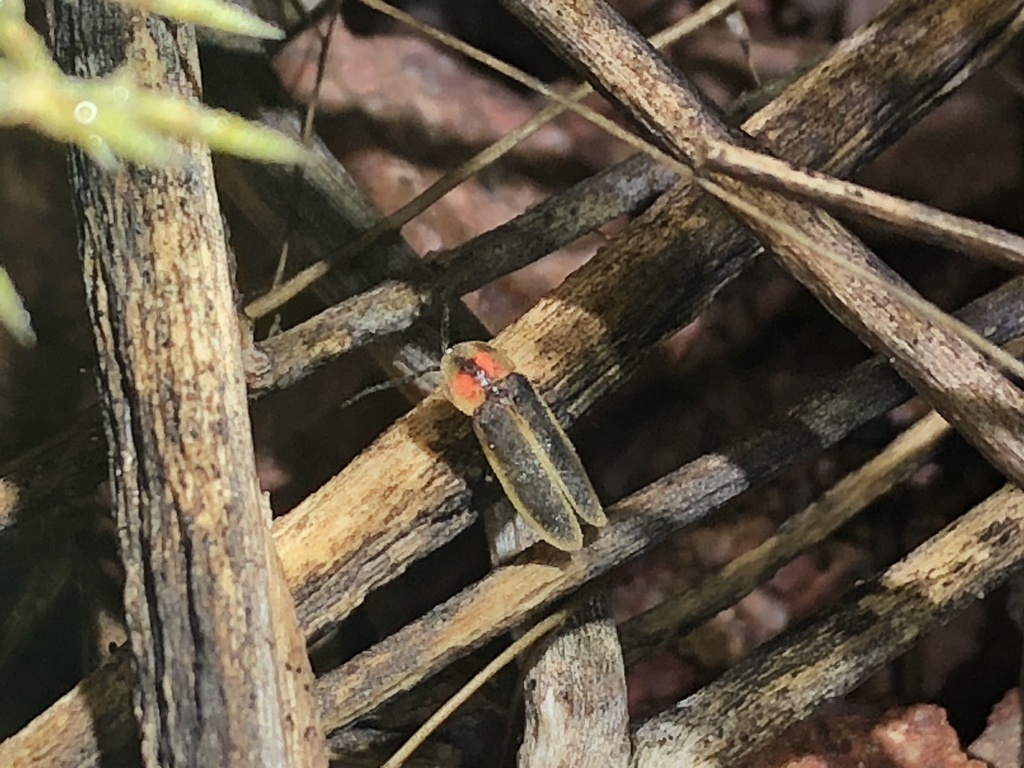
(c) Jared Shorma, some rights reserved (CC BY) · licence
Family: Lampyridae · Class: Insecta · Order: Coleoptera
Photinus knulli (Southwest synchronous firefly) is a California animal in the Lampyridae family.
The Southwest synchronous firefly is a small beetle in the family Lampyridae that produces synchronized bioluminescent displays. Adults typically measure 8 to 12 millimeters (0.3 to 0.5 inches) in length, with the characteristic elongated body form of fireflies. Males possess large, prominent eyes and well-developed flight wings, while females are smaller with reduced wings. The species displays the typical firefly coloration of dark brown to black elytra with lighter markings on the pronotum. Photinus knulli occurs primarily in southeastern Arizona and extends into northern Sonora, Mexico (NatureServe Explorer). Within Arizona, the species has been documented from riparian areas in the Sonoran Desert region. The distribution appears highly localized, with populations concentrated along permanent and semi-permanent water sources in desert mountain ranges. This limited range makes the species particularly vulnerable to habitat modifications and water availability changes. The Southwest synchronous firefly inhabits riparian corridors and associated wetland areas in desert environments. Adults are typically found near streams, springs, and other permanent water sources where vegetation provides both shelter and prey habitat. The species requires areas with sufficient moisture to support both adult activity and larval development. Elevation ranges are not well documented, but observations suggest the species occurs in lower elevation desert riparian zones. This species exhibits the synchronous flashing behavior that gives it its common name, with multiple individuals coordinating their light displays in unified patterns. Males fly and flash to attract mates, while females respond with species-specific flash patterns from vegetation or ground positions. The synchronized displays typically occur during evening hours in optimal weather conditions. Larvae are predatory, feeding on soft-bodied invertebrates in moist soil and leaf litter environments. Adult ecology and specific prey relationships remain poorly documented. The Southwest synchronous firefly faces significant conservation challenges due to its limited distribution and specialized habitat requirements. While not federally listed, the species is considered one of only two flashing firefly species in Arizona, alongside the Southwest spring firefly (Bicellonycha wickershamorum) (Xerces Society). Primary threats include habitat loss and degradation of riparian areas, groundwater depletion affecting water sources, and the impacts of climate change on desert water availability. Urban development and water diversion projects pose additional risks to remaining populations. Light pollution from increasing development may interfere with mating behaviors by disrupting the visual communication essential for reproduction. The species' restricted range and apparent rarity make it particularly vulnerable to local extinction events. Current regulatory protections are limited, and no species-specific management plans exist for this firefly. Scientific documentation for this species remains limited, with much of its basic biology and population status requiring further research.
Classification
Class: Insecta · Order: Coleoptera · Family: Lampyridae
Frequently asked questions
How is Photinus knulli classified?
Photinus knulli belongs to class Insecta, order Coleoptera, family Lampyridae.
What family does Photinus knulli belong to?
Photinus knulli is in the Lampyridae family.
What is Photinus knulli?
The Southwest synchronous firefly is a small beetle in the family Lampyridae that produces synchronized bioluminescent displays.
Is Photinus knulli found in California?
Yes. Photinus knulli is recorded in California in The California Species Project's catalogue.
Related species
Other California species in the same genus, family, or bioregion.
Data from The California Species Project — 14,000+ California species with verified data from CNPS, CDFW, USFWS, and more.