Phragmatobia fuliginosa
Ruby Tiger Moth
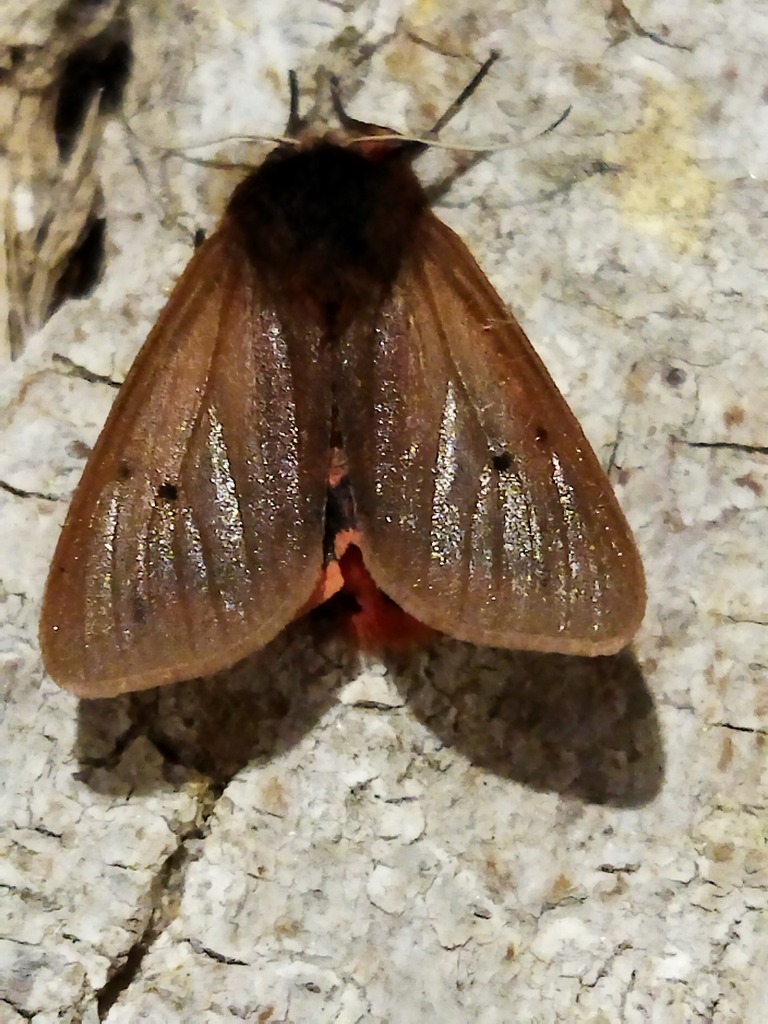
(c) SteveM4560, some rights reserved (CC BY) · licence
Family: Erebidae · Class: Insecta · Order: Lepidoptera
Phragmatobia fuliginosa (Ruby Tiger Moth) is a California animal in the Erebidae family.
The Ruby Tiger Moth (Phragmatobia fuliginosa) is a medium-sized moth in the family Erebidae, subfamily Arctiinae. Adults have a wingspan of 30 to 45 mm (1.2 to 1.8 inches). The forewings are typically dark brown to reddish-brown with variable patterns of pale spots or streaks. The hindwings are bright red or orange-red with black spots or borders, giving the species its common name. Males are generally smaller than females and have more feathered antennae. The thorax is covered in dense, dark hair-like scales, while the abdomen shows alternating bands of red and black coloration. This holarctic species has a broad distribution across northern regions of both Eurasia and North America. In North America, the subspecies P. f. rubricosa occurs from Alaska and Canada south through the northern United States, including California's mountainous regions. The species is found at various elevations but is most common in cooler, northern latitudes and higher elevation sites in temperate zones. Ruby Tiger Moths inhabit diverse environments including grasslands, meadows, woodland edges, wetlands, and disturbed areas. Adults are active from late spring through early fall, with peak flight periods typically occurring in summer months. The species can complete one to two generations per year depending on latitude and local climate conditions. In warmer regions, multiple broods may occur, while northern populations typically have a single annual generation. Larvae, known as woolly bears, are highly polyphagous feeders utilizing numerous host plants including dock (Rumex species), Eupatorium species, goldenrod (Solidago species), ironweed (Vernonia species), plantain (Plantago species), skunk cabbage (Symplocarpus foetidus), sunflowers (Helianthus species), sweetgale (Myrica gale), and various other herbaceous plants. This broad host range contributes to the species' widespread distribution and ecological adaptability. Caterpillars are covered in dense, bristly setae that provide protection from predators and environmental conditions. They overwinter as larvae in protected locations and pupate in spring within loose cocoons constructed of silk and larval hairs. Adults are primarily nocturnal and are attracted to artificial lights. Mating occurs during evening and nighttime hours, with females depositing eggs singly or in small clusters on host plant foliage. The species exhibits seasonal variation in coloration and size, with spring-emerging adults often differing from summer generations in wing pattern intensity and overall size. Ruby Tiger Moths are not currently listed under federal or state endangered species legislation and appear to maintain stable populations across their range. The species' polyphagous larval feeding habits and adaptability to various habitats contribute to its conservation security. Climate change may affect northern populations through habitat shifts, but the species' broad ecological tolerance suggests resilience to moderate environmental changes. No specific conservation measures are currently required for this species.
Classification
Class: Insecta · Order: Lepidoptera · Family: Erebidae
Frequently asked questions
How is Phragmatobia fuliginosa classified?
Phragmatobia fuliginosa belongs to class Insecta, order Lepidoptera, family Erebidae.
What family does Phragmatobia fuliginosa belong to?
Phragmatobia fuliginosa is in the Erebidae family.
What is Phragmatobia fuliginosa?
The Ruby Tiger Moth (Phragmatobia fuliginosa) is a medium-sized moth in the family Erebidae, subfamily Arctiinae.
Is Phragmatobia fuliginosa found in California?
Yes. Phragmatobia fuliginosa is recorded in California in The California Species Project's catalogue.
Related species
Other California species in the same genus, family, or bioregion.
Data from The California Species Project — 14,000+ California species with verified data from CNPS, CDFW, USFWS, and more.