Phryganidia californica
California Oak Moth
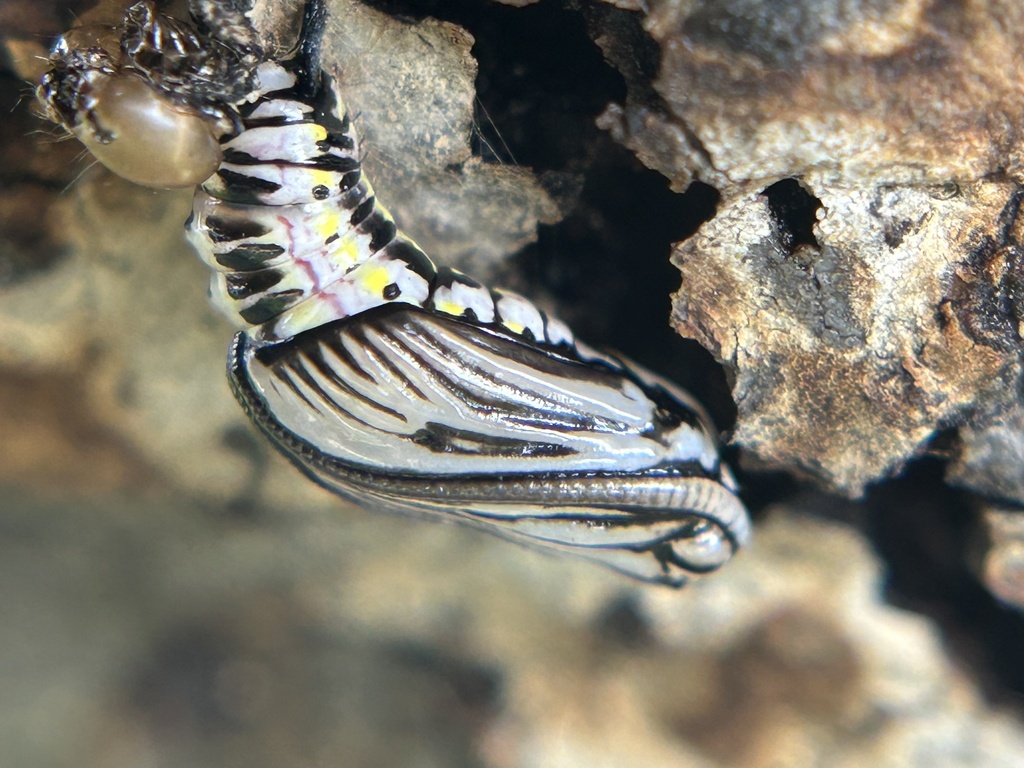
no rights reserved · CC0
Family: Notodontidae · Class: Insecta · Order: Lepidoptera
Phryganidia californica (California Oak Moth) is a California animal in the Notodontidae family.
The California oak moth (Phryganidia californica), also known as the California oakworm, is a medium-sized moth in the family Notodontidae endemic to California and Baja California. Adults have a wingspan of 25 to 40 mm (1.0 to 1.6 inches), with males typically smaller than females. The forewings are pale gray to brownish-gray with darker gray crosslines and a distinct white spot near the center. The hindwings are lighter, appearing whitish to pale gray. Males possess feathery antennae, while females have thread-like antennae. The species exhibits sexual dimorphism, with males having more slender bodies and broader, more feathered antennae adapted for detecting female pheromones. Phryganidia californica occurs throughout California's oak woodland regions, from sea level to approximately 1,500 meters (4,900 feet) elevation. The species ranges from Humboldt and Shasta counties in the north to San Diego County in the south, extending into Baja California, Mexico. Historical records document populations in the Coast Ranges, Sierra Nevada foothills, and Transverse and Peninsular ranges wherever suitable oak habitat exists. The species is closely associated with oak woodlands and mixed evergreen forests dominated by various Quercus species. Larvae feed exclusively on oaks, with coast live oak (Quercus agrifolia), interior live oak (Q. wislizeni), blue oak (Q. douglasii), and valley oak (Q. lobata) serving as primary hosts. Adults are most commonly found in areas with dense oak canopy cover, though they may disperse to adjacent habitats during flight periods. California oak moth larvae are significant defoliators of oak trees, with population cycles that fluctuate dramatically over multi-year periods. Females deposit eggs in clusters of 50 to 200 on oak leaves during late spring and early summer. Larvae hatch within 7 to 14 days and feed gregariously in early instars before becoming more solitary. The species typically completes one generation per year, though partial second broods may occur in warmer regions. Pupation occurs in leaf litter or soil beneath host trees. During outbreak years, larvae can completely defoliate oak trees across thousands of acres, though healthy trees typically recover by producing new foliage. Natural enemies include various parasitoid wasps, tachinid flies, and viral pathogens that help regulate population levels. Phryganidia californica is not federally or state-listed and appears to maintain stable populations throughout its range as of December 2025. The species benefits from California's extensive oak woodland preservation efforts, though habitat loss from urban development and conversion to agriculture poses localized threats. Climate change may affect the species through altered precipitation patterns that influence oak phenology and larval survival. Periodic outbreaks, while locally damaging to oak trees, are considered a natural ecological process that has coevolved with California's oak ecosystems over millennia.
Classification
Class: Insecta · Order: Lepidoptera · Family: Notodontidae
Frequently asked questions
How is Phryganidia californica classified?
Phryganidia californica belongs to class Insecta, order Lepidoptera, family Notodontidae.
What family does Phryganidia californica belong to?
Phryganidia californica is in the Notodontidae family.
What is Phryganidia californica?
The California oak moth (Phryganidia californica), also known as the California oakworm, is a medium-sized moth in the family Notodontidae endemic to California and Baja California.
Is Phryganidia californica found in California?
Yes. Phryganidia californica is recorded in California in The California Species Project's catalogue.
Related species
Other California species in the same genus, family, or bioregion.
Data from The California Species Project — 14,000+ California species with verified data from CNPS, CDFW, USFWS, and more.