Phrynosoma mcallii
Flat-tailed Horned Lizard
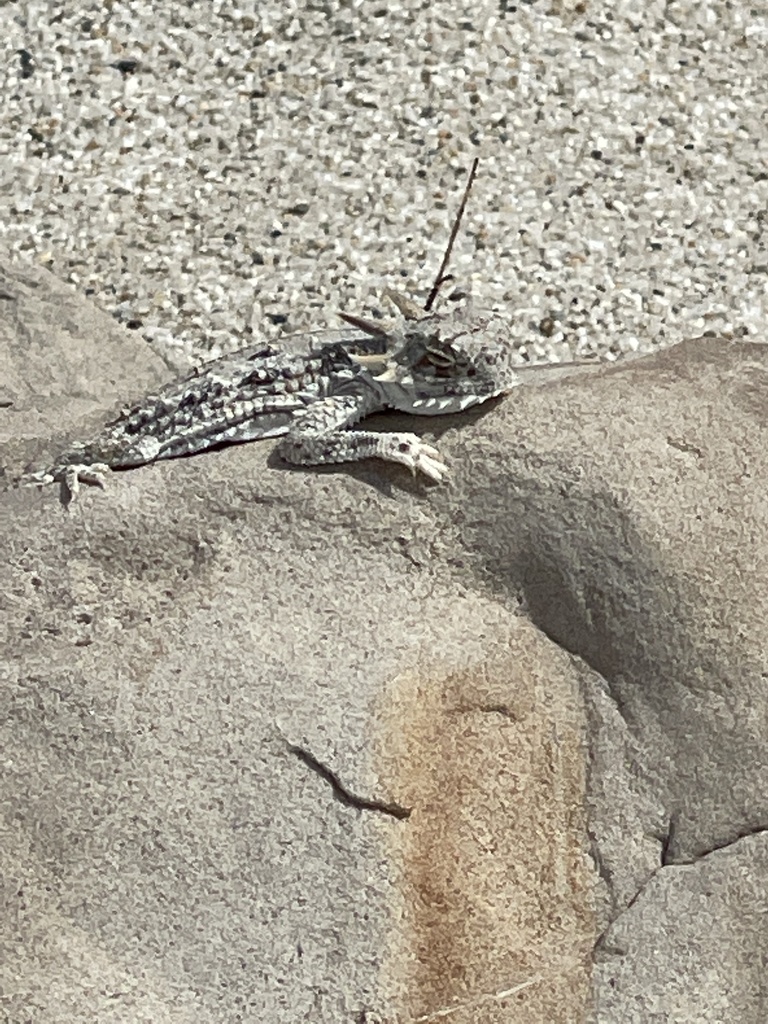
no rights reserved · CC0
Family: Phrynosomatidae · Class: Reptilia · Order: Squamata
Conservation status: G3 S3
Phrynosoma mcallii (Flat-tailed Horned Lizard) is a California animal in the Phrynosomatidae family.
The flat-tailed horned lizard is a distinctive reptile endemic to the Sonoran Desert of southeastern California, southwestern Arizona, northwestern Mexico, and extreme southwestern Nevada. Adults typically measure 65 to 95 mm (2.6 to 3.7 inches) in snout-vent length, with a flattened, oval-shaped body adapted for desert conditions. The species is distinguished by its extremely flattened tail, which lacks the pointed scales found in other horned lizard species. The dorsal surface displays a cryptic pattern of brown, gray, and tan coloration with darker blotches that provide effective camouflage against desert substrates. Two rows of pointed scales project from the sides of the head, forming the characteristic 'horns' that give the species its common name. In California, flat-tailed horned lizards occur exclusively in Imperial County and extreme southeastern Riverside County. The species inhabits portions of the Colorado Desert, including areas near the Salton Sea, Algodones Dunes, and desert flats extending to the Arizona and Mexico borders. Historically, the species likely occupied a larger range within suitable habitat, but development and habitat conversion have reduced available areas. This species requires specific habitat conditions found in desert flats, washes, and sandy areas with sparse vegetation. Optimal habitat consists of fine sand or sandy loam soils with creosote bush scrub vegetation, typically at elevations below 250 meters (820 feet). The lizards require loose substrate for burrowing and areas with scattered shrubs that provide shade and foraging opportunities. Surface temperatures in occupied habitat can exceed 60°C (140°F) during summer months. Flat-tailed horned lizards are specialized predators that feed almost exclusively on harvester ants, particularly species in the genera Pogonomyrmex and Messor. This dietary specialization makes them vulnerable to habitat changes that affect ant colonies. The species is most active during morning and late afternoon hours, avoiding extreme midday heat by burrowing into sand or seeking shade. Reproduction occurs in spring, with females laying clutches of 2 to 10 eggs in sandy soil. Eggs incubate for approximately 60 to 75 days, with hatching typically occurring from July through September. The flat-tailed horned lizard is considered a species of special concern due to significant habitat loss and population decline. According to the U.S. Fish and Wildlife Service, the species has lost an estimated 45 to 87 percent of its historical habitat range due to agricultural conversion, urban development, off-road vehicle use, and energy development projects. Climate change poses additional threats through altered precipitation patterns and increased temperatures. The Bureau of Land Management and other agencies have implemented habitat conservation measures, including off-road vehicle restrictions in critical areas and habitat restoration projects. Population monitoring efforts continue to assess the effectiveness of these conservation measures.
Classification
Class: Reptilia · Order: Squamata · Family: Phrynosomatidae
Conservation status
G3 S3
Frequently asked questions
How is Phrynosoma mcallii classified?
Phrynosoma mcallii belongs to class Reptilia, order Squamata, family Phrynosomatidae.
What family does Phrynosoma mcallii belong to?
Phrynosoma mcallii is in the Phrynosomatidae family.
Is Phrynosoma mcallii protected or of conservation concern?
Phrynosoma mcallii carries the following status: G3 S3.
What is Phrynosoma mcallii?
The flat-tailed horned lizard is a distinctive reptile endemic to the Sonoran Desert of southeastern California, southwestern Arizona, northwestern Mexico, and extreme southwestern Nevada.
Is Phrynosoma mcallii found in California?
Yes. Phrynosoma mcallii is recorded in California in The California Species Project's catalogue.
Related species
Other California species in the same genus, family, or bioregion.
Data from The California Species Project — 14,000+ California species with verified data from CNPS, CDFW, USFWS, and more.