Phrynosoma platyrhinos
Desert Horned Lizard
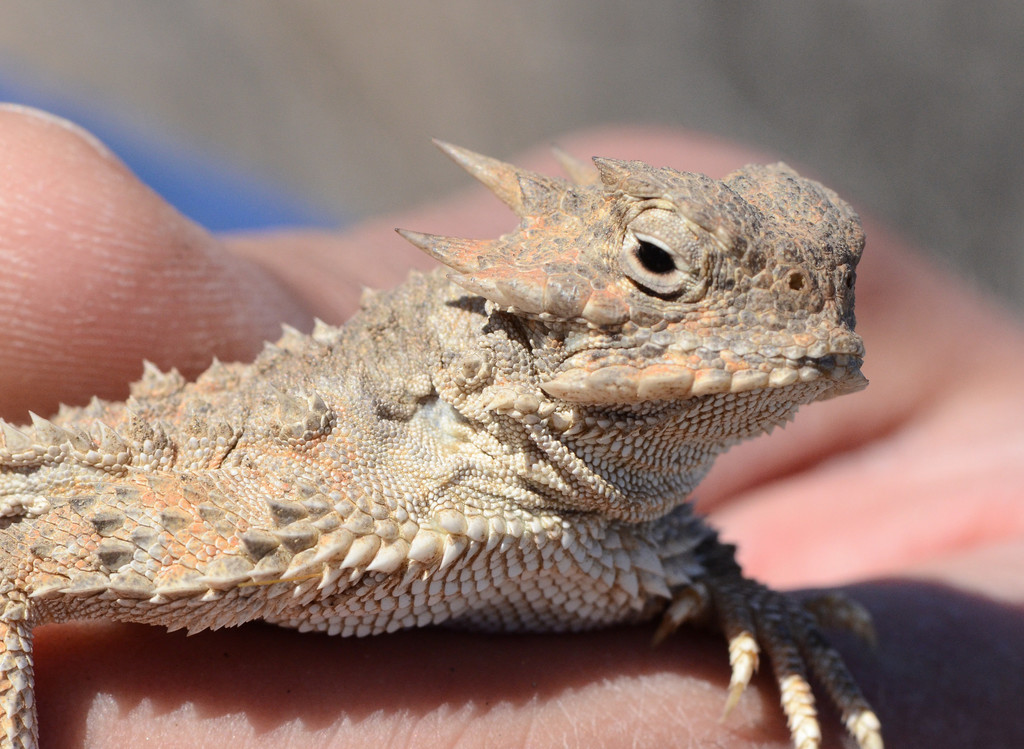
(c) Don Loarie, some rights reserved (CC BY) · licence
Family: Phrynosomatidae · Class: Reptilia · Order: Squamata
Phrynosoma platyrhinos (Desert Horned Lizard) is a California animal in the Phrynosomatidae family.
The desert horned lizard is a robust, flattened reptile measuring 76 to 127 mm (3.0 to 5.0 inches) in snout-to-vent length. The body is broad and oval-shaped with a distinctive flattened profile that allows the animal to blend with rocky substrates. Two prominent, horn-like scales project from the back of the head, giving the species its common name. Additional smaller spines extend along the sides of the head and body. The dorsal surface displays a mottled pattern of gray, brown, and tan coloration with darker blotches, providing effective camouflage against desert soils and rocks. The ventral surface is typically cream-colored with darker spots. The desert horned lizard occurs across much of the southwestern United States and northwestern Mexico. In California, the species is found primarily in the Mojave and Sonoran deserts, extending from the Oregon border south through the Central Valley and into Baja California. The range includes desert regions of Inyo, Kern, Los Angeles, Riverside, San Bernardino, and Imperial counties. Populations also occur in portions of the southern San Joaquin Valley. This species inhabits arid and semi-arid environments characterized by sandy or gravelly soils with scattered shrub cover. Preferred habitats include creosote bush scrub, Joshua tree woodland, and desert washes at elevations from below sea level to approximately 1,525 meters (5,000 feet). The lizard favors areas with loose, friable soil suitable for burrowing and open spaces between vegetation for foraging and thermoregulation. Desert horned lizards are primarily insectivorous, with ants comprising up to 90 percent of their diet. They are sit-and-wait predators that remain motionless near ant trails and capture prey with rapid tongue movements. The species is active during daylight hours, with peak activity occurring during morning and late afternoon when temperatures are moderate. When threatened, individuals may inflate their bodies, hiss, and as a last resort, squirt blood from their eyes up to 1.5 meters (5 feet). This defensive behavior is achieved through increased blood pressure that ruptures capillaries around the eyes. Reproduction occurs from April through June, with females laying 2 to 16 eggs in sandy soil. Incubation lasts 60 to 90 days, and hatchlings emerge measuring approximately 25 mm (1 inch) in snout-to-vent length. During winter months, desert horned lizards become inactive and may burrow up to 30 cm (12 inches) deep in loose soil. The desert horned lizard currently holds no federal or state listing status in California as of December 2025. However, populations face pressure from habitat loss due to urbanization, agriculture, and renewable energy development. Off-road vehicle use degrades soil structure and vegetation cover essential for the species. Additionally, the widespread use of pesticides may reduce ant populations that serve as the primary food source. Climate change poses long-term threats through altered precipitation patterns and increased temperatures that may exceed the species' physiological tolerance limits.
Classification
Class: Reptilia · Order: Squamata · Family: Phrynosomatidae
Frequently asked questions
How is Phrynosoma platyrhinos classified?
Phrynosoma platyrhinos belongs to class Reptilia, order Squamata, family Phrynosomatidae.
What family does Phrynosoma platyrhinos belong to?
Phrynosoma platyrhinos is in the Phrynosomatidae family.
What is Phrynosoma platyrhinos?
The desert horned lizard is a robust, flattened reptile measuring 76 to 127 mm (3.0 to 5.0 inches) in snout-to-vent length.
Is Phrynosoma platyrhinos found in California?
Yes. Phrynosoma platyrhinos is recorded in California in The California Species Project's catalogue.
Related species
Other California species in the same genus, family, or bioregion.
Data from The California Species Project — 14,000+ California species with verified data from CNPS, CDFW, USFWS, and more.