Phyciodes mylitta
Mylitta Crescent
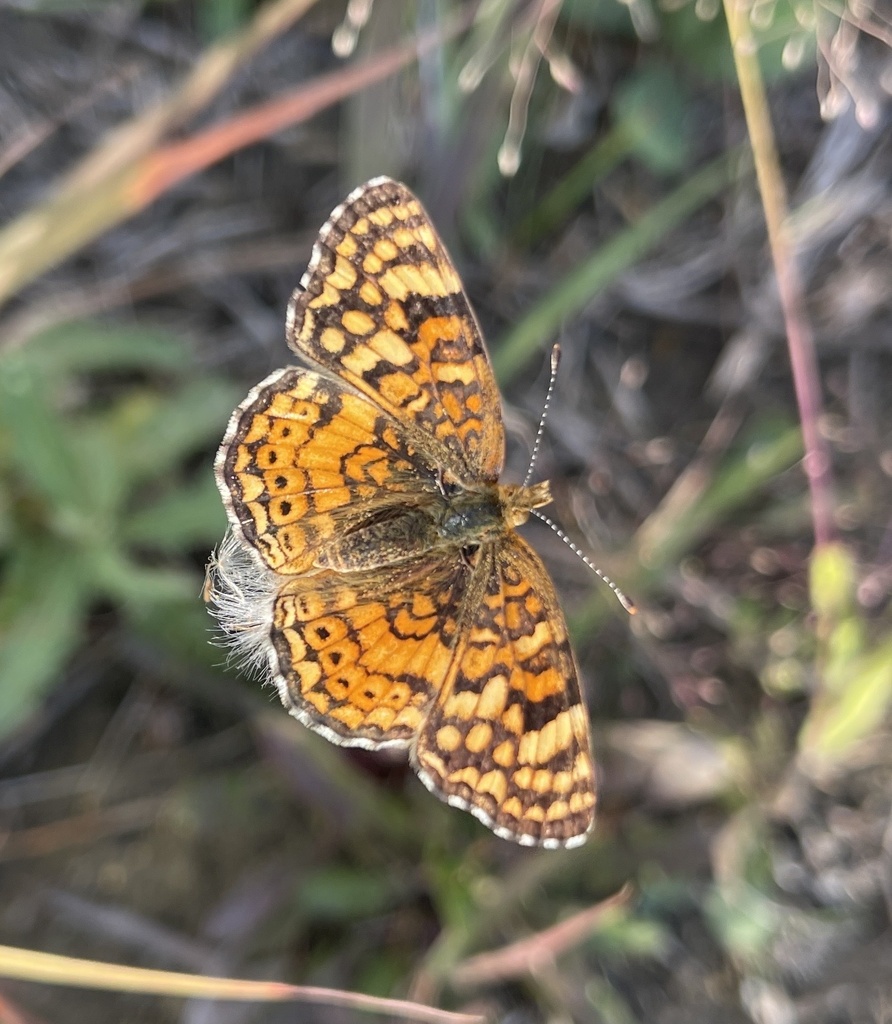
(c) wildrollo, some rights reserved (CC BY) · licence
Family: Nymphalidae · Class: Insecta · Order: Lepidoptera
Phyciodes mylitta (Mylitta Crescent) is a California animal in the Nymphalidae family.
The Mylitta Crescent is a small to medium-sized butterfly with a wingspan ranging from 32 to 44 mm (1.3 to 1.7 inches). The dorsal wing surfaces display a distinctive orange-brown base color with black markings forming a characteristic crescentic pattern, particularly prominent on the hindwings. Males typically exhibit brighter orange coloration with more defined black borders and spots, while females appear slightly larger and duller in coloration. The ventral surfaces show a complex pattern of orange, yellow, and white patches with black markings, including the distinctive pale crescents that give the species its common name. The forewings feature prominent black spots and lines, while the hindwings display a series of marginal crescents bordered by dark lines. Phyciodes mylitta ranges from southern British Columbia southeast through the Rocky Mountain region to Mexico, extending south through Washington, Oregon, and California. Within California, the species occurs primarily in mountainous regions and foothills, with documented populations in the Sierra Nevada, Cascade Range, and various mountain ranges throughout northern and central California. The species is generally absent from the Central Valley and southern California deserts but may occur in suitable habitat at higher elevations in southern mountain ranges. The Mylitta Crescent inhabits open areas including meadows, fields, roadsides, disturbed sites, and forest clearings from sea level to elevations exceeding 2,400 meters (8,000 feet). The species shows a strong preference for areas containing its host plants and typically occurs in sunny locations with scattered shrubs or trees. Adults are commonly found nectaring on various wildflowers including asters, goldenrods, and mints, particularly in areas adjacent to thistle patches. Host plants include native thistles (Cirsium species), introduced milk thistle (Silybum marianum), and European thistles (Carduus species). Females deposit eggs singly on host plant leaves, typically on the undersurface. Larvae feed on thistle foliage and develop through five instars before pupating. The caterpillars are dark with branching spines and feed primarily at night during later instars. In California, the species typically produces two to three broods per year, with adults active from April through October, depending on elevation and local conditions. Peak flight periods generally occur in May-June and August-September. The Mylitta Crescent is not currently listed under federal or state endangered species legislation and appears to maintain stable populations across much of its range. The species has likely benefited from the widespread establishment of introduced thistle species, which serve as additional host plants beyond native Cirsium species. However, intensive land management practices that eliminate thistle populations, including herbicide applications targeting invasive thistles, may locally impact butterfly populations. The species' adaptability to disturbed habitats and its use of both native and non-native host plants suggest relatively stable long-term prospects, though habitat loss in rapidly developing areas remains a potential concern for local populations.
Classification
Class: Insecta · Order: Lepidoptera · Family: Nymphalidae
Frequently asked questions
How is Phyciodes mylitta classified?
Phyciodes mylitta belongs to class Insecta, order Lepidoptera, family Nymphalidae.
What family does Phyciodes mylitta belong to?
Phyciodes mylitta is in the Nymphalidae family.
What is Phyciodes mylitta?
The Mylitta Crescent is a small to medium-sized butterfly with a wingspan ranging from 32 to 44 mm (1.3 to 1.7 inches).
Is Phyciodes mylitta found in California?
Yes. Phyciodes mylitta is recorded in California in The California Species Project's catalogue.
Related species
Other California species in the same genus, family, or bioregion.
Data from The California Species Project — 14,000+ California species with verified data from CNPS, CDFW, USFWS, and more.