Phyciodes pulchella
Field Crescent
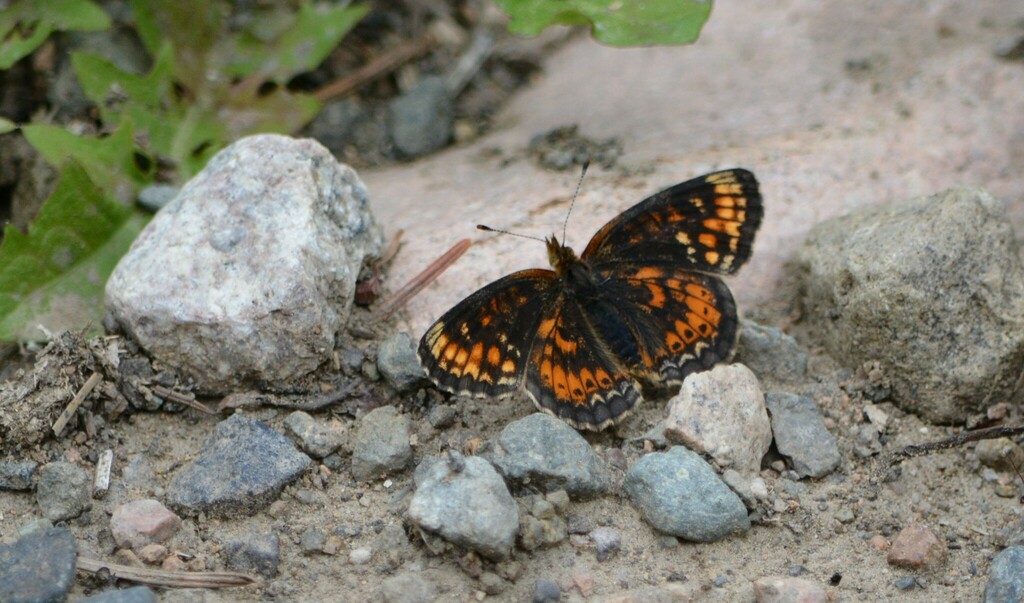
no rights reserved · CC0
Family: Nymphalidae · Class: Insecta · Order: Lepidoptera
Phyciodes pulchella (Field Crescent) is a California animal in the Nymphalidae family.
The Field Crescent is a small butterfly in the family Nymphalidae, measuring 25 to 35 mm (1.0 to 1.4 inches) in wingspan. Adults display orange-brown wings marked with black borders and intricate patterns of black lines and crescents. The forewings feature distinctive black checkering along the outer margins, while the hindwings bear characteristic white or pale orange crescents on the underside, from which the species derives its name. Males typically exhibit brighter orange coloration than females, which tend toward more muted brown tones. The underside of the wings shows a complex pattern of orange, brown, and white markings that provides camouflage when the butterfly rests with wings closed. The Field Crescent ranges from central Alaska and northern Canada south to southern California, southern Arizona, and southern New Mexico, extending east to the western edge of the Great Plains. In California, the species occurs throughout much of the state, from the coastal ranges to the Sierra Nevada and desert regions. Populations are documented from sea level to elevations exceeding 2,440 meters (8,000 feet), making it one of the more widely distributed crescents in North America. This species inhabits diverse environments including grasslands, meadows, sagebrush flats, open woodlands, and disturbed areas such as roadsides and vacant lots. Field Crescents show particular affinity for areas with abundant wildflowers and their host plants. They frequent both natural and human-modified landscapes, adapting well to agricultural edges and suburban environments where suitable vegetation persists. Field Crescents are multivoltine, producing two to three generations annually depending on latitude and elevation. Adults fly from April through October at lower elevations, with peak activity during summer months. Mating occurs throughout the flight period, with females depositing pale yellow eggs singly on the upper surfaces of host plant leaves. Various asters serve as larval food sources, including species in the genera Aster and Machaeranthera. Caterpillars feed primarily at night, creating distinctive feeding patterns on leaf surfaces. The species overwinters as partially grown larvae in leaf litter or low vegetation. Adults are active during daylight hours and exhibit strong attraction to flowers for nectar feeding. They commonly visit composite flowers, particularly those in the aster family, as well as other wildflowers including penstemon, rabbitbrush, and cultivated garden flowers. Males establish territories in areas with suitable host plants and engage in aerial courtship displays. Flight patterns are typically low and erratic, with frequent stops for feeding and basking. The Field Crescent currently holds no special conservation status at federal or state levels. Populations appear stable across most of the species' range, and the butterfly's adaptability to various habitats and elevation zones contributes to its persistence. However, like many native pollinators, local populations may be affected by habitat loss, pesticide use, and invasive plant species that displace native asters. Urban development and agricultural intensification represent potential long-term threats to suitable breeding habitat in some regions.
Classification
Class: Insecta · Order: Lepidoptera · Family: Nymphalidae
Frequently asked questions
How is Phyciodes pulchella classified?
Phyciodes pulchella belongs to class Insecta, order Lepidoptera, family Nymphalidae.
What family does Phyciodes pulchella belong to?
Phyciodes pulchella is in the Nymphalidae family.
What is Phyciodes pulchella?
The Field Crescent is a small butterfly in the family Nymphalidae, measuring 25 to 35 mm (1.0 to 1.4 inches) in wingspan.
Is Phyciodes pulchella found in California?
Yes. Phyciodes pulchella is recorded in California in The California Species Project's catalogue.
Related species
Other California species in the same genus, family, or bioregion.
Data from The California Species Project — 14,000+ California species with verified data from CNPS, CDFW, USFWS, and more.