Phyllocnistis populiella
Aspen Serpentine Leafminer Moth
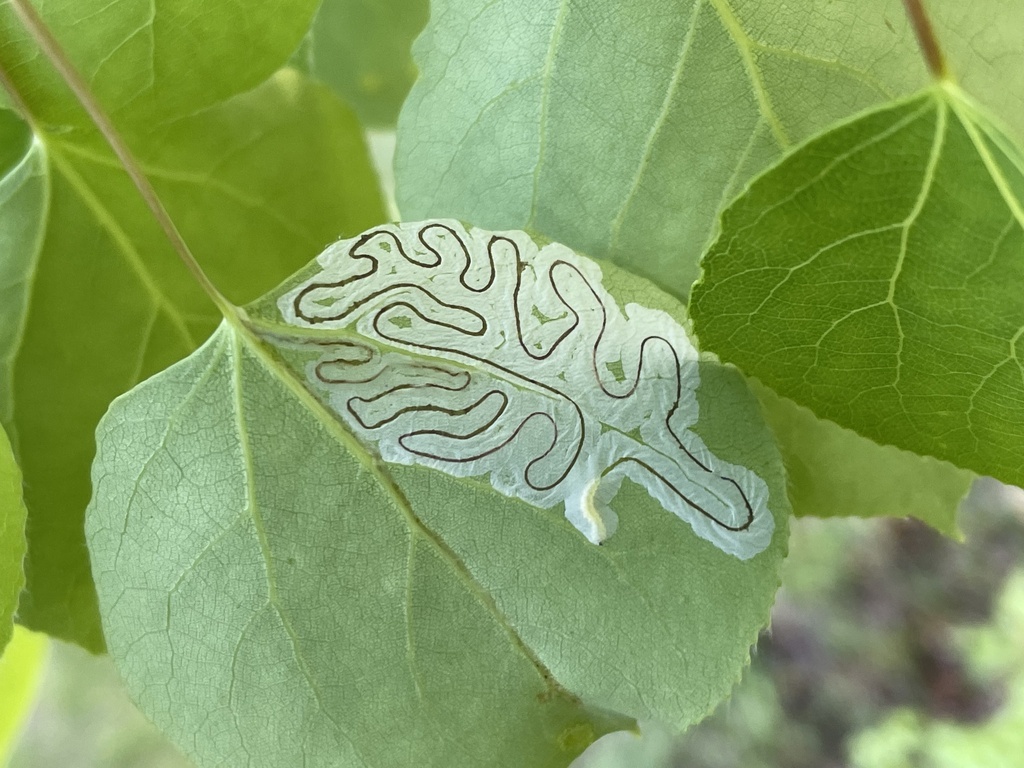
(c) Ian Manning, some rights reserved (CC BY) · licence
Family: Gracillariidae · Class: Insecta · Order: Lepidoptera
Phyllocnistis populiella (Aspen Serpentine Leafminer Moth) is a California animal in the Gracillariidae family.
Phyllocnistis populiella is a small moth in the family Gracillariidae, commonly known as the Aspen Serpentine Leafminer Moth or Common Aspen Leaf Miner. Adults are minute moths with narrow wings, typical of the leafminer family, measuring approximately 4-6 mm in wingspan. The forewings are pale with distinctive dark markings and metallic scaling that creates a characteristic pattern along the wing margins. This species has a broad distribution across North America, ranging from Canada south through the United States. In California, the moth occurs in areas where its primary host plants are present, though specific county-level distribution data within the state requires further documentation. The species has also been documented in numerous other states and provinces across the continent, indicating a widespread native range. Phyllocnistis populiella inhabits areas where aspen and poplar trees (Populus species) grow, including riparian zones, mountain slopes, and mixed deciduous forests. The species shows a preference for environments that support healthy populations of its host plants, typically at elevations where these trees naturally occur. Adult moths are often found in close proximity to their larval host plants during the breeding season. The larvae of this species are true leafminers, creating distinctive serpentine mines within the leaves of aspen and other Populus species. The larval feeding creates characteristic winding trails or galleries between the upper and lower leaf surfaces, which are diagnostic of this species' presence. These mines typically begin as narrow tunnels that gradually widen as the larva grows, eventually forming blotch-like areas near the end of the feeding period. Adult moths are active during warmer months, with peak activity varying by geographic location and local climate conditions. The species likely produces multiple generations per year in favorable conditions, though specific timing and generation numbers may vary across its range. Currently, Phyllocnistis populiella does not appear on federal or state endangered species lists. The species is included on some state Species of Greatest Conservation Need lists, including those of Louisiana and New York, where it has been identified as requiring conservation attention based on factors including abundance and population trends (BugGuide). This designation suggests that while not federally protected, the species may face localized conservation concerns in certain portions of its range. The primary threats to this species likely include habitat loss through deforestation and development of riparian areas where host plants occur. Climate change may also impact the species through alterations to the distribution and health of aspen and poplar forests. However, comprehensive population studies and detailed threat assessments for this species appear to be limited, indicating a need for additional research to better understand its conservation status and population trends across its range.
Classification
Class: Insecta · Order: Lepidoptera · Family: Gracillariidae
Frequently asked questions
How is Phyllocnistis populiella classified?
Phyllocnistis populiella belongs to class Insecta, order Lepidoptera, family Gracillariidae.
What family does Phyllocnistis populiella belong to?
Phyllocnistis populiella is in the Gracillariidae family.
What is Phyllocnistis populiella?
Phyllocnistis populiella is a small moth in the family Gracillariidae, commonly known as the Aspen Serpentine Leafminer Moth or Common Aspen Leaf Miner.
Is Phyllocnistis populiella found in California?
Yes. Phyllocnistis populiella is recorded in California in The California Species Project's catalogue.
Related species
Other California species in the same genus, family, or bioregion.
Data from The California Species Project — 14,000+ California species with verified data from CNPS, CDFW, USFWS, and more.