Phyllocoptes didelphis
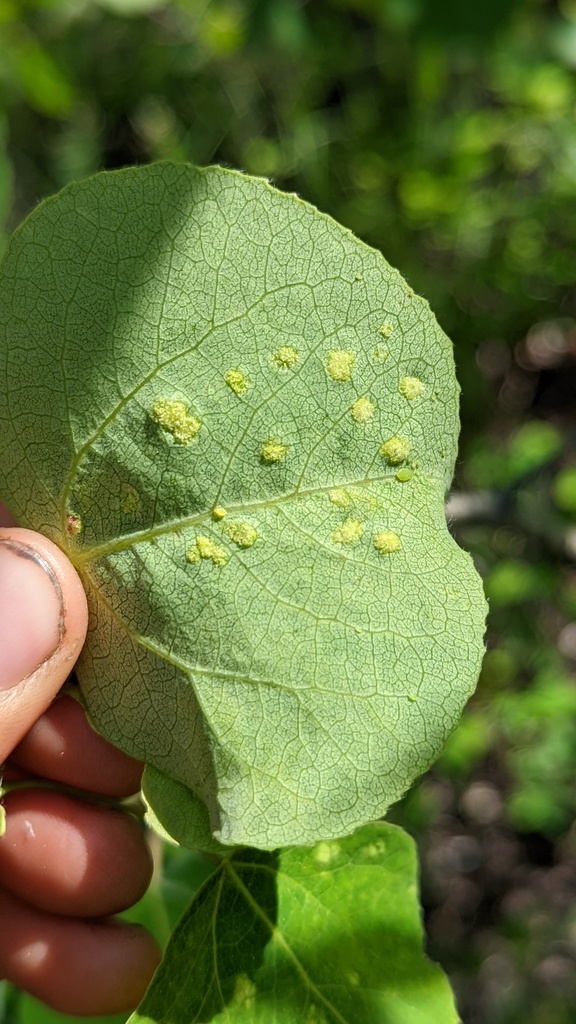
(c) Trevor Van Loon, some rights reserved (CC BY) · licence
Family: Eriophyidae · Class: Arachnida · Order: Trombidiformes
Phyllocoptes didelphis is a California animal in the Eriophyidae family.
Phyllocoptes didelphis is a microscopic eriophyid mite belonging to the family Eriophyidae within the order Trombidiformes. Like other eriophyid mites, this species is extremely small, typically measuring less than 0.3 millimeters in length. The body is elongated and worm-like, lacking the typical spider-like appearance of most arachnids. Eriophyid mites are characterized by having only two pairs of legs positioned at the front of the body, rather than the four pairs found in other mites and spiders. The body is segmented with distinct annulations and bears specialized setae. The range and distribution of Phyllocoptes didelphis are poorly documented in available scientific literature. While the species has been described taxonomically, specific locality records and detailed distribution maps are not readily available through standard biodiversity databases. This lack of distributional data is common among eriophyid mites, as these microscopic arthropods are often overlooked in faunal surveys despite their ecological importance. Habitat requirements for this species have not been well documented in the scientific literature. Eriophyid mites are typically highly host-specific, living as plant parasites on specific host plant species. They inhabit various microhabitats on their host plants, including leaf surfaces, flower buds, stems, and sometimes galls that they induce. Many species in this family are found in both natural and agricultural ecosystems, often showing strong associations with particular plant families or genera. Like other members of the Eriophyidae family, Phyllocoptes didelphis likely feeds by piercing plant cells with its needle-like chelicerae and consuming cell contents. Eriophyid mites reproduce sexually, with females laying eggs on host plant surfaces. Development typically includes egg, two nymphal stages, and adult stages. Many species exhibit seasonal activity patterns, with population peaks often corresponding to favorable environmental conditions and host plant phenology. Some eriophyid mites are capable of inducing galls or other plant deformities, while others live as free-living ectoparasites on leaf surfaces. The conservation status of Phyllocoptes didelphis has not been formally evaluated by major conservation organizations. This species does not appear on federal or state endangered species lists, nor has it been assessed by the International Union for Conservation of Nature. The lack of conservation assessment reflects the limited ecological and distributional knowledge available for most eriophyid mite species. These microscopic arthropods face potential threats similar to other invertebrates, including habitat loss, agricultural intensification, and pesticide use, though specific impacts on this species are unknown. Detailed ecological studies of this species are lacking. The above information synthesizes general knowledge of eriophyid mite biology with available taxonomic data. Scientific documentation for Phyllocoptes didelphis remains extremely limited despite thorough searches of entomological literature and biodiversity databases. Additional research is needed to document the host plant associations, distribution, ecology, and conservation needs of this species.
Classification
Class: Arachnida · Order: Trombidiformes · Family: Eriophyidae
Frequently asked questions
How is Phyllocoptes didelphis classified?
Phyllocoptes didelphis belongs to class Arachnida, order Trombidiformes, family Eriophyidae.
What family does Phyllocoptes didelphis belong to?
Phyllocoptes didelphis is in the Eriophyidae family.
What is Phyllocoptes didelphis?
Phyllocoptes didelphis is a microscopic eriophyid mite belonging to the family Eriophyidae within the order Trombidiformes.
Is Phyllocoptes didelphis found in California?
Yes. Phyllocoptes didelphis is recorded in California in The California Species Project's catalogue.
Related species
Other California species in the same genus, family, or bioregion.
Data from The California Species Project — 14,000+ California species with verified data from CNPS, CDFW, USFWS, and more.