Phyllodactylus nocticolus
Peninsula Leaf-Toed Gecko
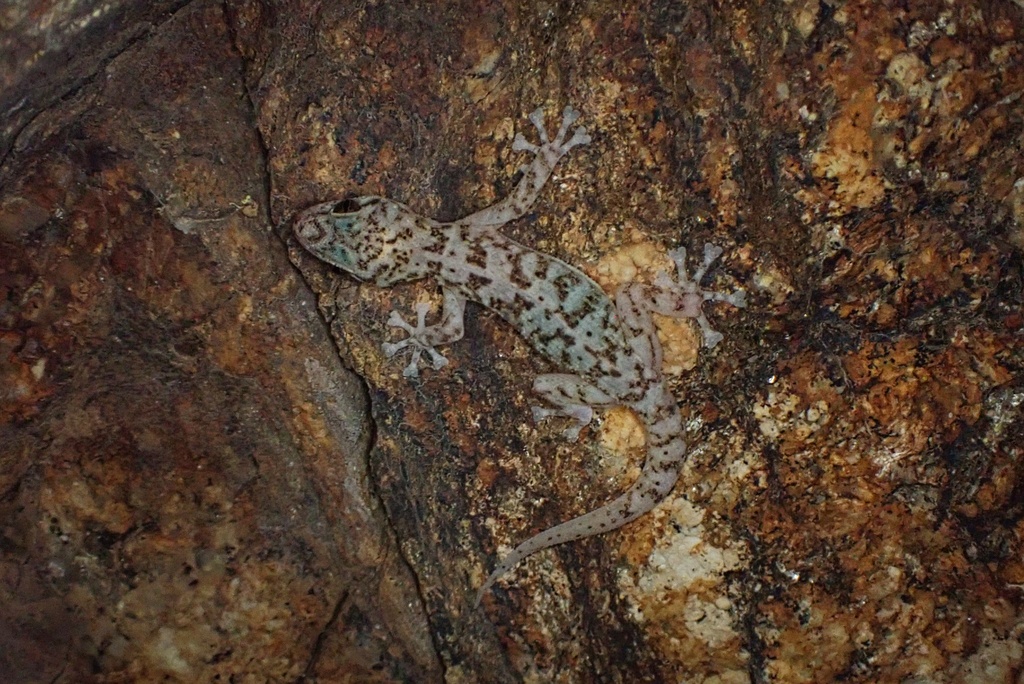
(c) Madeleine Claire, some rights reserved (CC BY) · licence
Family: Phyllodactylidae · Class: Reptilia · Order: Squamata
Phyllodactylus nocticolus (Peninsula Leaf-Toed Gecko) is a California animal in the Phyllodactylidae family.
The Peninsula Leaf-toed Gecko (Phyllodactylus nocticolus) is a small nocturnal reptile endemic to the Baja California Peninsula. Adults typically measure 50 to 70 mm (2.0 to 2.8 inches) in snout-to-vent length, with a total length including the tail reaching approximately 120 to 140 mm (4.7 to 5.5 inches). The species exhibits a flattened body form with distinctive expanded toe pads that bear leaf-like scales, giving rise to its common name. The dorsal coloration is typically gray to brown with darker crossbands or mottled patterns that provide camouflage against rocky surfaces. The ventral surface is pale cream to white. The original tail displays alternating light and dark bands, though regenerated tails lack this distinctive banding pattern. This gecko occurs exclusively on the Baja California Peninsula in Mexico, with its range extending from the Cape region northward to approximately the vicinity of La Paz. The species is found primarily in the Cape region of Baja California Sur, including areas around Los Cabos. Some populations may extend slightly into the southern portion of Baja California state, but the core range remains concentrated in the peninsula's southern tip. Peninsula Leaf-toed Geckos inhabit arid and semi-arid environments characteristic of the Sonoran Desert. They are closely associated with rocky habitats, including granite outcrops, boulder fields, and cliff faces. The species shows a preference for areas with abundant crevices and overhangs that provide daytime retreat sites. Elevation ranges from sea level to approximately 1,000 meters (3,280 feet). The habitat typically features sparse desert vegetation including cacti, agaves, and drought-adapted shrubs. As a nocturnal species, Peninsula Leaf-toed Geckos emerge after sunset to forage for small arthropods. Their diet consists primarily of insects, spiders, and other small invertebrates found on rock surfaces and vegetation. The specialized toe pads allow them to navigate vertical and overhanging rock surfaces with exceptional agility. During daylight hours, individuals retreat to rock crevices, under loose bark, or beneath rocks where they remain inactive. Reproduction occurs during warmer months, with females typically depositing two hard-shelled eggs in protected locations such as rock crevices or under stones. Eggs require approximately 60 to 90 days to hatch depending on temperature conditions. The Peninsula Leaf-toed Gecko does not appear on federal or state endangered species lists as of December 2025. The species is endemic to Mexico and therefore falls outside U.S. jurisdictional protection. Within its native range, the gecko faces potential threats from habitat modification associated with coastal development, particularly in the Los Cabos region where tourism infrastructure has expanded rapidly. Climate change may pose additional challenges through altered precipitation patterns and increased temperatures in an already arid environment. However, the species' association with rocky habitats that are less suitable for development may provide some protection from direct habitat loss.
Classification
Class: Reptilia · Order: Squamata · Family: Phyllodactylidae
Frequently asked questions
How is Phyllodactylus nocticolus classified?
Phyllodactylus nocticolus belongs to class Reptilia, order Squamata, family Phyllodactylidae.
What family does Phyllodactylus nocticolus belong to?
Phyllodactylus nocticolus is in the Phyllodactylidae family.
What is Phyllodactylus nocticolus?
The Peninsula Leaf-toed Gecko (Phyllodactylus nocticolus) is a small nocturnal reptile endemic to the Baja California Peninsula.
Is Phyllodactylus nocticolus found in California?
Yes. Phyllodactylus nocticolus is recorded in California in The California Species Project's catalogue.
Related species
Other California species in the same genus, family, or bioregion.
Data from The California Species Project — 14,000+ California species with verified data from CNPS, CDFW, USFWS, and more.