Phyllorhynchus decurtatus
Spotted Leaf-Nosed Snake
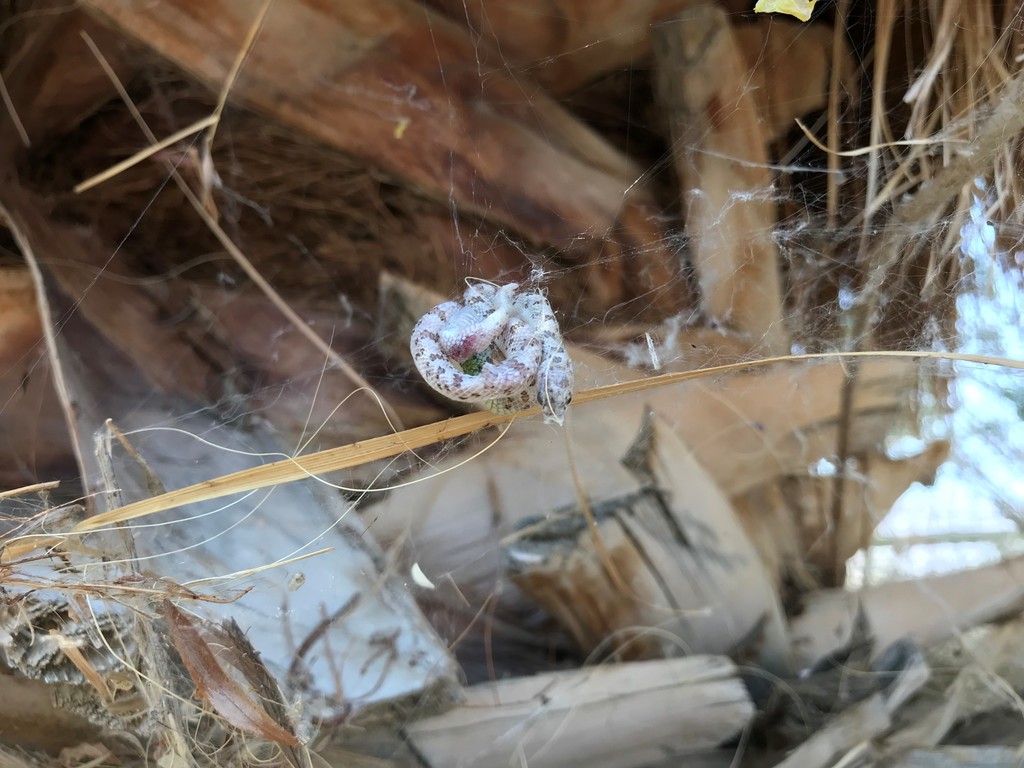
(c) Danny Mccamish, some rights reserved (CC BY) · licence
Family: Colubridae · Class: Reptilia · Order: Squamata
Phyllorhynchus decurtatus (Spotted Leaf-Nosed Snake) is a California animal in the Colubridae family.
The Spotted Leaf-Nosed Snake is a small, secretive colubrid snake native to the southwestern United States and northwestern Mexico. Adults typically measure 200 to 380 mm (7.9 to 15.0 inches) in total length, with females generally larger than males. The species is characterized by its distinctive enlarged rostral scale that forms a leaf-shaped projection extending beyond the tip of the snout. This modification serves as a specialized digging tool for burrowing in sandy substrates. The dorsal coloration consists of a pale gray, tan, or pinkish background with 17 to 42 dark brown or blackish blotches arranged along the back. These blotches are typically oval or rounded and may be connected by narrow bands. The ventral surface is cream or white, often with scattered dark spots. The scales are smooth and glossy, giving the snake a polished appearance. The Spotted Leaf-Nosed Snake occurs in extreme southeastern California, primarily in Imperial and eastern Riverside counties. The California range represents the northwestern edge of the species' distribution, which extends through Arizona, southern Nevada, Sonora, and Baja California. Within California, documented populations occur in the Colorado Desert region, including areas near the Salton Sea and along the Colorado River valley. The species has been recorded at elevations from below sea level to approximately 610 meters (2,000 feet). This snake inhabits arid desert environments characterized by sandy or gravelly soils with sparse vegetation. Preferred habitats include desert flats, washes, and gentle slopes dominated by creosote bush scrub and desert saltbush communities. The species shows strong substrate preferences, favoring areas with loose, sandy soil that facilitates burrowing behavior. During daylight hours, individuals remain buried in sand or beneath rocks, emerging primarily at night when temperatures are moderate. Spotted Leaf-Nosed Snakes are highly fossorial, spending most of their lives underground in sandy substrates. The specialized rostral scale enables efficient movement through loose soil using a swimming-like motion. Activity patterns are predominantly nocturnal and crepuscular, with peak activity occurring during cooler months from October through April. The species enters a state of reduced activity during extreme summer heat. Diet consists primarily of small arthropods, including beetle larvae, moth larvae, and other soft-bodied invertebrates found in sandy substrates. Reproduction occurs through egg-laying, with females depositing clutches of 2 to 4 eggs in sandy soil during late spring or early summer. Hatchlings emerge after approximately 50 to 60 days of incubation. The Spotted Leaf-Nosed Snake lacks formal federal or state conservation status designations in California. However, the species faces potential threats from habitat modification, off-road vehicle use, and urban development within its limited California range. The Colorado Desert region continues to experience pressure from renewable energy projects, agricultural expansion, and residential development. Climate change may pose additional challenges through altered precipitation patterns and increased temperature extremes in already harsh desert environments.
Classification
Class: Reptilia · Order: Squamata · Family: Colubridae
Frequently asked questions
How is Phyllorhynchus decurtatus classified?
Phyllorhynchus decurtatus belongs to class Reptilia, order Squamata, family Colubridae.
What family does Phyllorhynchus decurtatus belong to?
Phyllorhynchus decurtatus is in the Colubridae family.
What is Phyllorhynchus decurtatus?
The Spotted Leaf-Nosed Snake is a small, secretive colubrid snake native to the southwestern United States and northwestern Mexico.
Is Phyllorhynchus decurtatus found in California?
Yes. Phyllorhynchus decurtatus is recorded in California in The California Species Project's catalogue.
Related species
Other California species in the same genus, family, or bioregion.
Data from The California Species Project — 14,000+ California species with verified data from CNPS, CDFW, USFWS, and more.