Phymatopus hectoides
Phymatopus Moth
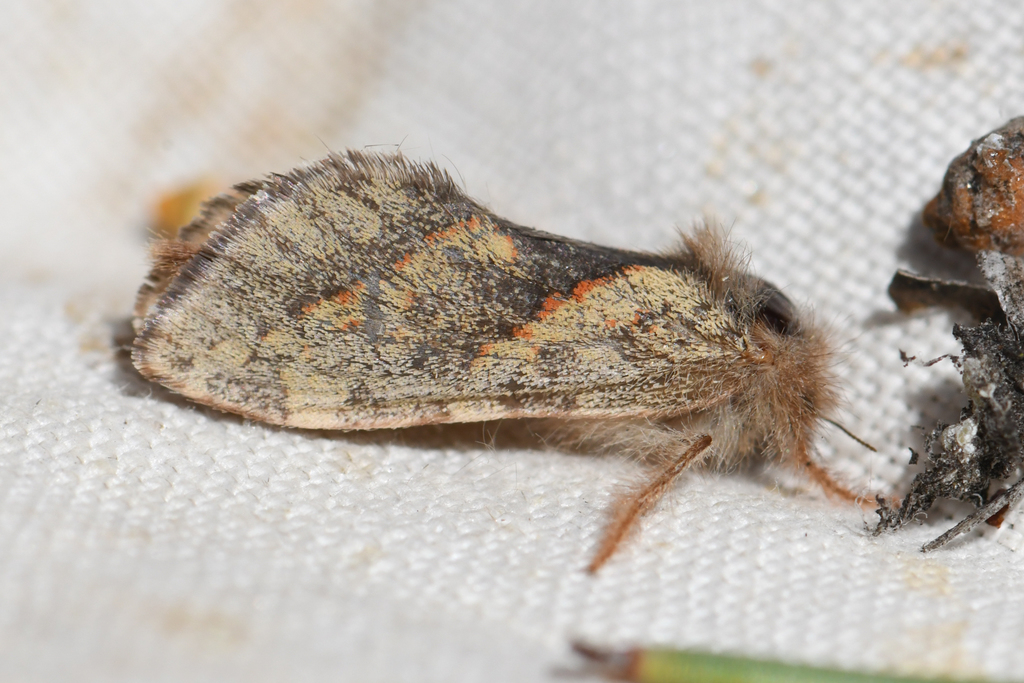
(c) Trevor Van Loon, some rights reserved (CC BY) · licence
Family: Hepialidae · Class: Insecta · Order: Lepidoptera
Phymatopus hectoides (Phymatopus Moth) is a California animal in the Hepialidae family.
Phymatopus hectoides is a species of ghost moth belonging to the family Hepialidae. This medium-sized moth was first described by Boisduval in 1868 and represents one of several Phymatopus species found in western North America (BugGuide). Adults display grayish-brown coloration with wing patterns typical of the Hepialidae family. Ghost moths in this genus are characterized by their relatively robust build and mottled wing surfaces that provide camouflage against tree bark and other natural substrates. Wing span measurements and detailed morphological descriptions have not been well documented for this species in the available literature. Phymatopus hectoides occurs throughout the western United States, with confirmed records from California, Arizona, Nevada, and Oregon (iNaturalist). The species' distribution encompasses diverse ecosystems across these western states, from coastal regions to interior mountain ranges. In California, the moth has been documented across multiple counties, though specific locality records and elevational ranges require further documentation. Habitat preferences for P. hectoides have not been extensively studied, though like other Hepialidae species, it likely occupies areas with suitable host plants for larval development. Ghost moth larvae typically develop as root borers, feeding on the root systems of various herbaceous plants and woody species. The specific host plant relationships for this species remain poorly documented in the scientific literature. Adult flight periods occur from May through the summer months based on available collection records (BugGuide). Like other ghost moths, P. hectoides adults are primarily nocturnal and may be attracted to artificial lights. Males typically emerge before females and may engage in characteristic hovering flight behaviors near host plants during mating periods. Larvae develop as root feeders, spending extended periods underground before pupating and emerging as adults. The complete life cycle duration and specific developmental requirements have not been thoroughly studied. Phymatopus hectoides currently lacks formal conservation status designations at federal or state levels. The species appears to maintain stable populations across its western range, though comprehensive population assessments have not been conducted. Habitat modifications from urban development, agriculture, and land use changes could potentially impact local populations, particularly in areas where suitable host plants become scarce. Climate change effects on the species' distribution and phenology remain unknown due to limited ecological research. Scientific documentation for this species remains limited. The information presented here is based on available sources including taxonomic databases and citizen science records. If you have additional verified information about this species' biology, distribution, or ecology, please contact us to help improve this species account.
Classification
Class: Insecta · Order: Lepidoptera · Family: Hepialidae
Frequently asked questions
How is Phymatopus hectoides classified?
Phymatopus hectoides belongs to class Insecta, order Lepidoptera, family Hepialidae.
What family does Phymatopus hectoides belong to?
Phymatopus hectoides is in the Hepialidae family.
What is Phymatopus hectoides?
Phymatopus hectoides is a species of ghost moth belonging to the family Hepialidae.
Is Phymatopus hectoides found in California?
Yes. Phymatopus hectoides is recorded in California in The California Species Project's catalogue.
More California species
This species has no close relatives in our California data — here are other species to explore.
Data from The California Species Project — 14,000+ California species with verified data from CNPS, CDFW, USFWS, and more.