Phytomyza syngenesiae
Chrysanthemum Leafminer
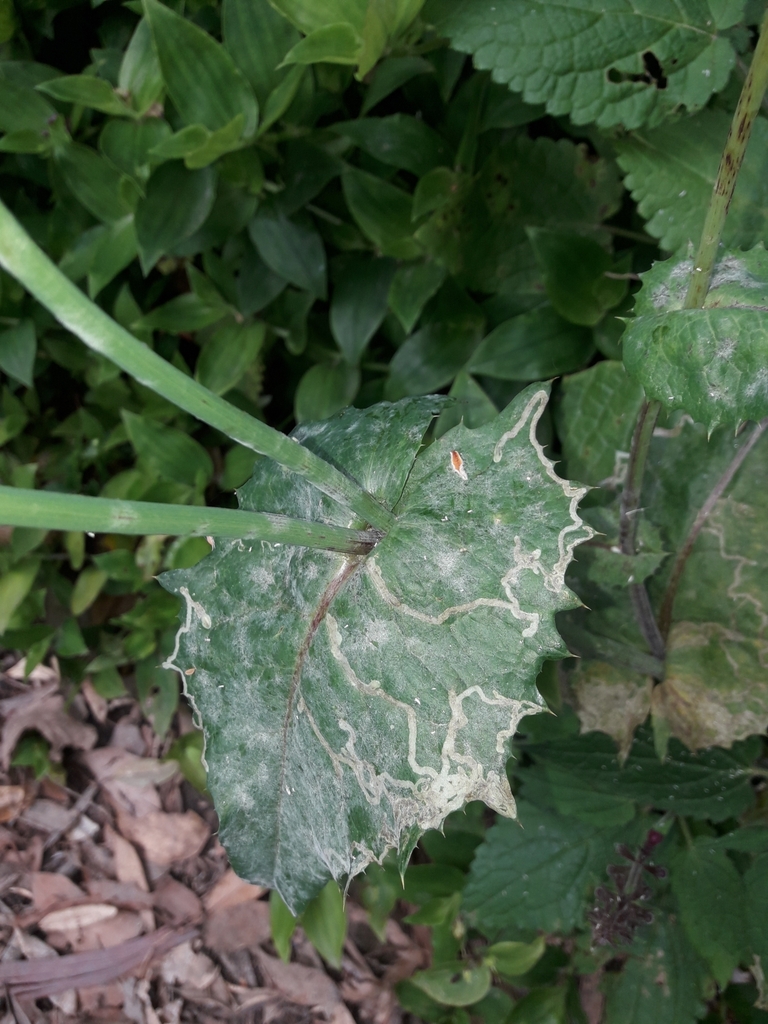
(c) naturewatchwidow, some rights reserved (CC BY) · licence
Family: Agromyzidae · Class: Insecta · Order: Diptera
Phytomyza syngenesiae (Chrysanthemum Leafminer) is a California animal in the Agromyzidae family.
The Chrysanthemum Leafminer is a small dipteran fly in the family Agromyzidae whose larvae create distinctive leaf mines in plants of the Asteraceae family. Adults are small flies typical of the leafminer family, measuring approximately 2-3 mm in length with dark coloration and clear wings. The species is distinguished from related leafminers by specific morphological characteristics of the adult flies and the distinctive mining patterns created by their larvae. Phytomyza syngenesiae has a broad global distribution, originally from the Palearctic region but now established in North America, Australia, and New Zealand (iNaturalist). In California, the species appears to be widely distributed wherever suitable host plants occur, though specific county-level distribution data remains poorly documented. The species has successfully colonized areas far from its native range, indicating strong dispersal ability and adaptability to different climatic conditions. The species primarily inhabits areas where Asteraceae plants are abundant, including agricultural settings, gardens, disturbed sites, and natural areas supporting native composites. According to BugGuide, larvae feed primarily on plants in the aster family and apparently exclusively so in California. Host plants include cultivated chrysanthemums, ragwort (Senecio species), and other herbaceous daisies. The species has been documented as problematic in greenhouse environments, where it can cause significant damage to ornamental plants (Advanced Books). Larvae create characteristic serpentine leaf mines within host plant tissues, feeding on the mesophyll between upper and lower leaf surfaces. The mining activity creates visible trails or blotches on affected leaves, which can reduce plant vigor and aesthetic value in ornamental species. Adults are presumably active during warmer months when host plants are growing, though specific phenology data for California populations is not well documented. The species likely completes multiple generations per year in favorable climates. Despite its widespread distribution and potential agricultural significance, Phytomyza syngenesiae currently lacks formal conservation status at federal or state levels. The species appears to be secure throughout its range, with populations potentially benefiting from the abundance of both native and introduced Asteraceae plants. However, as an introduced species in North America, its ecological impact on native plant communities and potential interactions with native leafminer species have not been thoroughly studied. The species' presence in greenhouse environments suggests it may have economic importance as an occasional pest of ornamental plants, though comprehensive assessment of its economic impact remains limited. Scientific documentation for this species' detailed biology, seasonal activity patterns, and ecological relationships in California remains limited, representing an area where additional research would enhance understanding of this widespread leafminer.
Classification
Class: Insecta · Order: Diptera · Family: Agromyzidae
Frequently asked questions
How is Phytomyza syngenesiae classified?
Phytomyza syngenesiae belongs to class Insecta, order Diptera, family Agromyzidae.
What family does Phytomyza syngenesiae belong to?
Phytomyza syngenesiae is in the Agromyzidae family.
What is Phytomyza syngenesiae?
The Chrysanthemum Leafminer is a small dipteran fly in the family Agromyzidae whose larvae create distinctive leaf mines in plants of the Asteraceae family.
Is Phytomyza syngenesiae found in California?
Yes. Phytomyza syngenesiae is recorded in California in The California Species Project's catalogue.
Related species
Other California species in the same genus, family, or bioregion.
Data from The California Species Project — 14,000+ California species with verified data from CNPS, CDFW, USFWS, and more.