Pisaster giganteus
Giant Sea Star
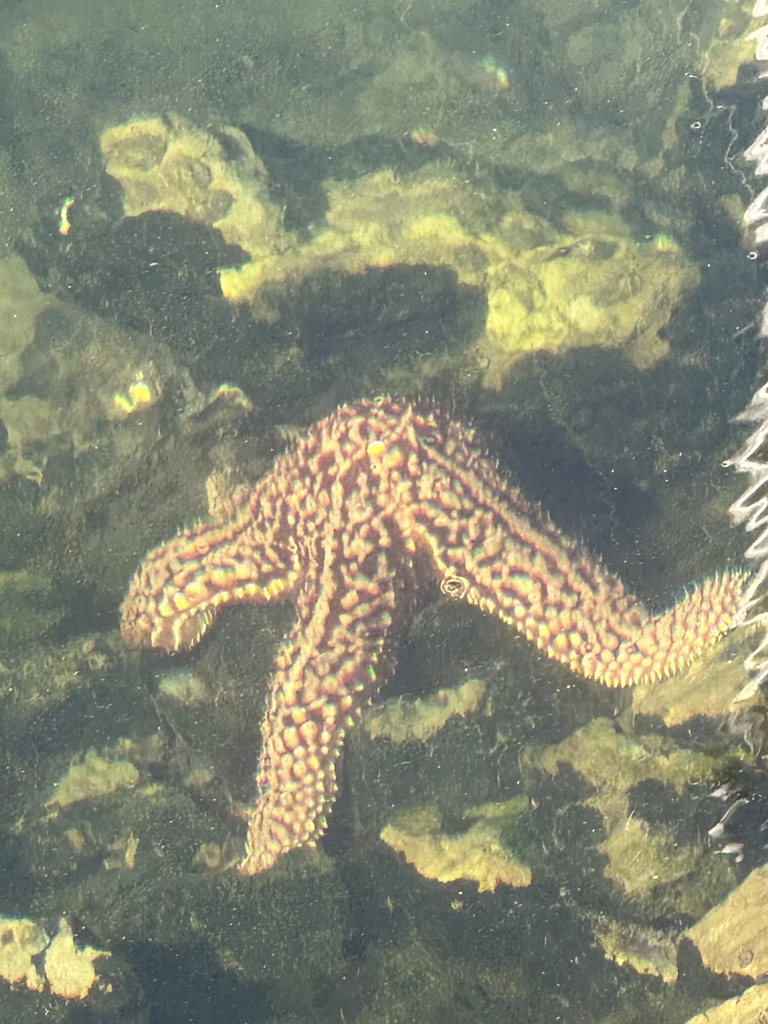
(c) Irina Mitine, some rights reserved (CC BY) · licence
Family: Asteriidae · Class: Asteroidea · Order: Forcipulatida
Pisaster giganteus (Giant Sea Star) is a California animal in the Asteriidae family.
The giant sea star is a large marine echinoderm native to the eastern Pacific Ocean. Adults commonly reach 30 to 45 cm (12 to 18 inches) in diameter, with exceptional specimens exceeding 60 cm (24 inches). The species displays five thick, tapering arms radiating from a robust central disc. Coloration ranges from deep purple and reddish-brown to orange, with some individuals showing mottled patterns. The aboral (upper) surface is covered with numerous short spines and pedicellariae, while the oral (lower) surface features rows of tube feet used for locomotion and prey capture. Pisaster giganteus occurs along the Pacific coast from British Columbia, Canada, to Baja California, Mexico. In California, the species is found throughout the state's coastline, inhabiting rocky shores from Humboldt County south to the Mexican border. Populations are documented in marine protected areas including Santa Barbara Island State Marine Reserve, San Diego-Scripps Coastal State Marine Conservation Area, and Pacific Grove Marine Gardens (California Department of Fish and Wildlife). The species also occurs around the Channel Islands and other offshore California locations. This sea star inhabits rocky intertidal and subtidal zones, typically found from the low intertidal zone to depths of approximately 90 meters (300 feet). Giant sea stars prefer areas with hard substrates including rocky reefs, boulder fields, and kelp forest environments. They are commonly observed in tidepools, on jetties, and along rocky coastlines where wave action provides adequate water circulation. The species tolerates a range of salinity conditions and water temperatures typical of California's temperate marine environment. Giant sea stars are opportunistic predators that feed primarily on bivalve mollusks, including mussels, clams, and oysters. They also consume gastropods, barnacles, and occasionally other echinoderms. Feeding occurs through eversion of the stomach, allowing external digestion of prey items too large to ingest whole. Reproduction involves broadcast spawning, with males and females releasing gametes into the water column. Fertilization occurs externally, and larvae undergo a planktonic stage before settling and metamorphosing into juvenile sea stars. Adults are capable of regenerating lost arms, a common adaptation among asteroids. Pisaster giganteus is not currently listed under federal or state endangered species legislation. However, like many sea star species along the Pacific coast, populations have been impacted by sea star wasting syndrome, a disease that has caused significant mortality events since 2013 (California Department of Fish and Wildlife). This condition results in lesions, tissue decay, and death, affecting multiple sea star species throughout their range. Climate change, ocean acidification, and coastal development represent additional long-term conservation concerns. The species benefits from protection within California's network of marine protected areas, which provide refugia from fishing pressure and habitat disturbance. Monitoring efforts continue to track population trends and the ongoing impacts of environmental stressors on this ecologically important predator.
Classification
Class: Asteroidea · Order: Forcipulatida · Family: Asteriidae
Frequently asked questions
How is Pisaster giganteus classified?
Pisaster giganteus belongs to class Asteroidea, order Forcipulatida, family Asteriidae.
What family does Pisaster giganteus belong to?
Pisaster giganteus is in the Asteriidae family.
What is Pisaster giganteus?
The giant sea star is a large marine echinoderm native to the eastern Pacific Ocean.
Is Pisaster giganteus found in California?
Yes. Pisaster giganteus is recorded in California in The California Species Project's catalogue.
Related species
Other California species in the same genus, family, or bioregion.
Data from The California Species Project — 14,000+ California species with verified data from CNPS, CDFW, USFWS, and more.