Pisidium ultramontanum
Montane Peaclam
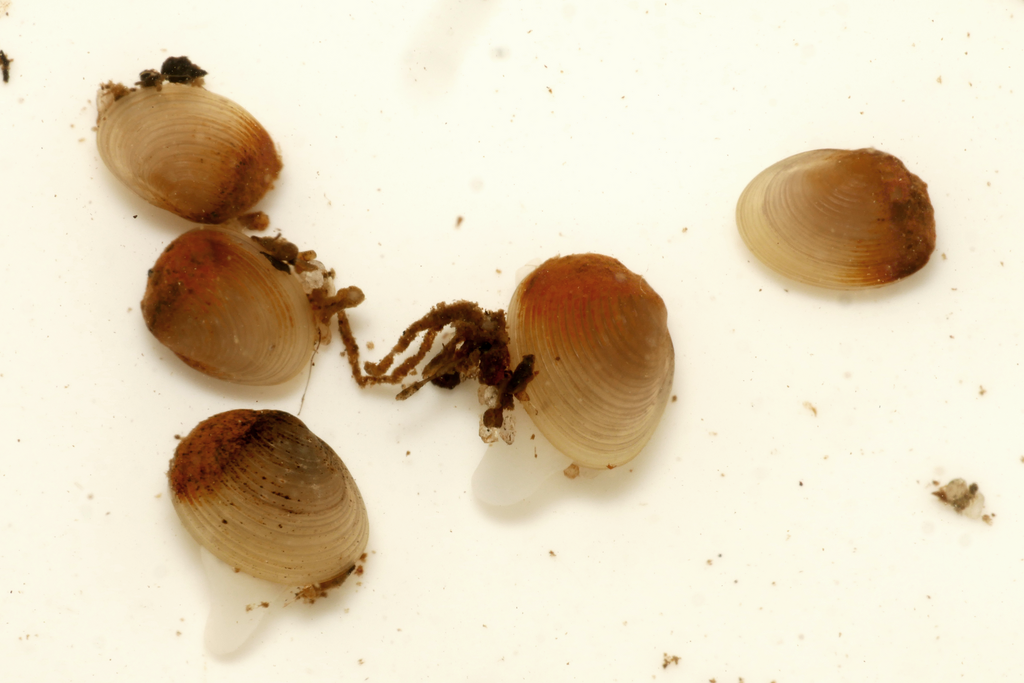
(c) Johan Kjær Prehn, some rights reserved (CC BY) · licence
Family: Pisidiidae · Class: Bivalvia · Order: Veneroida
Conservation status: G1 S1
Pisidium ultramontanum (Montane Peaclam) is a California animal in the Pisidiidae family.
The Montane Peaclam is a small freshwater bivalve mollusk in the family Pisidiidae. As a member of the genus Pisidium, this species likely measures between 2-6 millimeters (0.08-0.24 inches) in length, typical for peaclams. The shell is rounded to oval with two valves connected by a hinge, displaying the characteristic bivalve body plan. Like other Pisidium species, the shell is typically thin, translucent to opaque, and ranges from yellowish to brownish in coloration. The Montane Peaclam occurs in California and Oregon, representing one of the more geographically restricted peaclam species in western North America. Based on its common name, the species is associated with montane environments, suggesting occurrence at higher elevations in mountainous regions of these two states. The specific distribution within California and Oregon has not been comprehensively documented in available literature. As indicated by its common name, this species inhabits montane aquatic environments. Peaclams typically occur in freshwater habitats including lakes, ponds, streams, and wetlands. The species likely requires clean, well-oxygenated water with suitable substrate for burrowing and feeding. Specific elevation ranges, water chemistry requirements, and substrate preferences for P. ultramontanum have not been well documented in scientific literature. Like other peaclams, the Montane Peaclam is likely a filter feeder, consuming algae, bacteria, and organic detritus suspended in the water column. Peaclams are hermaphroditic, possessing both male and female reproductive organs, and can reproduce through self-fertilization when population densities are low. They brood their young internally, releasing juvenile clams that resemble miniature adults. The species' specific reproductive timing, longevity, and ecological interactions remain poorly studied. The Montane Peaclam carries a global conservation rank of G1, indicating it is critically imperiled globally, and a state rank of S1 in California, reflecting critical imperilment within the state. This species is included on the California Department of Fish and Wildlife's Special Animals List. The species appears on the U.S. Fish and Wildlife Service's Species of Concern list, indicating conservation concern but no federal legal protection (USFWS Oregon Species List 2024). Primary threats likely include habitat degradation, water quality changes, sedimentation, and climate change impacts on montane aquatic ecosystems. The species' restricted distribution and specialized habitat requirements make it particularly vulnerable to environmental changes. Water diversions, recreational activities, and watershed disturbances in montane regions may pose additional risks to remaining populations. Specific population monitoring and habitat protection efforts for this species have not been well documented, representing a significant knowledge gap for conservation planning.
Classification
Class: Bivalvia · Order: Veneroida · Family: Pisidiidae
Conservation status
G1 S1
Frequently asked questions
How is Pisidium ultramontanum classified?
Pisidium ultramontanum belongs to class Bivalvia, order Veneroida, family Pisidiidae.
What family does Pisidium ultramontanum belong to?
Pisidium ultramontanum is in the Pisidiidae family.
Is Pisidium ultramontanum protected or of conservation concern?
Pisidium ultramontanum carries the following status: G1 S1.
What is Pisidium ultramontanum?
The Montane Peaclam is a small freshwater bivalve mollusk in the family Pisidiidae.
Is Pisidium ultramontanum found in California?
Yes. Pisidium ultramontanum is recorded in California in The California Species Project's catalogue.
More California species
This species has no close relatives in our California data — here are other species to explore.
Data from The California Species Project — 14,000+ California species with verified data from CNPS, CDFW, USFWS, and more.