Pituophis catenifer
Gopher Snake
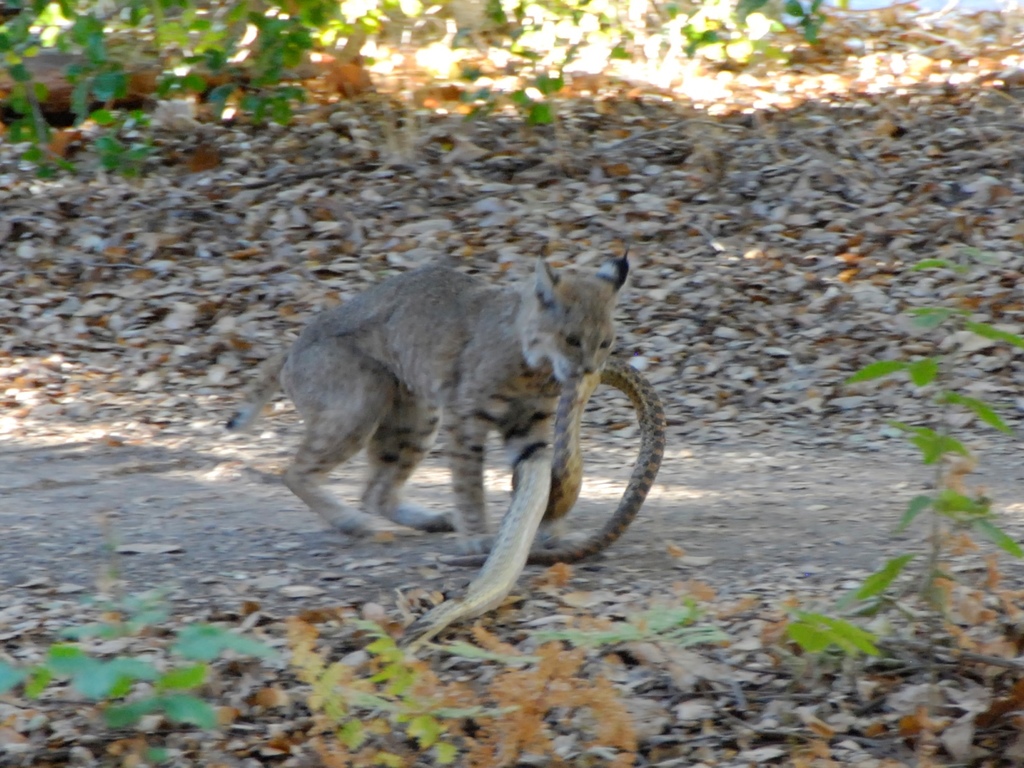
(c) Pinnacles National Park, some rights reserved (CC BY) · licence
Family: Colubridae · Class: Reptilia · Order: Squamata
Pituophis catenifer (Gopher Snake) is a California animal in the Colubridae family.
The gopher snake is a large, robust constrictor and one of California's most widely distributed reptiles. Adults typically measure 91 to 183 cm (3 to 6 feet) in total length, though exceptional individuals may exceed 244 cm (8 feet). The body is heavy and cylindrical with a relatively small head compared to body size. Dorsal coloration consists of a cream, yellow, or tan ground color marked with dark brown or black blotches arranged in a regular pattern along the back. These blotches often alternate with smaller lateral spots. The belly is cream to yellow with dark markings. The scales are keeled, giving the snake a somewhat rough texture, and the anal plate is single. Gopher snakes occur throughout California from sea level to approximately 2,743 meters (9,000 feet) elevation. The species ranges from the Oregon border south through Baja California and extends eastward across much of western North America. In California, they inhabit all biogeographic regions and are found in nearly every county. Multiple subspecies are recognized, with the Pacific gopher snake (P. c. catenifer) occurring along the coast and Central Valley, the San Diego gopher snake (P. c. annectens) in southern California, and the Great Basin gopher snake (P. c. deserticola) in northeastern regions. This adaptable species occupies diverse habitats including grasslands, chaparral, oak woodlands, coniferous forests, agricultural areas, and desert scrub. Gopher snakes prefer areas with loose soil suitable for fossorial prey and utilize rock outcrops, fallen logs, and mammal burrows for shelter and thermoregulation. They are equally at home in cultivated areas and frequently inhabit barns, abandoned buildings, and residential gardens where rodent populations are abundant. Gopher snakes are primarily diurnal but may become crepuscular during hot weather. They are accomplished climbers and swimmers, though they spend most time on the ground. The species is a powerful constrictor, feeding primarily on small mammals including ground squirrels, pocket gophers, mice, and rats. They also consume birds, bird eggs, and occasionally lizards and amphibians. Mating occurs in spring following emergence from winter dormancy. Females lay 12 to 24 leathery eggs in summer, typically in loose soil, compost piles, or rotting logs. Eggs incubate for 65 to 75 days, with hatchlings emerging in late summer measuring 30 to 45 cm (12 to 18 inches). When threatened, gopher snakes exhibit defensive behaviors including loud hissing, rapid tail vibration that mimics rattlesnakes, and flattening of the head and neck. This Batesian mimicry often causes confusion with venomous species, leading to unnecessary persecution. Gopher snakes are not federally or state listed and maintain stable populations throughout most of their range. Local declines may occur due to habitat conversion, vehicle mortality, and direct persecution. However, their ecological flexibility and broad habitat tolerance suggest populations remain secure. The species provides significant ecosystem services through rodent control, particularly in agricultural settings where a single individual may consume dozens of pest rodents annually.
Classification
Class: Reptilia · Order: Squamata · Family: Colubridae
Frequently asked questions
How is Pituophis catenifer classified?
Pituophis catenifer belongs to class Reptilia, order Squamata, family Colubridae.
What family does Pituophis catenifer belong to?
Pituophis catenifer is in the Colubridae family.
What is Pituophis catenifer?
The gopher snake is a large, robust constrictor and one of California's most widely distributed reptiles.
Is Pituophis catenifer found in California?
Yes. Pituophis catenifer is recorded in California in The California Species Project's catalogue.
Related species
Other California species in the same genus, family, or bioregion.
Data from The California Species Project — 14,000+ California species with verified data from CNPS, CDFW, USFWS, and more.