Pituophis catenifer pumilus
Santa Cruz Island Gophersnake
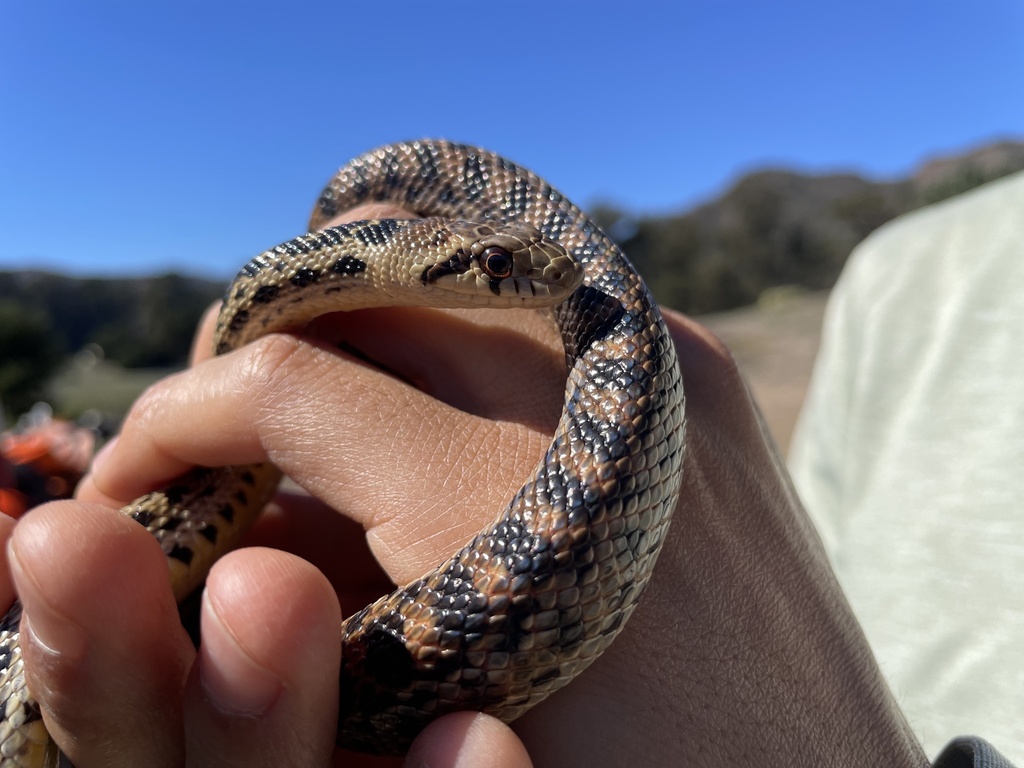
(c) Cayman Lanzone, some rights reserved (CC BY) · licence
Family: Colubridae · Class: Reptilia · Order: Squamata
Conservation status: G5T1T2 S1?
Pituophis catenifer pumilus (Santa Cruz Island Gophersnake) is a California animal in the Colubridae family.
The Santa Cruz Island gophersnake is a subspecies of gophersnake endemic to Santa Cruz Island, California. Adults typically measure 60-120 cm (24-47 inches) in total length, making this one of the smaller gophersnake subspecies. The dorsal pattern consists of dark brown or black blotches on a cream to light brown background, with smaller lateral blotches along the sides. The ventral surface is cream-colored with dark spotting. Like other gophersnakes, this subspecies has keeled scales and a relatively small head compared to body size. The Santa Cruz Island gophersnake is restricted entirely to Santa Cruz Island, the largest of California's Channel Islands. This island subspecies evolved in isolation from mainland populations, with its range encompassing the entire 250 square kilometer island from near sea level to elevations of 2,100 feet (640 meters) (californiaherps.com). The subspecies does not occur on any other Channel Islands or on the mainland. This subspecies occurs in all vegetation types found on Santa Cruz Island. According to californiaherps.com, it is most common in open grassland areas, dry streambeds, and oak and chaparral woodlands. The species utilizes both native island scrub communities and areas modified by historical ranching activities. Rocky outcrops and areas with loose soil suitable for burrowing appear to be preferred microhabitats. Like other gophersnakes, the Santa Cruz Island subspecies is primarily fossorial, spending considerable time in underground burrows. It feeds on small mammals, birds, and eggs, with diet likely including native deer mice and introduced species. Mating occurs in spring following emergence from winter dormancy. Females are oviparous, laying clutches of eggs from June through August, with incubation lasting approximately 2 to 2.5 months (californiaherps.com). The species is primarily diurnal but may be active during warm evenings. The Santa Cruz Island gophersnake has a Global/State Rank of G5T1T2 S1, indicating the subspecies is critically imperiled in California with very few populations or occurrences. While the species Pituophis catenifer is secure globally, this island endemic subspecies faces unique conservation challenges. The California Department of Fish and Wildlife has included this subspecies in recent surveys to address knowledge gaps regarding its status and distribution (CDFW 2021). Primary threats likely include habitat modification from past ranching activities, potential impacts from introduced species, and the inherent vulnerability of small island populations. The removal of introduced ungulates from Santa Cruz Island by the National Park Service may benefit native vegetation communities that support this subspecies. Climate change poses additional risks through altered precipitation patterns and potential sea level rise affecting low-elevation habitats. Current population size and trends remain poorly documented, highlighting the need for comprehensive surveys to assess the subspecies' conservation status.
Classification
Class: Reptilia · Order: Squamata · Family: Colubridae
Conservation status
G5T1T2 S1?
Frequently asked questions
How is Pituophis catenifer pumilus classified?
Pituophis catenifer pumilus belongs to class Reptilia, order Squamata, family Colubridae.
What family does Pituophis catenifer pumilus belong to?
Pituophis catenifer pumilus is in the Colubridae family.
Is Pituophis catenifer pumilus protected or of conservation concern?
Pituophis catenifer pumilus carries the following status: G5T1T2 S1?.
What is Pituophis catenifer pumilus?
The Santa Cruz Island gophersnake is a subspecies of gophersnake endemic to Santa Cruz Island, California.
Is Pituophis catenifer pumilus found in California?
Yes. Pituophis catenifer pumilus is recorded in California in The California Species Project's catalogue.
Related species
Other California species in the same genus, family, or bioregion.
Data from The California Species Project — 14,000+ California species with verified data from CNPS, CDFW, USFWS, and more.