Plagiodera californica
California Willow Leaf Beetle
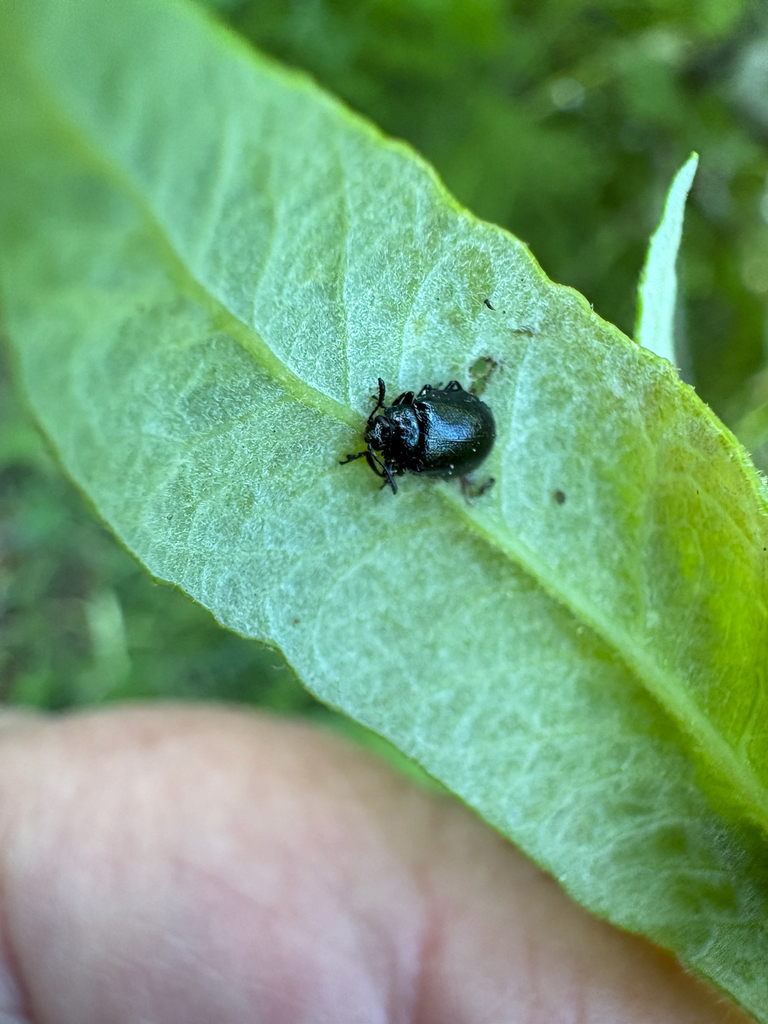
(c) Annette Herz, some rights reserved (CC BY) · licence
Family: Chrysomelidae · Class: Insecta · Order: Coleoptera
Plagiodera californica (California Willow Leaf Beetle) is a California animal in the Chrysomelidae family.
The California Willow Leaf Beetle is a small leaf beetle in the family Chrysomelidae, subfamily Chrysomelinae. This species belongs to the subgenus Plagiodera (Plagiomorpha), distinguishing it from other members of the genus Plagiodera. Adults are typically 4-6 mm in length with metallic coloration, though specific morphological details have not been comprehensively documented in the scientific literature. Plagiodera californica is endemic to California, with its distribution centered in areas supporting willow species. The species' range appears to be associated with riparian corridors and wetland margins where suitable host plants occur. Specific county-level distribution data remains limited, though the species is presumed to occur throughout much of the state where appropriate habitat exists. This beetle inhabits riparian zones, wetland edges, and areas with dense willow growth. The species shows a strong association with willow species (Salix spp.), which serve as both larval host plants and adult feeding sites. Preferred habitats include streamside corridors, seasonal wetlands, and irrigated areas where willows maintain adequate moisture levels. The beetle may also occur in managed landscapes where ornamental willows are planted, provided suitable microclimatic conditions exist. Adult California Willow Leaf Beetles feed primarily on willow foliage, creating characteristic feeding damage patterns on leaves. Like other members of the genus, larvae likely develop as leaf miners or external feeders on willow tissue. The species presumably has one or more generations per year, with adults most active during warmer months when willow foliage is abundant. Mating and egg-laying likely occur on host plants, though specific reproductive biology has not been thoroughly studied. The conservation status of Plagiodera californica has not been formally assessed by federal or state agencies. The species does not appear on current threatened or endangered species lists, nor does it have a designated conservation rank from NatureServe or similar organizations. However, like many riparian-associated insects, the California Willow Leaf Beetle may face habitat pressures from urban development, agricultural conversion, and water management practices that alter natural flow regimes in California's watersheds. Willow-dominated riparian habitats have experienced significant reduction throughout California due to land use changes, channelization, and groundwater pumping. The decline of riparian ecosystems throughout California poses potential long-term threats to specialized insects like P. californica. Climate change may further stress willow populations through altered precipitation patterns and increased drought frequency. Conservation of this species would benefit from protection and restoration of riparian corridors, maintenance of natural hydrologic regimes, and preservation of native willow stands. Scientific documentation for this species remains limited. The information presented here is based on taxonomic records from the U.S. Fish and Wildlife Service and general knowledge of chrysomelid beetle ecology. Detailed ecological studies, population assessments, and comprehensive distribution surveys are needed to better understand this species' status and conservation needs. We welcome contributions of verified scientific data, photographs, or field observations to enhance this species account.
Classification
Class: Insecta · Order: Coleoptera · Family: Chrysomelidae
Frequently asked questions
How is Plagiodera californica classified?
Plagiodera californica belongs to class Insecta, order Coleoptera, family Chrysomelidae.
What family does Plagiodera californica belong to?
Plagiodera californica is in the Chrysomelidae family.
What is Plagiodera californica?
The California Willow Leaf Beetle is a small leaf beetle in the family Chrysomelidae, subfamily Chrysomelinae.
Is Plagiodera californica found in California?
Yes. Plagiodera californica is recorded in California in The California Species Project's catalogue.
Related species
Other California species in the same genus, family, or bioregion.
Data from The California Species Project — 14,000+ California species with verified data from CNPS, CDFW, USFWS, and more.