Plataea personaria
Personate Moth
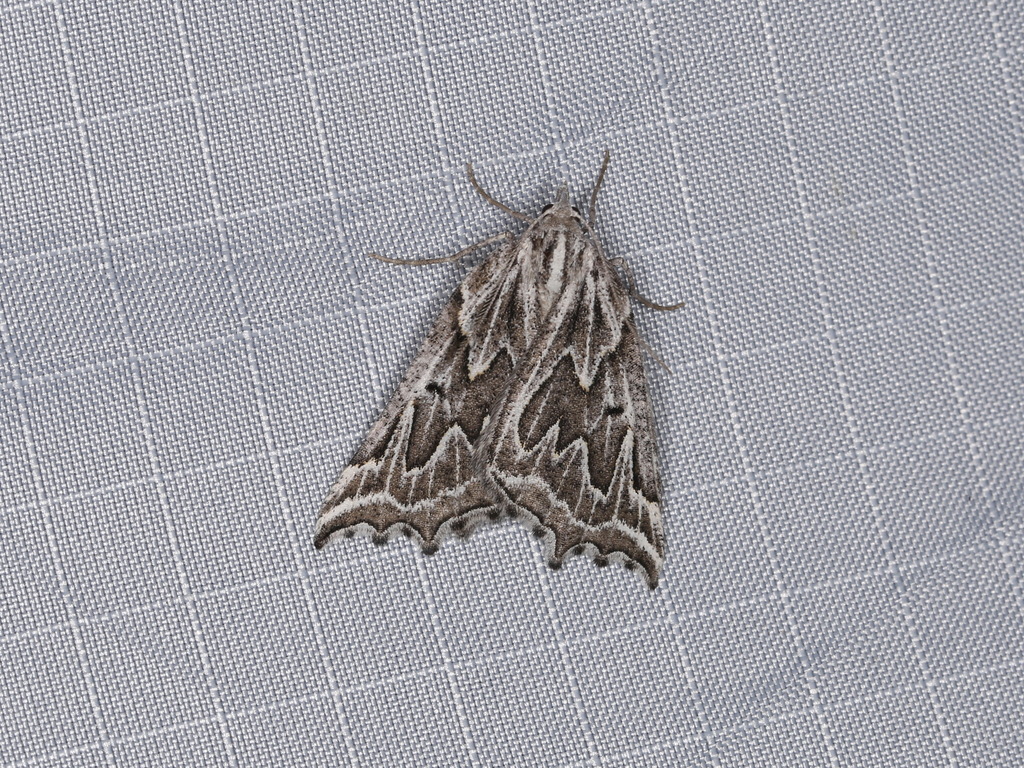
(c) Donald Hobern, some rights reserved (CC BY) · licence
Family: Geometridae · Class: Insecta · Order: Lepidoptera
Plataea personaria (Personate Moth) is a California animal in the Geometridae family.
The Personate Moth (Plataea personaria) is a member of the Geometridae family, commonly known as geometrid moths or inchworm moths. This species belongs to the subfamily Ennominae and tribe Ourapterygini within the larger superfamily Geometroidea. Like other geometrid moths, adults likely have a slender body and broad wings, though specific morphological details for this species are not well documented in current literature. Plataea personaria occurs along the Pacific Coast from California south into Baja California, Mexico. This coastal distribution suggests the species is adapted to maritime climatic conditions and associated vegetation communities. The range extends from the temperate coastal regions of California through the Mediterranean-climate zones into the more arid coastal areas of Baja California. Specific habitat requirements for Plataea personaria have not been well documented in available scientific literature. As a coastal species, it likely inhabits shrublands, chaparral, or coastal sage scrub communities typical of the Pacific Coast region. Many geometrid moths are associated with woody plants, and this species may utilize native shrubs or trees as larval host plants, though specific host plant relationships remain undocumented. The life cycle and behavior of Plataea personaria follow the typical geometrid pattern of complete metamorphosis. Adults likely emerge during specific seasonal periods, though flight times have not been well documented. Larvae, commonly called inchworms or loopers, move in a characteristic arching motion due to their reduced number of prolegs. The caterpillars likely feed on foliage of native plants within their coastal range, pupating in soil or leaf litter before emerging as adults. Mating and egg-laying behaviors are presumed to follow standard lepidopteran patterns, but specific details remain unstudied. Plataea personaria does not appear on federal or state threatened or endangered species lists as of December 2025. However, like many coastal California species, it may face pressures from habitat loss due to urban development, agricultural conversion, and invasive plant species. The coastal regions of California and Baja California have experienced significant human development pressure, particularly in areas with Mediterranean climates. Climate change may also affect this species through altered precipitation patterns and temperature regimes that could impact both adult moths and their larval host plants. Documentation of this moth species remains limited in scientific literature. It appears in species lists for various refuges and protected areas (USFWS refuge documents), indicating it occurs in managed natural areas, but detailed ecological studies are lacking. The species is catalogued in taxonomic databases (BugGuide), confirming its taxonomic placement, but biological and ecological information requires further research. Additional field studies and observations are needed to better understand the habitat requirements, host plant relationships, and conservation status of this coastal geometrid moth.
Classification
Class: Insecta · Order: Lepidoptera · Family: Geometridae
Frequently asked questions
How is Plataea personaria classified?
Plataea personaria belongs to class Insecta, order Lepidoptera, family Geometridae.
What family does Plataea personaria belong to?
Plataea personaria is in the Geometridae family.
What is Plataea personaria?
The Personate Moth (Plataea personaria) is a member of the Geometridae family, commonly known as geometrid moths or inchworm moths.
Is Plataea personaria found in California?
Yes. Plataea personaria is recorded in California in The California Species Project's catalogue.
Related species
Other California species in the same genus, family, or bioregion.
Data from The California Species Project — 14,000+ California species with verified data from CNPS, CDFW, USFWS, and more.