Plataea trilinearia
Sagebrush Girdle Moth
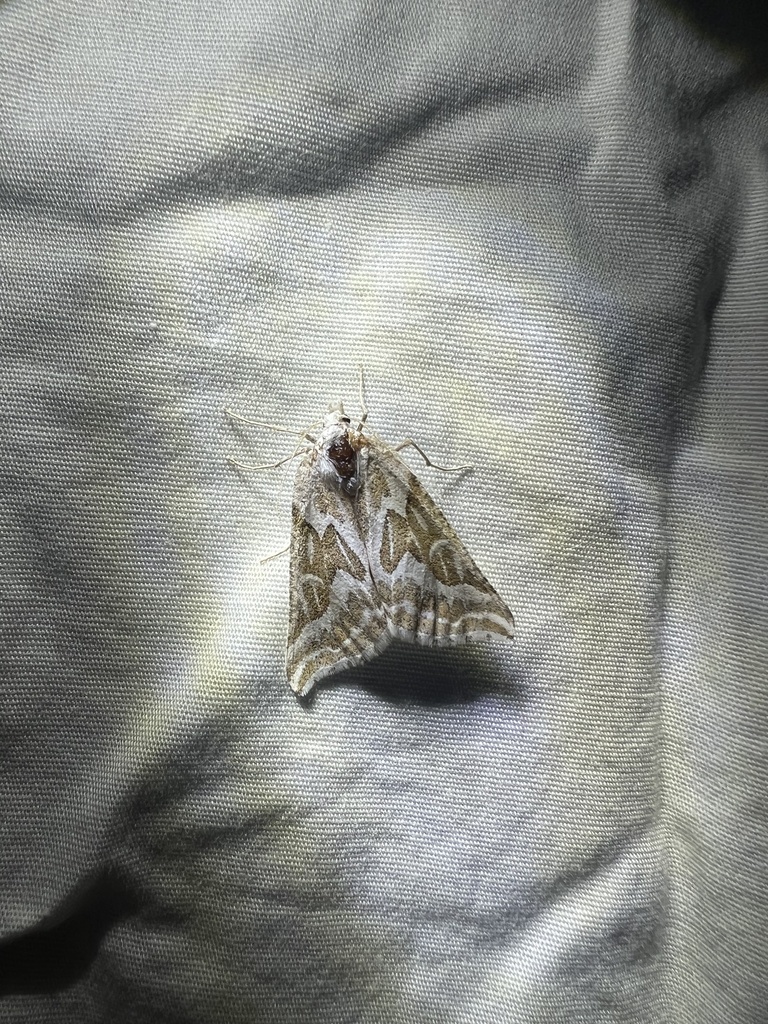
(c) Jared Shorma, some rights reserved (CC BY) · licence
Family: Geometridae · Class: Insecta · Order: Lepidoptera
Plataea trilinearia (Sagebrush Girdle Moth) is a California animal in the Geometridae family.
The Sagebrush Girdle Moth (Plataea trilinearia) is a geometrid moth in the family Geometridae, distinguished by its association with sagebrush ecosystems across western North America. Adults are medium-sized moths typical of the Geometridae family, characterized by their broad wings and slender bodies. The species belongs to the tribe Ourapterygini and carries the Hodges number 6926 in North American moth classification systems. This species ranges from southeastern British Columbia to southwestern Saskatchewan, extending south through California and into central Texas, with populations continuing into Mexico. The extensive distribution spans multiple biogeographic regions, from the northern Great Plains through the Great Basin and southwestern deserts. In California, the species likely occurs in sagebrush-dominated habitats throughout the eastern portions of the state, particularly in the Great Basin region and Mojave Desert areas where Artemisia species are prevalent. Sagebrush Girdle Moths inhabit arid and semi-arid environments characterized by sagebrush scrubland and related plant communities. These ecosystems typically occur at elevations ranging from desert valleys to montane zones where Artemisia species dominate the vegetation. The moths are adapted to the seasonal patterns and environmental conditions of these often harsh, drought-prone landscapes. Larval foodplants are presumed to be wormwood species (Artemisia sp.), based on the feeding habits of the closely related sister species Plataea personaria. This host plant relationship aligns with the species' common name and ecological distribution, as Artemisia species are dominant shrubs throughout the moth's range. The specific larval biology and development patterns remain poorly documented, representing a significant knowledge gap for this species. Adult moths are most commonly observed in spring, often appearing in large numbers at artificial lights during peak activity periods. This seasonal emergence pattern suggests synchronization with optimal environmental conditions and host plant phenology. The species exhibits typical geometrid moth behavior, with adults likely being nocturnal and attracted to light sources. Mating and egg-laying behaviors have not been well documented in the scientific literature. The relationship between adult flight periods and larval development cycles in relation to host plant availability requires further study. Conservation status information for Plataea trilinearia indicates a Global NatureServe ranking of G5, suggesting the species is globally secure with stable populations across its range. No federal or state listing status has been assigned, indicating the species faces no immediate conservation concerns. However, like many moths associated with specific habitat types, populations may be vulnerable to habitat modification, particularly conversion of native sagebrush communities for agriculture or development. Climate change impacts on arid ecosystems could potentially affect future population stability. Scientific documentation for this species remains limited beyond basic taxonomic and distributional information. The information presented here is based on available sources including NatureServe Explorer, BugGuide, and butterfliesandmoths.org. If you have additional verified information about this species' biology, distribution, or ecology, please contact us to help improve this species account.
Classification
Class: Insecta · Order: Lepidoptera · Family: Geometridae
Frequently asked questions
How is Plataea trilinearia classified?
Plataea trilinearia belongs to class Insecta, order Lepidoptera, family Geometridae.
What family does Plataea trilinearia belong to?
Plataea trilinearia is in the Geometridae family.
What is Plataea trilinearia?
The Sagebrush Girdle Moth (Plataea trilinearia) is a geometrid moth in the family Geometridae, distinguished by its association with sagebrush ecosystems across western North America.
Is Plataea trilinearia found in California?
Yes. Plataea trilinearia is recorded in California in The California Species Project's catalogue.
Related species
Other California species in the same genus, family, or bioregion.
Data from The California Species Project — 14,000+ California species with verified data from CNPS, CDFW, USFWS, and more.