Platalea ajaja
Roseate Spoonbill
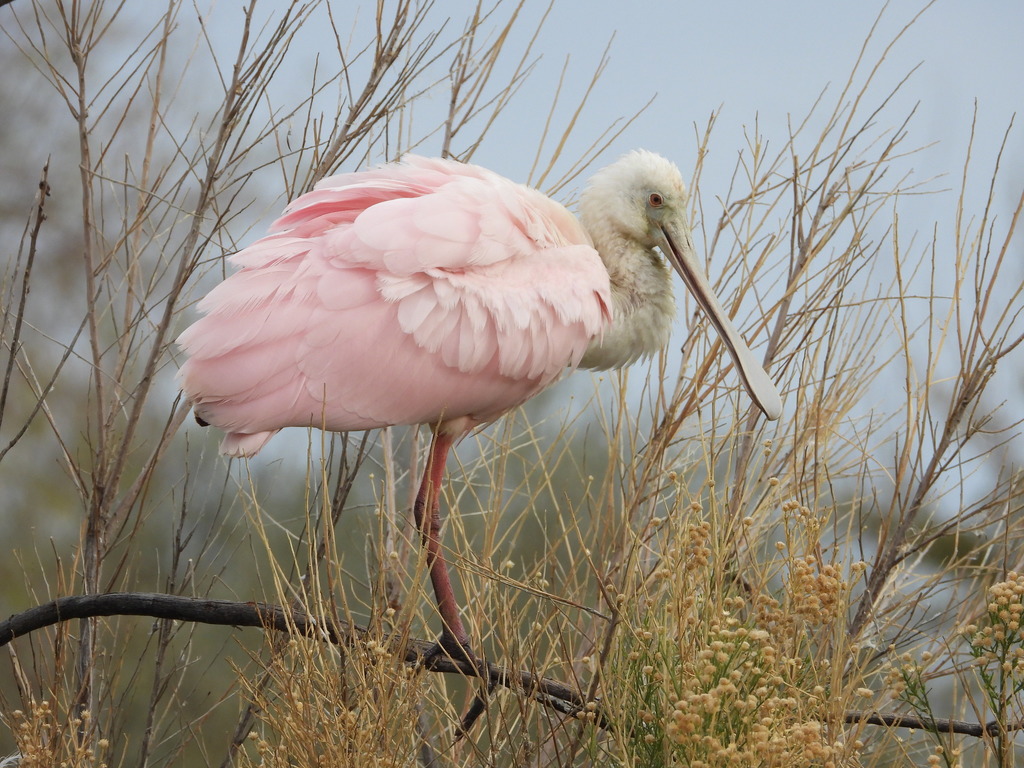
(c) Jared Shorma, some rights reserved (CC BY) · licence
Family: Threskiornithidae · Class: Aves · Order: Pelecaniformes
Platalea ajaja (Roseate Spoonbill) is a California animal in the Threskiornithidae family.
The Roseate Spoonbill is a large wading bird measuring 71 to 86 centimeters (28 to 34 inches) in length with a wingspan of 120 to 133 centimeters (47 to 52 inches). Adults weigh between 1.2 to 1.8 kilograms (2.6 to 4.0 pounds). The species is distinguished by its distinctive spatulate bill, which is flattened and rounded at the tip. Adult plumage is predominantly pink to rose-colored, with deeper carmine on the shoulders and wing coverts. The head and neck are bare of feathers, appearing greenish-yellow in adults. Legs are reddish-pink, and the tail is orange-buff. Juveniles are white with pale pink wing patches, gradually acquiring adult coloration over three years. Historically, Roseate Spoonbills bred in California's Central Valley and coastal regions during the late 1800s, but breeding populations were extirpated by the early 1900s due to hunting for the millinery trade. Currently, the species is considered a rare visitor to California, with most sightings occurring along the coast from San Diego County to Humboldt County. The Salton Sea region records the most consistent observations, particularly during post-breeding dispersal from July through October. Individual birds occasionally appear at freshwater wetlands in the Central Valley and San Francisco Bay Area. Roseate Spoonbills inhabit shallow wetlands including coastal lagoons, mangrove swamps, mudflats, and freshwater marshes. They prefer areas with water depths of 5 to 24 centimeters (2 to 9 inches) for optimal foraging. The species typically roosts in trees or shrubs near water, often in mixed colonies with other wading birds. In California, visiting birds are most commonly observed in managed wetlands, sewage treatment ponds, and shallow bays. The species feeds by sweeping its specialized bill from side to side through water and soft substrates, filtering small fish, crustaceans, aquatic insects, and mollusks. Spoonbills are highly social, often foraging in flocks and nesting in colonies. Breeding occurs from October through August depending on location, with peak activity during winter months in southern regions. Females construct platform nests of sticks in trees or shrubs, typically laying 2 to 4 white eggs with brown markings. Incubation lasts 22 to 24 days, and young fledge after 35 to 42 days. The Roseate Spoonbill is not federally listed but is considered a Species of Special Concern by some Gulf Coast states. The species recovered significantly from near extinction in the early 1900s, with current North American populations estimated at approximately 120,000 individuals. However, threats persist including habitat loss from coastal development, water management practices affecting wetland hydrology, and climate change impacts on sea level and storm intensity. In California, the lack of suitable breeding habitat and distance from core populations limit potential for reestablishment, though climate change may facilitate northward range expansion.
Classification
Class: Aves · Order: Pelecaniformes · Family: Threskiornithidae
Frequently asked questions
How is Platalea ajaja classified?
Platalea ajaja belongs to class Aves, order Pelecaniformes, family Threskiornithidae.
What family does Platalea ajaja belong to?
Platalea ajaja is in the Threskiornithidae family.
What is Platalea ajaja?
The Roseate Spoonbill is a large wading bird measuring 71 to 86 centimeters (28 to 34 inches) in length with a wingspan of 120 to 133 centimeters (47 to 52 inches).
Is Platalea ajaja found in California?
Yes. Platalea ajaja is recorded in California in The California Species Project's catalogue.
Related species
Other California species in the same genus, family, or bioregion.
Data from The California Species Project — 14,000+ California species with verified data from CNPS, CDFW, USFWS, and more.