Platycryptus californicus
California Flattened Jumping Spider
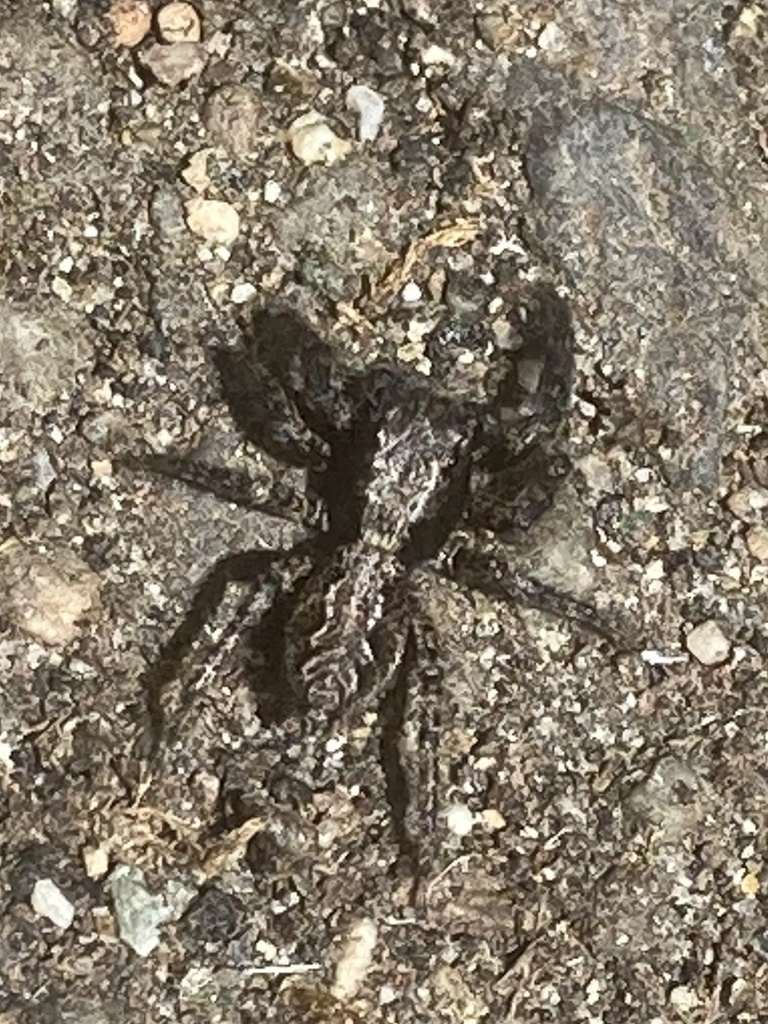
no rights reserved · CC0
Family: Salticidae · Class: Arachnida · Order: Araneae
Platycryptus californicus (California Flattened Jumping Spider) is a California animal in the Salticidae family.
The California flattened jumping spider (Platycryptus californicus) is a medium-sized arachnid in the family Salticidae, distinguished by its characteristic flattened body profile and distinctive leaf-like abdominal pattern. This species exhibits the typical jumping spider morphology with a compact cephalothorax and relatively narrow abdomen compared to other Platycryptus species. The body displays cryptic coloration with mottled brown and gray patterns that provide effective camouflage against bark and rock surfaces. Like all salticids, P. californicus possesses the family's characteristic large anterior median eyes that provide exceptional vision for hunting and navigation. Platycryptus californicus is found in North and Central America, with its range extending from western North America into parts of Central America (iNaturalist 2025). Within California, this species occurs across various elevations and habitat types, though specific distributional data within the state requires further documentation. The species appears to have a relatively broad geographic range compared to some other regional salticid species. This jumping spider inhabits diverse terrestrial environments, typically associated with woody vegetation, rock outcrops, and structured habitats that provide hunting opportunities and retreat sites. Like other Platycryptus species, P. californicus likely prefers habitats with vertical surfaces such as tree bark, rock faces, and wooden structures where its flattened morphology allows it to hide in crevices and under loose bark. The species' cryptic coloration suggests adaptation to bark-dwelling or rock-dwelling lifestyles. As an active hunter typical of the Salticidae family, the California flattened jumping spider employs visual hunting strategies rather than web construction for prey capture. These spiders use their exceptional eyesight to locate prey items, primarily small arthropods including flies, mosquitoes, small moths, and other invertebrates appropriate to their size. Jumping spiders are known for their complex courtship behaviors, with males performing species-specific visual displays involving leg movements and body positioning to attract females. Reproductive timing likely follows seasonal patterns typical of temperate zone salticids, with mating occurring during warmer months and females producing egg sacs in protected locations. Platycryptus californicus currently has no formal conservation designation at federal or state levels. The species appears to maintain stable populations across its range, though comprehensive population assessments have not been conducted. As with many arthropod species, habitat modification and urbanization may pose localized threats, but the species' apparent adaptability to various habitat types suggests resilience to moderate environmental changes. The broad geographic distribution of P. californicus likely provides some buffer against regional population fluctuations. Scientific documentation for this species remains limited, and additional research on population dynamics, habitat requirements, and ecological role would enhance understanding of its conservation needs. If you have additional verified information about this species' biology, distribution, or ecology, please contact us to help improve this species account.
Classification
Class: Arachnida · Order: Araneae · Family: Salticidae
Frequently asked questions
How is Platycryptus californicus classified?
Platycryptus californicus belongs to class Arachnida, order Araneae, family Salticidae.
What family does Platycryptus californicus belong to?
Platycryptus californicus is in the Salticidae family.
What is Platycryptus californicus?
The California flattened jumping spider (Platycryptus californicus) is a medium-sized arachnid in the family Salticidae, distinguished by its characteristic flattened body profile and distinctive leaf-like abdominal pattern.
Is Platycryptus californicus found in California?
Yes. Platycryptus californicus is recorded in California in The California Species Project's catalogue.
Related species
Other California species in the same genus, family, or bioregion.
Data from The California Species Project — 14,000+ California species with verified data from CNPS, CDFW, USFWS, and more.