Platyedra subcinerea
Cotton Stem Moth
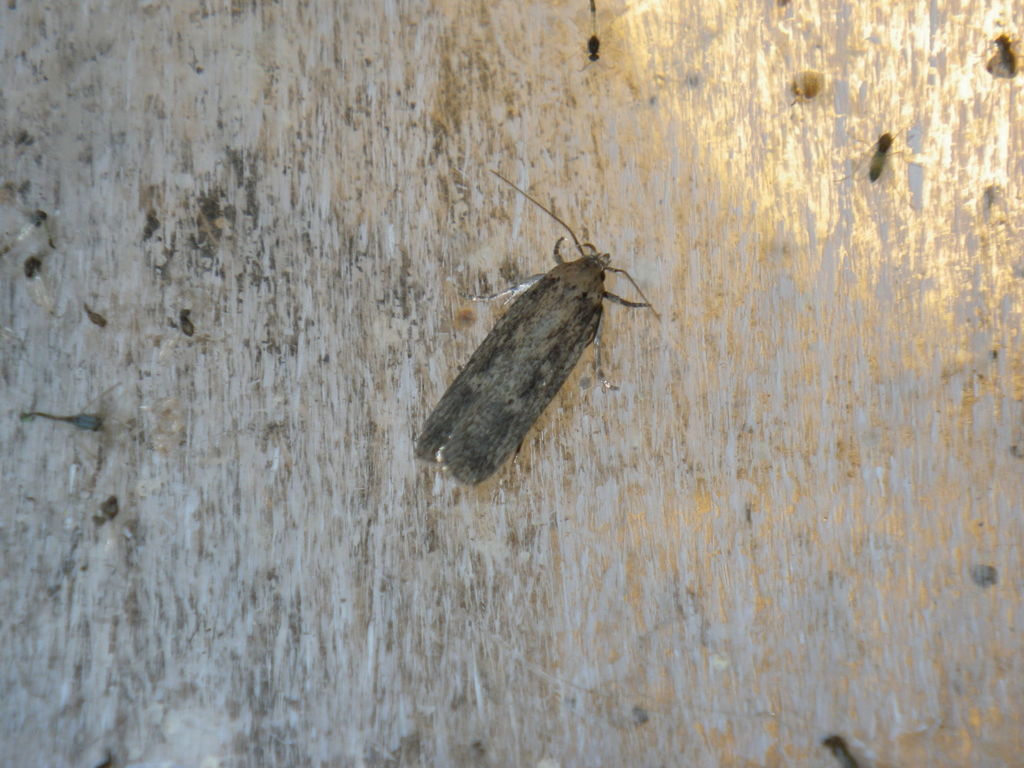
(c) Dominic, some rights reserved (CC BY) · licence
Family: Gelechiidae · Class: Insecta · Order: Lepidoptera
Platyedra subcinerea (Cotton Stem Moth) is a California animal in the Gelechiidae family.
The cotton stem moth (Platyedra subcinerea) is a small moth in the family Gelechiidae, measuring approximately 8-12 mm in wingspan. Adults display mottled gray and brown forewings with indistinct darker markings, while hindwings are pale gray to whitish. The forewings fold along the body when at rest, creating a narrow profile typical of gelechiid moths. Larvae are small, cylindrical caterpillars that develop within plant stems, reaching approximately 10-15 mm in length when fully grown. This species occurs in western North America, with documented populations in California, Nevada, Arizona, and northern Mexico. In California, the cotton stem moth has been recorded from desert regions in the southeastern counties, including Imperial, Riverside, and San Bernardino counties. The species also extends into the Sonoran Desert of Arizona and northwestern Mexico, suggesting adaptation to arid environments. The cotton stem moth inhabits desert and semi-desert regions, typically at elevations below 1,000 meters (3,280 feet). Adults are associated with areas supporting native shrubland vegetation, particularly where host plants in the family Malvaceae occur. The species shows preference for sandy washes, desert flats, and lower mountain slopes where appropriate host vegetation grows. These habitats are characterized by hot, dry summers and mild winters with minimal precipitation. Larvae are stem borers that develop within the woody stems of various shrubs and small trees in the Malvaceae family. The caterpillars tunnel through stem tissue, feeding on the inner bark and cambium layer. This boring activity can cause stem swelling or galling in some host plants. Adults are nocturnal and likely attracted to artificial lights. Flight periods appear to coincide with favorable temperature conditions, typically occurring during cooler months when desert temperatures moderate. Females presumably lay eggs on or near host plant stems, though specific reproductive behaviors require further study. The conservation status of the cotton stem moth remains poorly documented, with no current federal or state listing designations. Population trends are unknown due to limited systematic surveys of this species. As a desert-adapted lepidopteran, the species may face threats from habitat loss due to urban development, agricultural conversion, and infrastructure projects in desert regions. Climate change could affect the species through altered precipitation patterns and increased temperature extremes, potentially impacting both the moth and its host plants. The restricted desert habitat and apparent host plant specificity suggest the species could be vulnerable to environmental changes, though comprehensive population assessments are needed to determine conservation priorities. Additional research on distribution, host plant relationships, and population dynamics would improve understanding of this desert moth's ecological requirements and conservation needs.
Classification
Class: Insecta · Order: Lepidoptera · Family: Gelechiidae
Frequently asked questions
How is Platyedra subcinerea classified?
Platyedra subcinerea belongs to class Insecta, order Lepidoptera, family Gelechiidae.
What family does Platyedra subcinerea belong to?
Platyedra subcinerea is in the Gelechiidae family.
What is Platyedra subcinerea?
The cotton stem moth (Platyedra subcinerea) is a small moth in the family Gelechiidae, measuring approximately 8-12 mm in wingspan.
Is Platyedra subcinerea found in California?
Yes. Platyedra subcinerea is recorded in California in The California Species Project's catalogue.
Related species
Other California species in the same genus, family, or bioregion.
Data from The California Species Project — 14,000+ California species with verified data from CNPS, CDFW, USFWS, and more.