Platylyra californica
California Chaparral Katydid
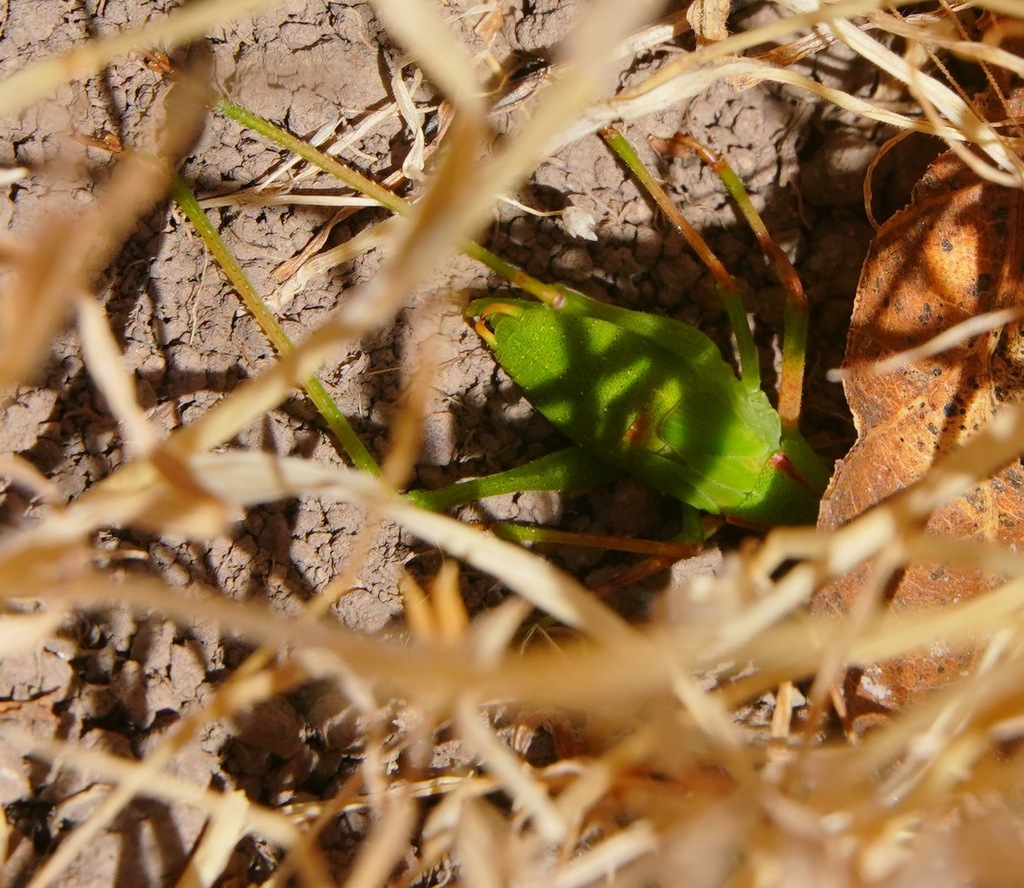
(c) Michael Warner, some rights reserved (CC BY) · licence
Family: Tettigoniidae · Class: Insecta · Order: Orthoptera
Platylyra californica (California Chaparral Katydid) is a California animal in the Tettigoniidae family.
The California Chaparral Katydid is a secretive orthopteran endemic to California's native shrubland ecosystems. This medium-sized katydid is smaller and less slender than members of the genus Scudderia, with proportionally shorter wings that distinguish it from related species (BugGuide 2025). Adults exhibit the typical katydid body plan with long antennae, powerful hind legs adapted for jumping, and wings that may be reduced compared to more mobile katydid species. Platylyra californica occurs throughout California, where it is associated with native chaparral vegetation communities (BugGuide 2025). The species' distribution appears to coincide with the Mediterranean climate regions of the state where chaparral is the dominant vegetation type. Historical and current range boundaries have not been well documented in the scientific literature, though the species is described as common within suitable habitat. This katydid inhabits native chaparral ecosystems, which consist of drought-adapted shrublands dominated by species such as manzanita, ceanothus, and scrub oak. Chaparral vegetation typically occurs on slopes and hillsides in areas with Mediterranean climate patterns of wet winters and dry summers. The species appears to be closely tied to undisturbed native plant communities, as its secretive nature and specialized habitat requirements make it vulnerable to habitat modification. The California Chaparral Katydid exhibits highly secretive behavior and does not readily fly to artificial lights, unlike many other katydid species (BugGuide 2025). This cryptic lifestyle likely contributes to the species being "seldom seen" despite being described as common within its range. Like other katydids, P. californica is presumed to be primarily herbivorous, feeding on the foliage of chaparral shrubs, though specific dietary preferences have not been documented. Reproductive behavior, seasonal activity patterns, and life cycle timing remain poorly studied for this species. No federal or state conservation listing status has been established for Platylyra californica. However, the species' dependence on native chaparral ecosystems raises conservation concerns given the ongoing threats to California's shrubland habitats. Urban development, altered fire regimes, and invasion by non-native plant species represent primary threats to chaparral communities throughout the species' range. Climate change may further stress these Mediterranean climate ecosystems through altered precipitation patterns and increased fire frequency. The secretive nature of this katydid makes population monitoring challenging, and current population trends are unknown. Detailed ecological studies of the California Chaparral Katydid are lacking, limiting our understanding of its specific habitat requirements, population dynamics, and conservation needs. Research priorities should include habitat use studies, population assessments, and evaluation of responses to habitat management practices such as prescribed burning, which is important for maintaining healthy chaparral ecosystems.
Classification
Class: Insecta · Order: Orthoptera · Family: Tettigoniidae
Frequently asked questions
How is Platylyra californica classified?
Platylyra californica belongs to class Insecta, order Orthoptera, family Tettigoniidae.
What family does Platylyra californica belong to?
Platylyra californica is in the Tettigoniidae family.
What is Platylyra californica?
The California Chaparral Katydid is a secretive orthopteran endemic to California's native shrubland ecosystems.
Is Platylyra californica found in California?
Yes. Platylyra californica is recorded in California in The California Species Project's catalogue.
Related species
Other California species in the same genus, family, or bioregion.
Data from The California Species Project — 14,000+ California species with verified data from CNPS, CDFW, USFWS, and more.