Platynereis bicanaliculata
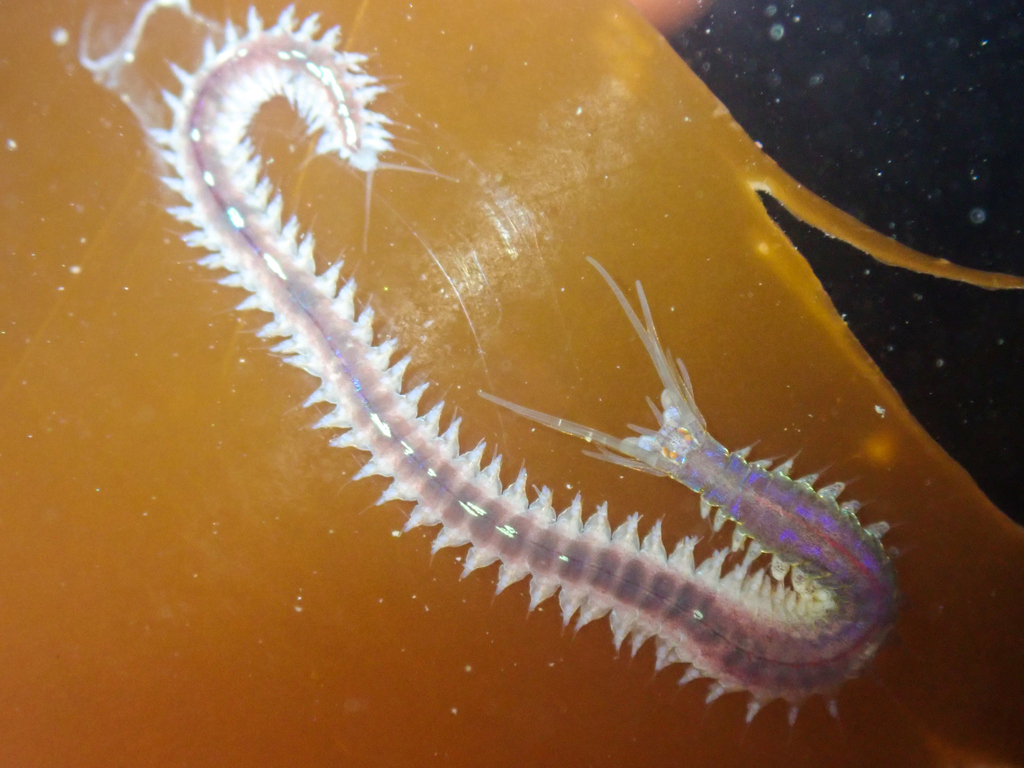
(c) Trevor Van Loon, some rights reserved (CC BY) · licence
Family: Nereididae · Class: Polychaeta · Order: Phyllodocida
Platynereis bicanaliculata is a California animal in the Nereididae family.
Platynereis bicanaliculata is a marine polychaete worm belonging to the family Nereididae. As a member of the order Phyllodocida, this species represents one of the errant polychaetes, characterized by their active, mobile lifestyle and well-developed parapodia for locomotion. The species exhibits the typical nereidid body plan with a segmented, elongated form and paired lateral appendages called parapodia that extend from each body segment. Like other members of the genus Platynereis, P. bicanaliculata possesses a well-developed prostomium (head region) with sensory appendages including antennae and palps that aid in prey detection and environmental sensing. The pharynx is eversible and equipped with chitinous jaws for capturing prey. The body segments bear biramous parapodia with both notopodial and neuropodial lobes, each supporting bundles of chaetae (bristles) that provide traction during movement through sediment or over surfaces. The distribution and specific habitat requirements of P. bicanaliculata have not been comprehensively documented in the available scientific literature. The species appears in the U.S. Fish and Wildlife Service taxonomic database, indicating its presence within U.S. waters, though detailed range information is not currently available. Marine polychaetes of this family typically inhabit coastal and estuarine environments, including intertidal zones, subtidal soft sediments, and rocky substrates. Nereidid polychaetes are generally omnivorous, feeding on a variety of organic matter including small invertebrates, algae, detritus, and bacterial films. They employ various feeding strategies depending on environmental conditions and prey availability, ranging from active predation to deposit feeding. Many species in this family exhibit complex reproductive cycles, with some undergoing epitokous transformation where reproductive individuals develop enlarged parapodia and modified body structures for swimming during spawning events. The conservation status of P. bicanaliculata has not been formally assessed, and the species does not appear on federal or state endangered species lists as of December 2025. However, marine polychaetes face various anthropogenic threats including coastal development, pollution, sedimentation, and climate change impacts such as ocean acidification and warming temperatures. These stressors can affect benthic communities through habitat degradation, altered food webs, and direct physiological impacts. Detailed ecological studies of P. bicanaliculata are lacking in the current scientific literature. The taxonomic validity and phylogenetic relationships within the genus Platynereis continue to be refined through molecular systematic studies. Like many marine invertebrates, this species likely plays important ecological roles in benthic food webs as both predator and prey, contributing to nutrient cycling and sediment processing in marine ecosystems. Further research is needed to document the species' distribution, habitat preferences, life history, and ecological significance.
Classification
Class: Polychaeta · Order: Phyllodocida · Family: Nereididae
Frequently asked questions
How is Platynereis bicanaliculata classified?
Platynereis bicanaliculata belongs to class Polychaeta, order Phyllodocida, family Nereididae.
What family does Platynereis bicanaliculata belong to?
Platynereis bicanaliculata is in the Nereididae family.
What is Platynereis bicanaliculata?
Platynereis bicanaliculata is a marine polychaete worm belonging to the family Nereididae.
Is Platynereis bicanaliculata found in California?
Yes. Platynereis bicanaliculata is recorded in California in The California Species Project's catalogue.
More California species
This species has no close relatives in our California data — here are other species to explore.
Data from The California Species Project — 14,000+ California species with verified data from CNPS, CDFW, USFWS, and more.