Platynota labiosana
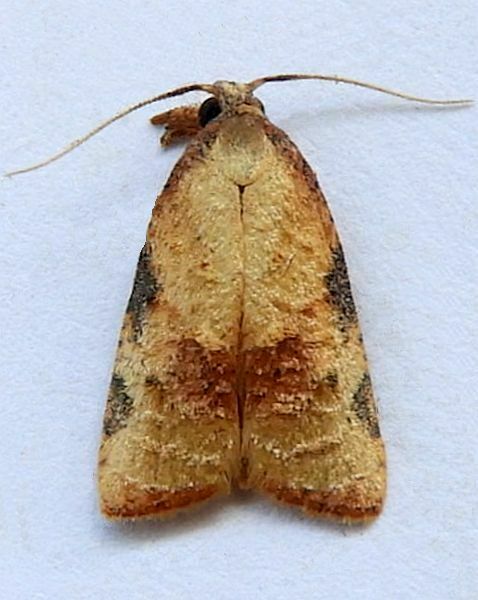
(c) jimeckert49, some rights reserved (CC BY) · licence
Family: Tortricidae · Class: Insecta · Order: Lepidoptera
Platynota labiosana is a California animal in the Tortricidae family.
Platynota labiosana is a moth species in the family Tortricidae, commonly known as leafroller moths. This species belongs to the genus Platynota, which comprises numerous North American tortricid moths characterized by their distinctive wing patterns and leaf-rolling larval behavior. Adult moths typically measure 12-18 mm in wingspan, displaying the characteristic tortricid wing shape with broad forewings and narrower hindwings. The forewings are generally brownish or grayish with darker markings and pale streaking patterns that provide effective camouflage against tree bark and dried vegetation. The distribution and range of Platynota labiosana remains poorly documented in current literature. Like many tortricid species, it likely occurs across portions of western North America, though specific locality records and range boundaries require further research. The species may be endemic to California or have a broader distribution extending into adjacent states, but comprehensive surveys are needed to establish accurate range maps. Habitat preferences for this species are not well-established in available literature. Most Platynota species inhabit woodland and forest environments where their host plants occur. They typically favor areas with mixed vegetation that provides both larval food sources and adult nectar resources. The species likely occurs from low elevations to montane zones, depending on the distribution of suitable host plants and environmental conditions. Like other tortricid moths, Platynota labiosana undergoes complete metamorphosis with egg, larval, pupal, and adult stages. Larvae are the leaf-rolling stage that gives the family its common name, creating shelters by spinning silk to bind leaves or portions of leaves together. These shelters provide protection from predators and environmental conditions while the larvae feed on plant tissue. Adult moths are primarily nocturnal and are attracted to artificial lights. Mating typically occurs during evening hours, with females depositing eggs on or near host plants. The number of generations per year likely depends on local climate conditions and may range from one to several broods annually. Detailed information about host plant associations, specific ecological requirements, and life cycle timing for Platynota labiosana is limited in current scientific literature. This knowledge gap represents a significant constraint in assessing the species' conservation needs and population status. Without comprehensive data on distribution, abundance, habitat requirements, and potential threats, it is difficult to determine whether conservation measures are necessary. The conservation status of Platynota labiosana has not been formally evaluated by state or federal agencies. The species lacks federal listing status and does not appear on California's Species of Special Concern list as of December 2025. However, the absence of recent systematic surveys and limited ecological data means that population trends and conservation needs remain unknown. Many invertebrate species, particularly moths, face threats from habitat loss, pesticide use, light pollution, and climate change, but the specific impacts on this species require investigation.
Classification
Class: Insecta · Order: Lepidoptera · Family: Tortricidae
Frequently asked questions
How is Platynota labiosana classified?
Platynota labiosana belongs to class Insecta, order Lepidoptera, family Tortricidae.
What family does Platynota labiosana belong to?
Platynota labiosana is in the Tortricidae family.
What is Platynota labiosana?
Platynota labiosana is a moth species in the family Tortricidae, commonly known as leafroller moths.
Is Platynota labiosana found in California?
Yes. Platynota labiosana is recorded in California in The California Species Project's catalogue.
Related species
Other California species in the same genus, family, or bioregion.
Data from The California Species Project — 14,000+ California species with verified data from CNPS, CDFW, USFWS, and more.