Platynota nigrocervina
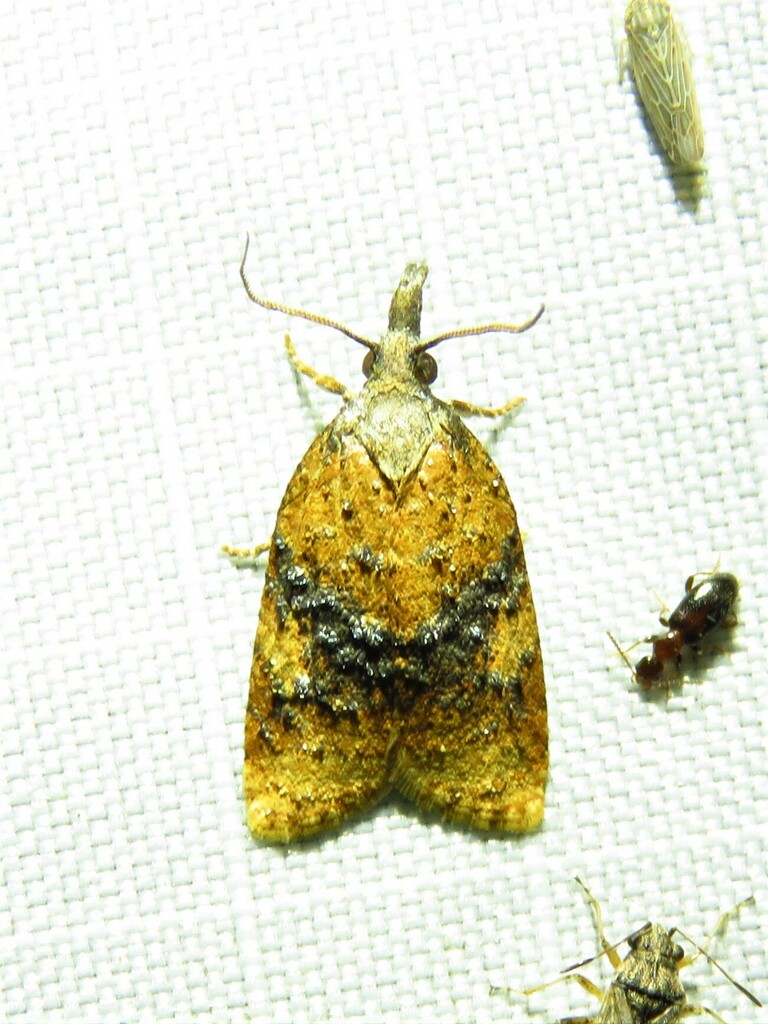
(c) Annika Lindqvist, some rights reserved (CC BY) · licence
Family: Tortricidae · Class: Insecta · Order: Lepidoptera
Platynota nigrocervina is a California animal in the Tortricidae family.
Platynota nigrocervina is a moth species in the family Tortricidae, commonly known as leafroller moths. This species belongs to a diverse family of small to medium-sized moths whose larvae typically feed within rolled or folded leaves. Adult moths in the genus Platynota generally measure 12-20 mm in wingspan, with forewings that are often mottled or banded in earth tones. P. nigrocervina, as indicated by its specific epithet 'nigrocervina' (meaning black-necked), likely displays dark coloration on the head and thorax region, though detailed morphological descriptions for this particular species are limited in accessible literature. The distribution and range of Platynota nigrocervina remain poorly documented in current entomological databases. Many Tortricidae species have restricted ranges, particularly those adapted to specific host plants or microhabitats. Without comprehensive survey data, the historical and current distribution of this species in California cannot be precisely determined. The genus Platynota includes both widespread and endemic species, with some confined to particular geographic regions or elevation zones. Habitat requirements for P. nigrocervina are not well-established in available sources. Tortricidae moths typically inhabit areas where their larval host plants occur, ranging from coastal scrublands to montane forests depending on the species. Many leafroller moths are associated with woody plants, including both native shrubs and trees. The larvae create shelters by rolling or tying leaves together with silk, feeding on the enclosed plant material during development. Like other tortricid moths, P. nigrocervina likely undergoes complete metamorphosis with egg, larval, pupal, and adult stages. Adults are generally most active during evening and nighttime hours, when mating and egg-laying occur. Females typically deposit eggs on or near host plants, where larvae will feed after hatching. The number of generations per year varies among Tortricidae species, with some completing multiple generations annually while others may require longer development periods. Larval feeding behavior involves creating characteristic leaf rolls or folds that serve as both feeding sites and protection from predators and environmental conditions. The conservation status of Platynota nigrocervina cannot be assessed due to insufficient data regarding its population size, distribution, and trends. This species does not appear on current federal or state endangered species lists, nor is it included in comprehensive invertebrate conservation assessments. The lack of available information highlights a common challenge in lepidopteran conservation, where many species remain poorly studied despite their ecological importance as pollinators and components of food webs. Without baseline population data or habitat requirements, it is impossible to evaluate potential threats or conservation needs for this species. Further taxonomic research and field surveys would be necessary to determine the current status and distribution of P. nigrocervina in California's diverse ecosystems.
Classification
Class: Insecta · Order: Lepidoptera · Family: Tortricidae
Frequently asked questions
How is Platynota nigrocervina classified?
Platynota nigrocervina belongs to class Insecta, order Lepidoptera, family Tortricidae.
What family does Platynota nigrocervina belong to?
Platynota nigrocervina is in the Tortricidae family.
What is Platynota nigrocervina?
Platynota nigrocervina is a moth species in the family Tortricidae, commonly known as leafroller moths.
Is Platynota nigrocervina found in California?
Yes. Platynota nigrocervina is recorded in California in The California Species Project's catalogue.
Related species
Other California species in the same genus, family, or bioregion.
Data from The California Species Project — 14,000+ California species with verified data from CNPS, CDFW, USFWS, and more.