Platyprepia virginalis
Ranchman's Tiger Moth
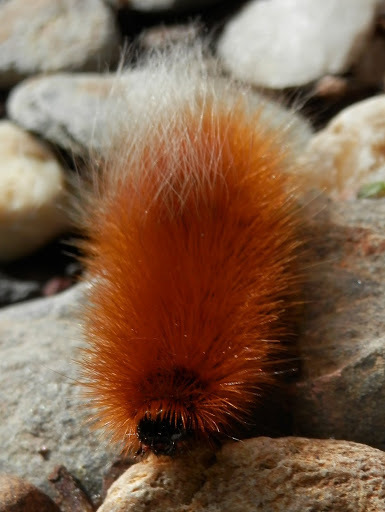
(c) 101595408250610106310, some rights reserved (CC BY) · licence
Family: Erebidae · Class: Insecta · Order: Lepidoptera
Platyprepia virginalis (Ranchman's Tiger Moth) is a California animal in the Erebidae family.
The Ranchman's Tiger Moth (Platyprepia virginalis) is a medium-sized moth in the family Erebidae, subfamily Arctiinae. Adults have a wingspan of approximately 35-45 mm (1.4-1.8 inches). The forewings display a distinctive pattern of cream-colored or pale yellow ground color with bold black markings forming irregular bands and spots. The hindwings are typically orange to reddish-orange with black marginal borders and scattered black spots. The thorax is cream-colored with black longitudinal stripes, while the abdomen shows alternating bands of orange and black. Males are generally smaller than females and may have more pronounced feathery antennae. This species occurs in western North America, with populations documented from British Columbia south through Washington, Oregon, Idaho, and California. In California, the Ranchman's Tiger Moth is found primarily in mountainous regions of the northern and central portions of the state, including the Sierra Nevada and Cascade Range. The species has been recorded at elevations ranging from approximately 1,200 to 2,400 meters (4,000 to 8,000 feet). Ranchman's Tiger Moths inhabit montane coniferous forests, particularly areas dominated by Douglas fir, ponderosa pine, and mixed conifer stands. Adults are associated with forest openings, meadow edges, and riparian areas within these forest systems. The species shows a preference for areas with moderate canopy cover that provide both host plants for larvae and nectar sources for adults. Adults are nocturnal and are attracted to artificial lights during their flight period, which typically occurs from late June through August, with peak activity in July. Females lay clusters of eggs on or near host plants. The larvae are polyphagous, feeding on various herbaceous plants and low shrubs including lupines (Lupinus species), paintbrush (Castilleja species), and other members of the Fabaceae and Scrophulariaceae families. Caterpillars are densely covered with bristly hairs and exhibit warning coloration with dark and light banding. The species overwinters as a pupa in a cocoon constructed among leaf litter or in shallow soil. Adults feed on nectar from various flowering plants including composites and other summer-blooming species. The Ranchman's Tiger Moth is not currently listed under federal or state endangered species legislation. Population trends are not well documented, but the species appears to maintain stable populations within suitable habitat. Primary potential threats include habitat loss from logging activities, fire suppression that alters natural forest dynamics, and climate change effects on montane forest ecosystems. Forest management practices that maintain diverse understory plant communities and natural fire regimes likely benefit this species by preserving both larval host plants and adult nectar sources.
Classification
Class: Insecta · Order: Lepidoptera · Family: Erebidae
Frequently asked questions
How is Platyprepia virginalis classified?
Platyprepia virginalis belongs to class Insecta, order Lepidoptera, family Erebidae.
What family does Platyprepia virginalis belong to?
Platyprepia virginalis is in the Erebidae family.
What is Platyprepia virginalis?
The Ranchman's Tiger Moth (Platyprepia virginalis) is a medium-sized moth in the family Erebidae, subfamily Arctiinae.
Is Platyprepia virginalis found in California?
Yes. Platyprepia virginalis is recorded in California in The California Species Project's catalogue.
Related species
Other California species in the same genus, family, or bioregion.
Data from The California Species Project — 14,000+ California species with verified data from CNPS, CDFW, USFWS, and more.