Plebejus anna
Anna's Blue
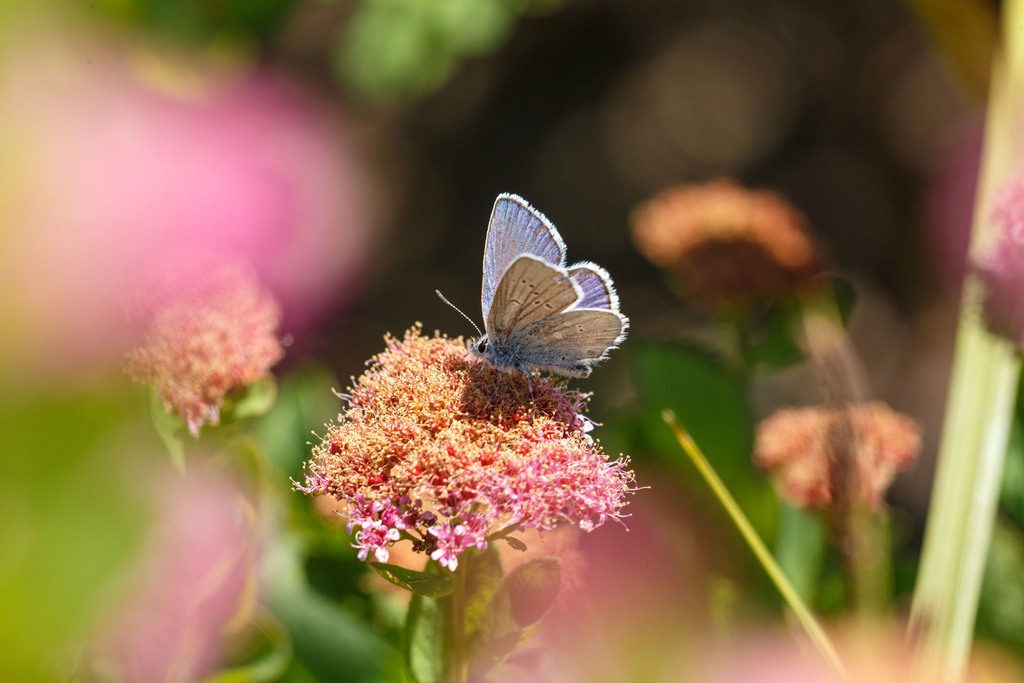
(c) Jeff Bartlett, some rights reserved (CC BY) · licence
Family: Lycaenidae · Class: Insecta · Order: Lepidoptera
Plebejus anna (Anna's Blue) is a California animal in the Lycaenidae family.
Plebejus anna, commonly known as Anna's Blue, is a small butterfly in the family Lycaenidae. This species represents one of the lesser-documented blues in the western North American fauna, with limited available information about its specific characteristics and distribution patterns. Males typically display the characteristic blue coloration on the dorsal wing surfaces common to many Plebejus species, while females generally exhibit brown dorsal wings with varying degrees of blue scaling near the wing bases. The ventral wing surfaces of both sexes are typically gray to brown with distinctive white-ringed black spots and orange marginal spots along the hindwing edges. Wing span measurements and specific morphological details for this species remain poorly documented in the scientific literature. The range and distribution of Anna's Blue appears to be restricted to specific areas of western North America, though precise geographic boundaries and elevational limits require further documentation. Current records suggest a limited distribution that may encompass portions of California and adjacent regions, but comprehensive surveys are needed to establish definitive range maps. Habitat requirements for Plebejus anna remain incompletely understood. Like other members of the genus, this species likely inhabits montane or subalpine environments where appropriate host plants occur. The specific elevation range, vegetation associations, and microhabitat preferences have not been thoroughly documented. Adults presumably fly during summer months, consistent with other high-elevation blues, but precise flight periods and seasonal activity patterns require verification. The larval host plants for Anna's Blue have not been definitively established, though members of the genus Plebejus typically utilize various Fabaceae species, particularly lupines (Lupinus) and other leguminous plants. Larval development likely follows the typical lycaenid pattern, with eggs laid on or near host plants and larvae feeding on leaves, flowers, or developing seeds. Some Plebejus species maintain facultative relationships with ant species, which may provide protection in exchange for honeydew secretions, though such associations have not been confirmed for P. anna. The conservation status of Anna's Blue remains uncertain due to limited survey data and taxonomic questions surrounding this species. It does not appear on federal or state endangered species lists, and its global conservation rank has not been formally assessed. The species may face threats common to montane butterflies, including habitat fragmentation, climate change effects on high-elevation ecosystems, and potential impacts from recreational activities in mountain environments. Further research is needed to clarify the taxonomic validity, distribution, ecology, and conservation needs of Plebejus anna. Systematic surveys throughout its suspected range would help establish population status and identify critical habitat requirements. Given the general vulnerability of high-elevation butterfly species to environmental changes, monitoring efforts may be warranted to track population trends and assess conservation priorities.
Classification
Class: Insecta · Order: Lepidoptera · Family: Lycaenidae
Frequently asked questions
How is Plebejus anna classified?
Plebejus anna belongs to class Insecta, order Lepidoptera, family Lycaenidae.
What family does Plebejus anna belong to?
Plebejus anna is in the Lycaenidae family.
What is Plebejus anna?
Plebejus anna, commonly known as Anna's Blue, is a small butterfly in the family Lycaenidae.
Is Plebejus anna found in California?
Yes. Plebejus anna is recorded in California in The California Species Project's catalogue.
Related species
Other California species in the same genus, family, or bioregion.
Data from The California Species Project — 14,000+ California species with verified data from CNPS, CDFW, USFWS, and more.