Plebejus anna lotis
Lotis blue butterfly
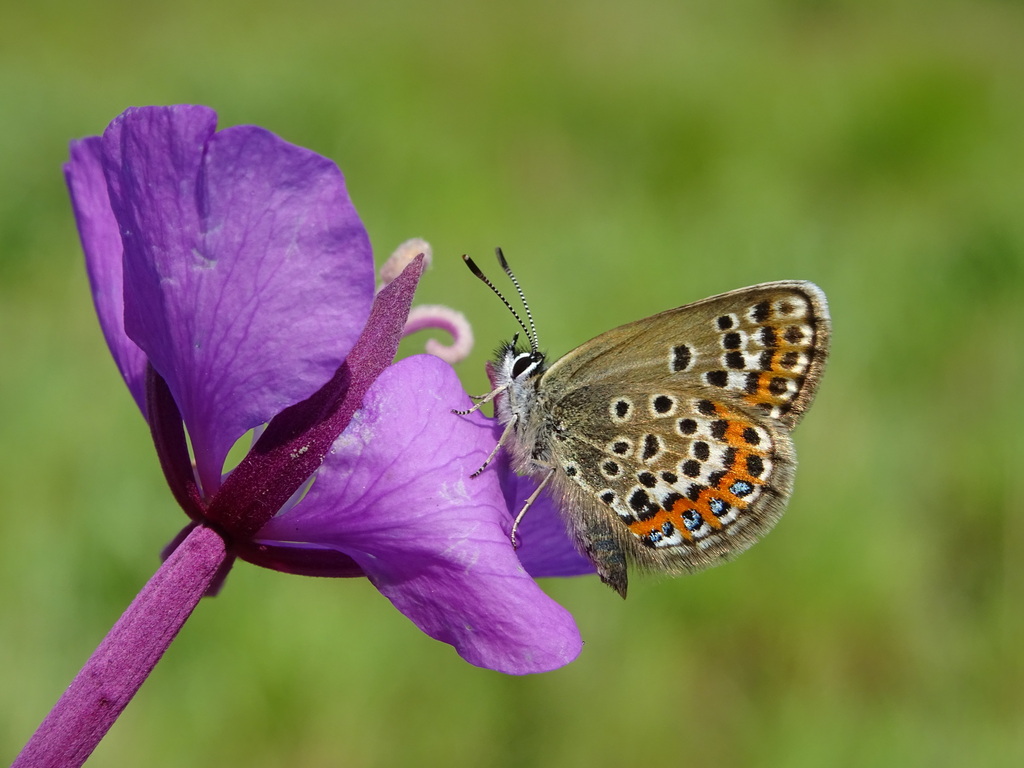
(c) Joey Bom, some rights reserved (CC BY) · licence
Family: Lycaenidae · Class: Insecta · Order: Lepidoptera
Conservation status: Endangered · G4TH SH
Plebejus anna lotis (Lotis blue butterfly) is a California animal in the Lycaenidae family.
The Lotis blue butterfly is a small lycaenid butterfly endemic to coastal California. Males display blue dorsal wing surfaces with narrow dark borders, while females are typically brown with blue scaling at the wing bases. The undersides of both sexes are gray with dark spots and orange crescents, distinguishing them from similar blue butterflies in the region. Adults measure approximately 18-25 mm in wingspan. Historically, the Lotis blue butterfly occurred in several coastal locations in Mendocino and northern Sonoma Counties, California. The species was documented from wet meadow habitats near the coast, where its larval host plants were present. Current distribution data indicates the species may be extirpated from its known range, with no confirmed populations documented in recent surveys. The species inhabits coastal wet meadows and associated grassland areas. These habitats are characterized by seasonal moisture patterns and specific plant communities that support the butterfly's host plants. The coastal fog influence and maritime climate of these locations create the microhabitat conditions necessary for both the butterfly and its associated vegetation. Lotis blue butterflies are univoltine, producing one generation per year. Adults typically emerge in late spring to early summer, coinciding with the blooming period of their host plants. Like other members of the Lycaenidae family, larvae likely feed on leguminous plants, though specific host plant relationships have not been definitively documented in published literature. The species exhibits typical lycaenid behavior, with adults engaging in patrolling flight patterns and territorial behavior around suitable habitat patches. The Lotis blue butterfly was listed as federally endangered on June 1, 1976, under the scientific name Lycaeides argyrognomon lotis, as part of the initial group of six California butterfly species proposed for protection (USFWS 1975). The species faces severe threats from habitat loss and degradation of coastal wet meadow ecosystems. Urban and agricultural development has eliminated much of the butterfly's historical habitat in Mendocino and Sonoma Counties. Climate change poses additional threats through altered precipitation patterns and coastal fog dynamics that maintain the moisture-dependent meadow systems. According to the U.S. Fish and Wildlife Service, the species may already be extinct, with no confirmed sightings in recent decades despite targeted surveys (USFWS 2011). The taxonomic status has evolved, with the species originally classified as Lycaeides argyrognomon lotis in federal records but now recognized as Plebejus anna lotis by some taxonomic authorities (NatureServe 2024). Recovery efforts have been hampered by the apparent absence of extant populations and the limited understanding of specific habitat requirements and host plant relationships. The species represents one of the most critically imperiled butterflies in North America, highlighting the vulnerability of specialized insects adapted to highly specific coastal habitats.
Classification
Class: Insecta · Order: Lepidoptera · Family: Lycaenidae
Conservation status
Endangered · G4TH SH
Frequently asked questions
How is Plebejus anna lotis classified?
Plebejus anna lotis belongs to class Insecta, order Lepidoptera, family Lycaenidae.
What family does Plebejus anna lotis belong to?
Plebejus anna lotis is in the Lycaenidae family.
Is Plebejus anna lotis protected or of conservation concern?
Plebejus anna lotis carries the following status: Endangered · G4TH SH.
What is Plebejus anna lotis?
The Lotis blue butterfly is a small lycaenid butterfly endemic to coastal California.
Is Plebejus anna lotis found in California?
Yes. Plebejus anna lotis is recorded in California in The California Species Project's catalogue.
Related species
Other California species in the same genus, family, or bioregion.
Data from The California Species Project — 14,000+ California species with verified data from CNPS, CDFW, USFWS, and more.