Plebejus emigdionis
San Emigdio Blue
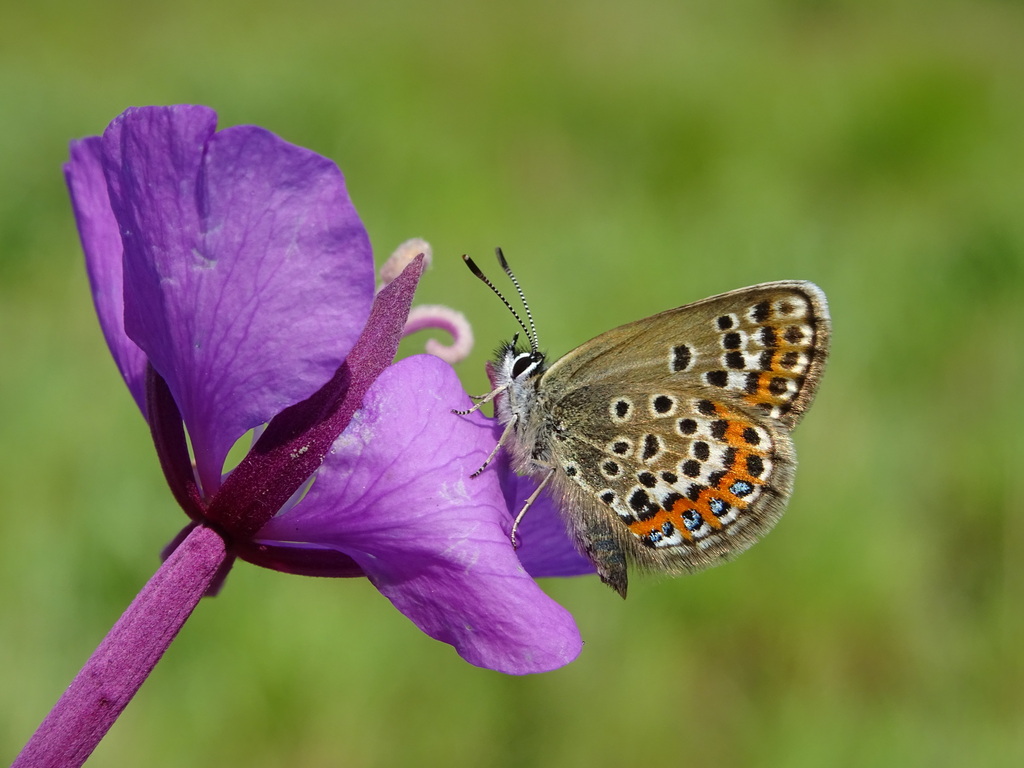
(c) Joey Bom, some rights reserved (CC BY) · licence
Family: Lycaenidae · Class: Insecta · Order: Lepidoptera
Plebejus emigdionis (San Emigdio Blue) is a California animal in the Lycaenidae family.
The San Emigdio Blue is a small butterfly in the copper and blue family (Lycaenidae). Adult males typically display blue dorsal wing surfaces, while females are generally brown with varying degrees of blue scaling. The underside of both sexes features gray-brown coloration with distinctive dark spots bordered by white rings, characteristic of the Plebejus genus. Wing span measurements have not been well documented for this species. This species occurs very locally in southern California, ranging from Inyo County south through the Mojave Desert, San Joaquin Valley, Bouquet and Mint Canyons, and Los Angeles County. According to NatureServe, the species extends from the southern San Joaquin Valley and Mojave Desert south to the Victorville area (Opler 1999). The U.S. Fish and Wildlife Service recognizes this as a California endemic species with populations believed to occur in specific counties throughout this range. The San Emigdio Blue inhabits arid and semi-arid environments where its host plant occurs. The species is obligately associated with shadscale (Atriplex canescens) in the goosefoot family (Chenopodiaceae). This shrubby perennial occurs in alkaline soils of desert flats, washes, and lower mountain slopes throughout the Mojave Desert and surrounding regions. The butterfly's distribution is therefore limited to areas supporting healthy shadscale populations. Larvae develop exclusively on shadscale, feeding on leaves and possibly flowers of this drought-adapted shrub. Adult flight periods and specific breeding behaviors have not been thoroughly documented in the scientific literature. Like other members of the Plebejus genus, adults likely feed on nectar from various flowering plants within their habitat. The species presumably follows a typical lycaenid life cycle with egg, larval, pupal, and adult stages, though detailed ecological studies are lacking. The San Emigdio Blue faces conservation challenges typical of desert-adapted species with restricted distributions. NatureServe assigns this species a global rank of G3, indicating it is very rare or local throughout its range. According to Butterflies and Moths of North America, habitat monitoring and conservation of all known populations is recommended. The species' dependence on shadscale makes it vulnerable to habitat degradation from urban development, agriculture, and altered land management practices within its limited California range. Climate change may pose additional threats through shifts in precipitation patterns and temperature regimes that could affect both the butterfly and its host plant. The restricted distribution and apparent rarity of this species highlight the need for continued monitoring and habitat protection efforts. Scientific documentation for this species remains limited compared to more widely distributed butterflies. If you have additional verified information about this species' biology, distribution, or ecology, please contact us to help improve this species account.
Classification
Class: Insecta · Order: Lepidoptera · Family: Lycaenidae
Frequently asked questions
How is Plebejus emigdionis classified?
Plebejus emigdionis belongs to class Insecta, order Lepidoptera, family Lycaenidae.
What family does Plebejus emigdionis belong to?
Plebejus emigdionis is in the Lycaenidae family.
What is Plebejus emigdionis?
The San Emigdio Blue is a small butterfly in the copper and blue family (Lycaenidae).
Is Plebejus emigdionis found in California?
Yes. Plebejus emigdionis is recorded in California in The California Species Project's catalogue.
Related species
Other California species in the same genus, family, or bioregion.
Data from The California Species Project — 14,000+ California species with verified data from CNPS, CDFW, USFWS, and more.