Plectrophenax nivalis
Snow Bunting
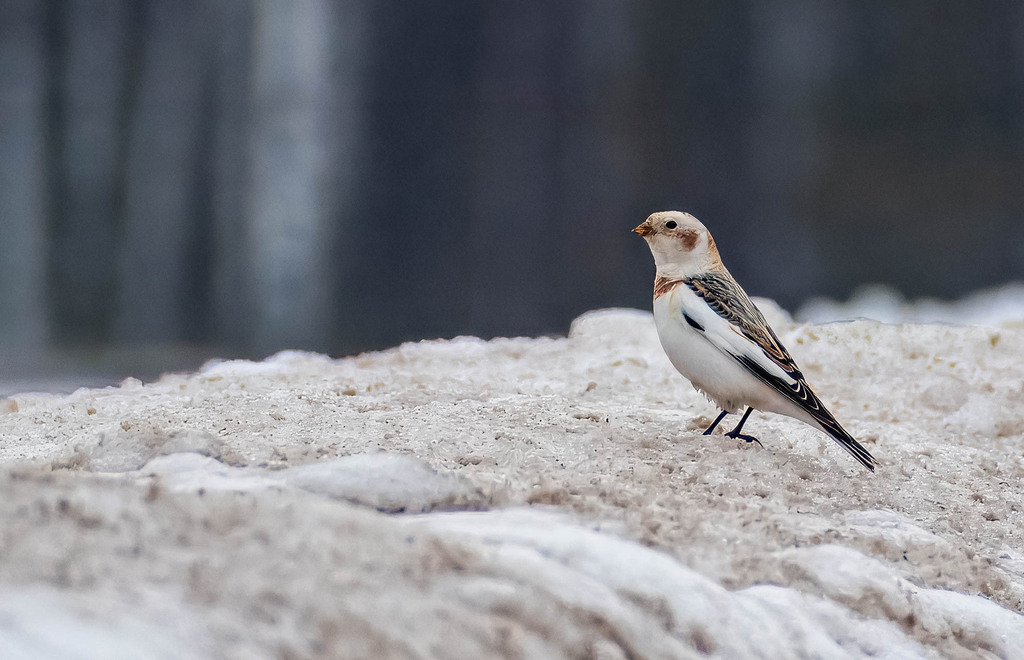
(c) Михаил Малышев, some rights reserved (CC BY) · licence
Family: Calcariidae · Class: Aves · Order: Passeriformes
Plectrophenax nivalis (Snow Bunting) is a California animal in the Calcariidae family.
The Snow Bunting is a medium-sized songbird measuring 15-18 cm (6-7 inches) in length with a wingspan of 32-38 cm (12.6-15 inches). During breeding season, males display striking black and white plumage with a pure white head, underparts, and wing patches contrasting sharply with black back, wings, and tail. Females and non-breeding males show more subdued coloration with brownish streaking on the crown and back. The species exhibits one of the most dramatic seasonal plumage changes among North American birds, molting from crisp black-and-white breeding colors to rusty-brown and buff winter tones. The bill is yellow-orange during breeding season, darkening to black in winter. Snow Buntings breed in the high Arctic tundra across Alaska and northern Canada, with the global population extending across northern Eurasia. In California, they are rare winter visitors, typically appearing from November through March in open areas along the coast and in the Central Valley. Most California records come from agricultural fields, coastal dunes, and airports, particularly in Marin, Sonoma, Monterey, San Luis Obispo, and Riverside counties. The species is irregular in occurrence, with some winters producing multiple sightings and others none. During winter in California, Snow Buntings inhabit open grasslands, agricultural fields, beaches, and other treeless areas that resemble their tundra breeding grounds. They prefer areas with sparse vegetation and exposed ground where seeds are readily accessible. The species shows a strong affinity for disturbed habitats including plowed fields, overgrazed pastures, and airport runways. They typically occur from sea level to 1,500 meters elevation in California. Snow Buntings are highly gregarious outside the breeding season, forming flocks of 10-100 individuals that may associate with other ground-foraging birds including Horned Larks and Lapland Longspurs. Their diet consists primarily of seeds from grasses and forbs, supplemented by insects during the breeding season. Winter feeding behavior involves scratching through snow and debris to reach buried seeds. The species exhibits nomadic movements in winter, following food availability and weather patterns. Breeding occurs on Arctic tundra from May through August, with females constructing ground nests in rock crevices or tussocks and laying 3-6 eggs. Snow Buntings are not federally or state listed in California, reflecting their status as uncommon but regular winter visitors rather than resident breeding birds. The global population is considered stable by the International Union for Conservation of Nature, which lists the species as Least Concern. However, climate change poses potential long-term threats to Arctic breeding habitat. In California, the species faces no specific conservation concerns, as winter habitat remains widely available. Population trends in North America show regional variation, with some Arctic breeding areas experiencing declines linked to changing vegetation patterns and warming temperatures affecting tundra ecosystems.
Classification
Class: Aves · Order: Passeriformes · Family: Calcariidae
Frequently asked questions
How is Plectrophenax nivalis classified?
Plectrophenax nivalis belongs to class Aves, order Passeriformes, family Calcariidae.
What family does Plectrophenax nivalis belong to?
Plectrophenax nivalis is in the Calcariidae family.
What is Plectrophenax nivalis?
The Snow Bunting is a medium-sized songbird measuring 15-18 cm (6-7 inches) in length with a wingspan of 32-38 cm (12.6-15 inches).
Is Plectrophenax nivalis found in California?
Yes. Plectrophenax nivalis is recorded in California in The California Species Project's catalogue.
Related species
Other California species in the same genus, family, or bioregion.
Data from The California Species Project — 14,000+ California species with verified data from CNPS, CDFW, USFWS, and more.