Plemyria georgii
George's Carpet Moth
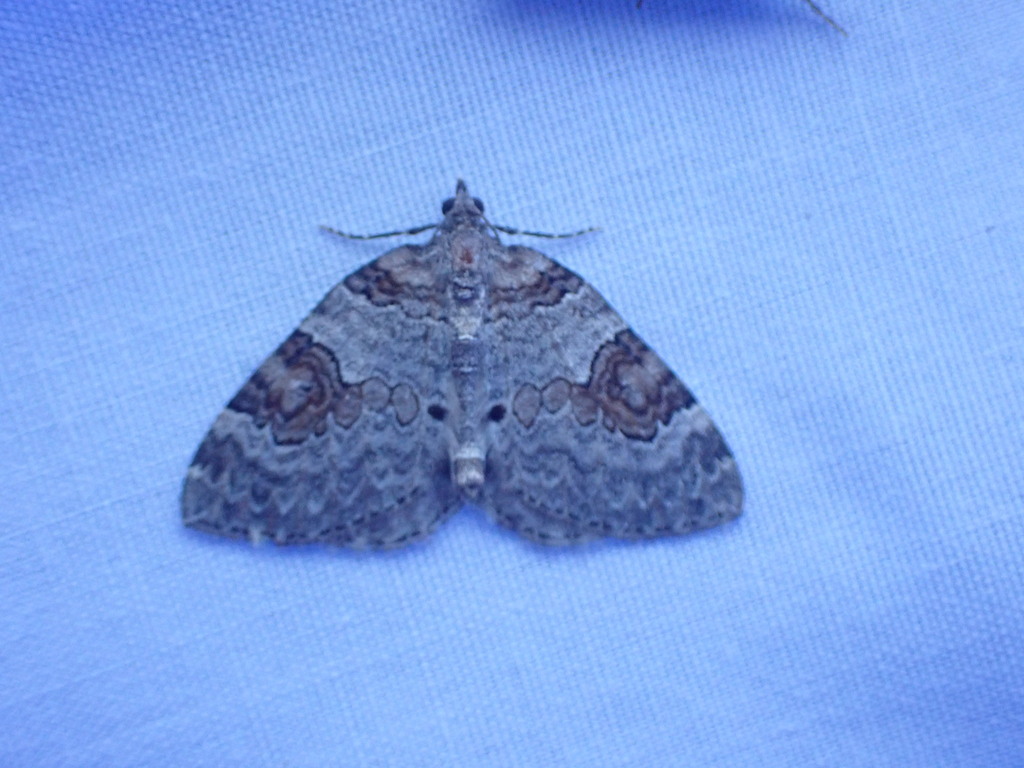
no rights reserved · CC0
Family: Geometridae · Class: Insecta · Order: Lepidoptera
Plemyria georgii (George's Carpet Moth) is a California animal in the Geometridae family.
George's Carpet Moth (Plemyria georgii) is a small geometrid moth with forewings measuring 13-16 mm in length (Powell & Opler 2009). The species belongs to the subfamily Larentiinae, tribe Hydriomenini, and represents the only member of the genus Plemyria occurring north of Mexico in North America (BugGuide 2025). Adults display the characteristic carpet moth wing patterns typical of the Geometridae family, with forewings showing subtle geometric markings that provide effective camouflage when at rest on tree bark. This species exhibits one of the broadest continental distributions among North American geometrids. The range extends across Canada from British Columbia and Northwest Territories eastward to Nova Scotia. In the United States, populations occur from central California eastward to Maine (Powell & Opler 2009). This transcontinental distribution reflects the moth's association with widely distributed deciduous tree genera that serve as larval hosts. George's Carpet Moth inhabits deciduous and mixed forests throughout its range, particularly areas supporting alder, birch, and willow communities. The species shows strong fidelity to riparian zones and forest edges where host trees are abundant. Adults are primarily nocturnal but are frequently observed during daylight hours, distinguishing them from many other geometrid species that remain strictly night-active (BugGuide 2025). The flight period extends from July through early September across most of the range (Powell & Opler 2009). Larvae feed on three genera of deciduous trees: Alnus (alder), Betula (birch), and Salix (willow) (BugGuide 2025). This polyphagous feeding strategy on related tree genera within the order Lepidoptera contributes to the species' broad geographic distribution. Recent rearing records from Alaska document successful development on both Alnus and Betula species, with adults emerging in July (Alaska Lepidoptera Survey 2015). The larvae likely overwinter in soil or leaf litter, pupating in spring before adult emergence. Reproductive biology follows typical geometrid patterns, with females depositing eggs on host plant foliage. The caterpillars are inchworms that move with the characteristic looping locomotion of geometrid larvae. Development from egg to adult likely requires one full year in northern populations, though specific life cycle timing may vary with latitude and local climate conditions. George's Carpet Moth currently holds no special conservation status at federal or state levels. The species appears stable across its extensive range, benefiting from its broad host plant tolerance and adaptability to various forest types. However, like many forest-dependent moths, populations may face localized pressures from habitat fragmentation and forest management practices. The species' reliance on native deciduous trees makes it potentially vulnerable to invasive forest pests and diseases affecting alder, birch, and willow populations. Climate change may alter the northern extent of suitable habitat, though the species' current range suggests considerable ecological flexibility. Continued monitoring through citizen science programs and lepidopteran surveys will help track population trends across this moth's extensive North American distribution.
Classification
Class: Insecta · Order: Lepidoptera · Family: Geometridae
Frequently asked questions
How is Plemyria georgii classified?
Plemyria georgii belongs to class Insecta, order Lepidoptera, family Geometridae.
What family does Plemyria georgii belong to?
Plemyria georgii is in the Geometridae family.
What is Plemyria georgii?
George's Carpet Moth (Plemyria georgii) is a small geometrid moth with forewings measuring 13-16 mm in length (Powell & Opler 2009).
Is Plemyria georgii found in California?
Yes. Plemyria georgii is recorded in California in The California Species Project's catalogue.
Related species
Other California species in the same genus, family, or bioregion.
Data from The California Species Project — 14,000+ California species with verified data from CNPS, CDFW, USFWS, and more.