Pleromelloida cinerea
Ashy Pleromelloida Moth
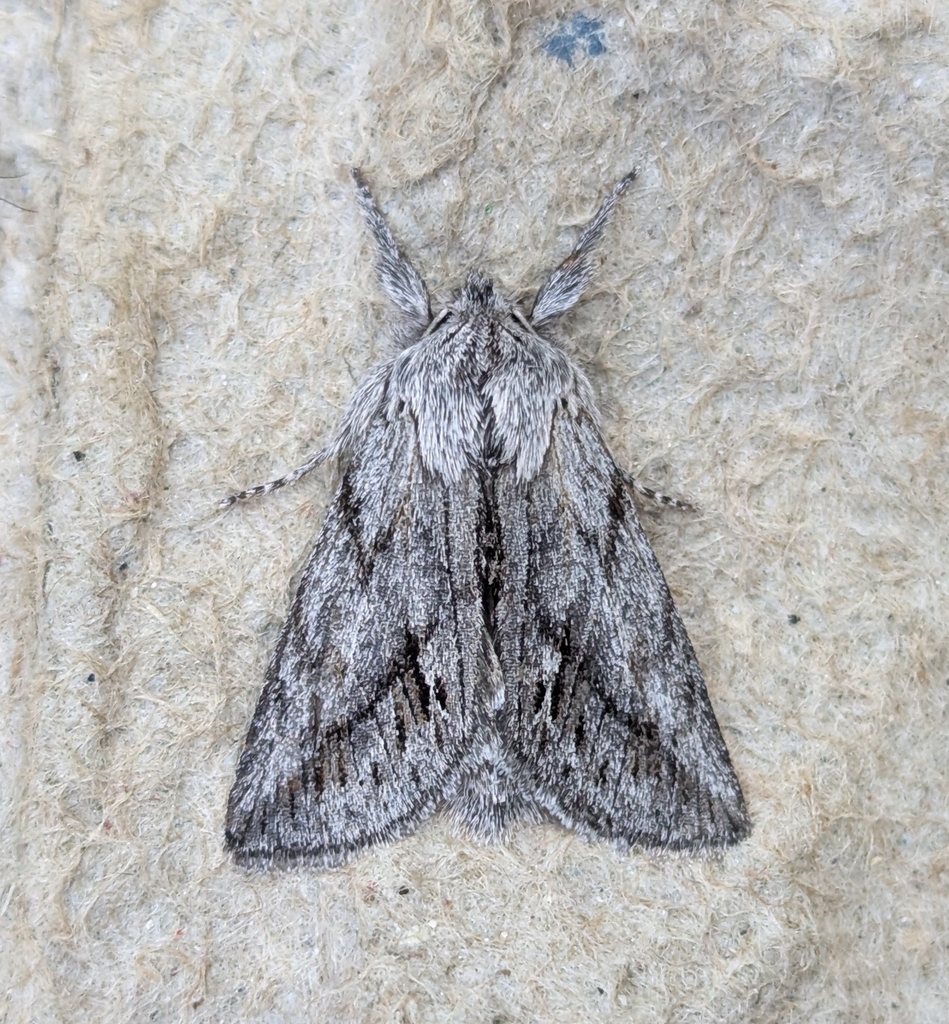
no rights reserved · CC0
Family: Noctuidae · Class: Insecta · Order: Lepidoptera
Pleromelloida cinerea (Ashy Pleromelloida Moth) is a California animal in the Noctuidae family.
Pleromelloida cinerea, commonly known as the Ashy Pleromelloida Moth, is a noctuid moth species distributed across western North America. This moth belongs to the family Noctuidae, one of the largest lepidopteran families comprising over 11,000 described species worldwide. The common name references the species' characteristic ashy-gray coloration that provides effective camouflage against tree bark and weathered wood surfaces. The species exhibits a broad geographic range extending from British Columbia, Canada, southward through the western United States to southern California, with additional populations documented in Utah. This distribution spans multiple biogeographic regions, including the Pacific Northwest coastal forests, Cascade Range, Sierra Nevada, and intermountain regions. The presence in both coastal and interior locations suggests considerable ecological adaptability across varying climatic conditions and elevation gradients. Pleromelloida cinerea demonstrates a specialized host plant relationship, with larvae feeding exclusively on leaves of Common Snowberry (Symphoricarpos albus) and Lonicera subspicata, a honeysuckle species. Both host plants are members of the Caprifoliaceae family and occur throughout the moth's range in forest understory, woodland edges, and shrubland communities. Common Snowberry typically grows in elevations from sea level to 2,900 meters (9,500 feet), inhabiting moist to moderately dry sites in coniferous and mixed forests, riparian areas, and mountain slopes. As a nocturnal species typical of the Noctuidae family, adults are primarily active during nighttime hours and are attracted to artificial light sources. The moth likely follows a univoltine life cycle in most of its range, with a single generation per year. Eggs are presumably deposited directly on host plant foliage, with larvae developing through multiple instars while feeding on Symphoricarpos and Lonicera leaves. Pupation likely occurs in soil or leaf litter beneath host plants, with adults emerging during warmer months when host plants are actively growing. Like many lepidopteran species associated with forest understory shrubs, Pleromelloida cinerea may face habitat pressures from forest management practices, urban development, and climate change effects on host plant distribution. However, the species' broad geographic range and use of relatively common host plants may provide some resilience against localized habitat disturbances. The moth's dependence on specific caprifoliaceous shrubs makes it sensitive to changes in forest composition and understory vegetation management. Currently, Pleromelloida cinerea holds no special conservation status at federal or state levels, suggesting stable populations across its range. The species' ability to utilize two different but related host plant species may contribute to its apparent stability. Nevertheless, like many forest-associated moths, populations could be affected by habitat fragmentation, invasive species competition, and altered fire regimes that impact host plant communities. Long-term monitoring of both the moth and its host plants would provide valuable insights into population trends and conservation needs.
Classification
Class: Insecta · Order: Lepidoptera · Family: Noctuidae
Frequently asked questions
How is Pleromelloida cinerea classified?
Pleromelloida cinerea belongs to class Insecta, order Lepidoptera, family Noctuidae.
What family does Pleromelloida cinerea belong to?
Pleromelloida cinerea is in the Noctuidae family.
What is Pleromelloida cinerea?
Pleromelloida cinerea, commonly known as the Ashy Pleromelloida Moth, is a noctuid moth species distributed across western North America.
Is Pleromelloida cinerea found in California?
Yes. Pleromelloida cinerea is recorded in California in The California Species Project's catalogue.
Related species
Other California species in the same genus, family, or bioregion.
Data from The California Species Project — 14,000+ California species with verified data from CNPS, CDFW, USFWS, and more.